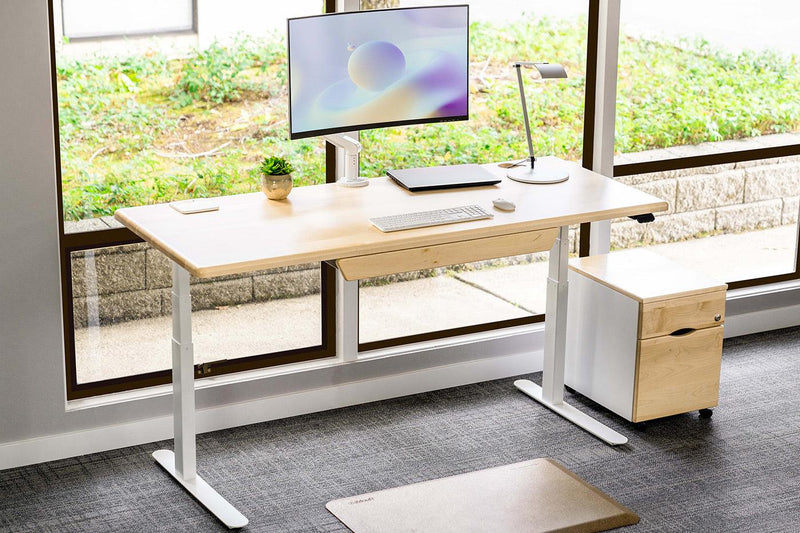
A study from the found that workers exposed to better daylight in their workspace sleep longer and work more efficiently.
So, here is the real question. If light can change how your body sleeps, how much is it already changing your focus and your daily energy at home?
This article explains how Home office lighting affects your brain and how to adjust your workspace for a real performance boost.
How Lighting Shapes Your Brain, Mood, And Work Performance
Lighting influences your biology. The moment light hits your eyes, your brain begins shifting chemical levels related to focus and energy. It reacts faster than most people realize. And that is why your workspace lighting matters more than the style of your desk, your notebook layout, or even your to do list.
Your body uses light to regulate its internal clock. Bright natural light in the morning tells your brain to suppress melatonin and raise cortisol slightly. This helps you feel alert instead of groggy. Lower brightness and warmer color temperature in the evening encourage melatonin to rise again. That rhythm keeps your energy stable through the day.
Inside a typical home office, this natural rhythm is often disrupted. Closed curtains, dim bulbs, harsh overhead light, or glare from a computer screen confuse the brain. Your body receives mixed signals. That confusion drains focus.
Workers with better lighting consistently report higher concentration, faster reaction times, and fewer headaches. The difference becomes even more noticeable for remote workers because they spend longer hours in one spot. If your workspace lighting does not support your body’s natural rhythm, your productivity suffers before you even start your first task.
So, the goal is simple. Shape your Home office lighting so your brain receives clean signals about what kind of energy it needs.
Natural Light: Your Most Powerful Focus Tool
Natural light is not just “nice to have.” It is a biological stimulant. When sunlight enters your room, your body increases serotonin levels. That shift improves mood, energy, and cognitive accuracy. Workers with access to natural light have reported a 40 percent improvement in productivity, according to a Cornell University study.
This makes window placement one of the most important elements in any Home office lighting plan. Sunlight provides consistent brightness and ideal color temperature for tasks that require decision making, creative thinking, or analytical work.
But sunlight is not always predictable. Overcast days, awkward room layouts, or apartment designs can limit your access to windows. And then again, too much sunlight creates the opposite problem. Glare. It hits your eyes or reflects on your computer screen, which strains your vision and forces your body to work harder.
So, the aim is balance. You want strong daylight without letting it hit your eyes directly.
Here is a simple rule. If the sun hits your screen or your eyes even for a moment, reposition your desk. Rotate it. Angle it. Do anything that removes the direct beam. Your work quality improves the moment your brain stops fighting glare.
Natural light sets the foundation. Everything else you add fills the gaps.
Color Temperature And Brightness: The Two Settings That Change Everything
Light has two characteristics that control how your brain responds: color temperature and brightness. Both matter more than the style of your lamp.
Color temperature affects your alertness. Cooler light in the range of 5000K to 6500K boosts focus. Warmer light in the 2700K to 3000K range relaxes the brain. Workers often use too much warm light during the day. That mistake lowers concentration and increases fatigue.
Brightness affects how hard your eyes must work. Dim rooms make your pupils widen. That increases eye strain. Rooms that are too bright create harsh contrasts with your computer screen, which also leads to strain.
The brain wants balanced light. Enough brightness to stay alert. Low enough contrast to avoid tension. That is why LED bulbs with adjustable brightness or Smart bulbs help remote workers. You shift settings based on the time of day. Cooler and brighter during the morning. Neutral in the afternoon. Warmer during the evening.
If your home office has ceiling lights, check the color temperature rating. Many old fixtures lean warm. That is comfortable at night but not ideal for daytime work. Replacing those bulbs is one of the fastest upgrades you can make.
Better energy starts with better signals. Color and brightness send those signals instantly.
How Task Lighting Supports Deep Work
Task lighting focuses light directly on what your eyes are using. It reduces eye strain and sharpens focus. You feel less tired because your brain has to work less hard to interpret detail.
A high quality Desk Lamp or LED Desk Lamp helps increase visibility without making the room overly bright. When placed correctly, it prevents shadows from forming on your hands or keyboard. Shadows confuse the eye and slow down processing.
Task lighting matters for deep work. When your lamp illuminates your keyboard, notes, or sketchpad, the brain naturally increases attention. It treats the lit area as the center of your work. So, your mind stays anchored instead of jumping from one thing to another.
Here is the simple guideline. Place your lamp at a 45 degree angle to your dominant hand. That prevents shadows. Choose adjustable models so you can shift the intensity based on your task. Many workers place their lamp behind their monitor, but that often creates uneven brightness between the screen and the surrounding space. The goal is even light across your work zone.
You can pair this with ambient lighting to soften the background. This prevents eye strain when switching focus between your screen and your notes. Deep work becomes smoother. Your energy stays stable longer.
Task lighting does not require complicated fixtures. Even basic table lamp designs improve performance when used correctly.
Ambient Lighting: The Foundation Of A Comfortable Workspace
Ambient lighting fills your room with general light. Think of it as the base layer of your setup. Without strong ambient lighting, your task lights and Floor Lamp setups feel harsh. Your eyes constantly jump between bright spots and dark corners. That jump increases tension.
Ambient lighting makes your Home office lighting feel natural. The right mix prevents shadows, reduces strain, and improves how comfortably you can work for long hours. And long hours matter most to remote workers.
You can create ambient lighting with office ceiling lights, wall fixtures, or diffused lamp shades. A Chandelier can produce ambient light if it diffuses evenly. The goal is soft, even brightness across the room. If overhead fixtures are too bright, add a shade or dimmer. If they are too dim, layer them with floor lights.
You want a gentle glow across the entire room. Enough to avoid dark corners. Not so bright that it creates sharp contrasts with your computer screen.
Ambient lighting matters because comfort drives performance. And when your room feels visually balanced, your eyes relax. That relaxation keeps your energy steady.
Balancing Multiple Light Sources For Better Energy
The strongest Home office lighting setups use a layered approach. One source provides daylight. Another provides task focus. A third fills the room. Each layer plays a role. Your body responds to that combination.
Most workers rely on a single overhead light. And that is exactly why they feel tired halfway through the day. Overhead lights often create shadows and glare. They rarely provide the brightness or the color temperature needed for long focus.
Balancing multiple sources solves this. Natural light through windows. A Desk Lamp for task control. A Floor Lamp or wall fixture for ambient support. A diffused strip behind your monitor for visual comfort. The effect is immediate. Balanced light lowers cognitive load. Your brain stops trying to adjust to changing brightness.
This is especially important for 9 to 5 workers who shift between tasks. Emails. Calls. Deep focus. Brainstorming. Each mode benefits from different light settings. With multiple sources, you adjust quickly. A quick flick of a switch changes your energy level.
Layering is how you take control of your workspace.
Small Lighting Mistakes That Kill Your Focus
Some lighting mistakes look small but have outsized effects on your concentration. They shift your energy without you realizing it.
Here are the most common mistakes:
• Harsh overhead fixtures
• Direct glare on the computer screen
• Warm bulbs during daylight hours
• Working in dim rooms
• Desk too close to the window
• Ignoring Lumens rating
• No dedicated task light
Each mistake forces your brain to adjust constantly. And that constant adjustment drains energy. A single bulb or a small reposition can solve these problems. And that is exactly what makes lighting such a high impact upgrade. Small changes lead to immediate improvement.
How To Choose The Right Lighting For Your Home Office
Choosing good lighting is easier when you know what measurements matter. Bulb packaging includes details about Lumens, color temperature, and wattage. The most important is Lumens, which measure brightness. For most workspaces, aim for 800 to 1500 Lumens across your setup. Add more for larger rooms.
Color temperature decides how your brain responds. Cool white improves alertness. Warm white relaxes the body. Neutral white sits in between. Choosing adjustable bulbs gives you flexibility through the day.
If your space has office light fixtures installed, choose bulbs that match your daily schedule. Cool during the morning. Neutral after lunch. Warm after sunset.
Smart bulbs help automate this. They shift color temperature on a schedule. That saves effort and keeps your energy consistent without manual adjustments.
Remember to balance these with natural light from windows. Artificial lighting should support natural rhythms, not replace them.
When your lighting matches your tasks, your entire workday feels smoother.
Creative Lighting Ideas For Smaller Workspaces
Not every worker has a large office. Many freelancers work from bedrooms, studio apartments, or shared spaces. Good lighting is still possible. You only need to be strategic.
Place a reflective surface beside your window to increase daylight. Use a compact office desk light to brighten your immediate workspace. Choose vertical desk lights office designs when your desk space is limited. You can also go for standing desk options. Compact accent lighting or wall mounted fixtures reduce clutter.
If you work with artwork, photography, or design boards, add accent lighting on the wall. Visual clarity improves accuracy and reduces fatigue.
Small rooms often struggle with overhead brightness. Replace harsh bulbs with diffused globes or softer office ceiling lights. A well positioned table lamp or Floor Lamp adds dimension to a small room.
Even tight spaces can support high quality Home office lighting. You only need balance and intentional placement.
How Good Lighting Supports Long Term Productivity
Workers often underestimate how lighting affects their long term energy. Poor lighting triggers a cycle. Eye strain. Fatigue. Slower decisions. Reduced motivation. Interruptions. Breaks. Then more fatigue.
Good Home office lighting reverses that pattern. When your eyes relax, your brain relaxes. Your focus sharpens. Your energy stabilizes. You complete tasks faster without feeling overwhelmed.
This benefit compounds over weeks. You start performing deep work more easily. You bounce between tasks with less friction. And you maintain productivity even during long remote work days.
Lighting is invisible until it is wrong. Then it becomes impossible to ignore. The moment you fix it, the improvement is obvious.
Better lighting is one of the most cost efficient upgrades you can make to your workspace. And iMovR provides high quality desk and workstation accessories that help build a more efficient and comfortable environment.
Conclusion
When your Home office lighting aligns with your body’s natural rhythm, everything becomes easier. Focus sharpens. Energy stabilizes. Comfort increases. You work faster without forcing yourself. And that is the entire goal of a productive workspace.
If you want to build a workspace that lifts your energy instead of draining it, start improving your lighting today. It is simple. It is measurable. And it changes your entire workday.
Explore ergonomic workstation solutions here: standing desk option
FAQs
1. What is the best type of lighting for a home office?
A mix of natural light and adjustable LED lighting works best. This combination reduces eye strain and keeps the workspace bright and balanced.
2. What kind of light is best for a home office?
Cool white or daylight LED bulbs (4000–5000K) are ideal. They improve focus, visibility, and overall productivity.
3. What is the best way to light up a home office?
Use layered lighting: ambient ceiling light, task lighting, and natural light. This setup ensures even brightness without harsh shadows.
4. What is the best lighting for a home office desk?
A focused LED desk lamp with adjustable brightness is best. Place it to the side of your dominant hand to avoid glare and shadows.