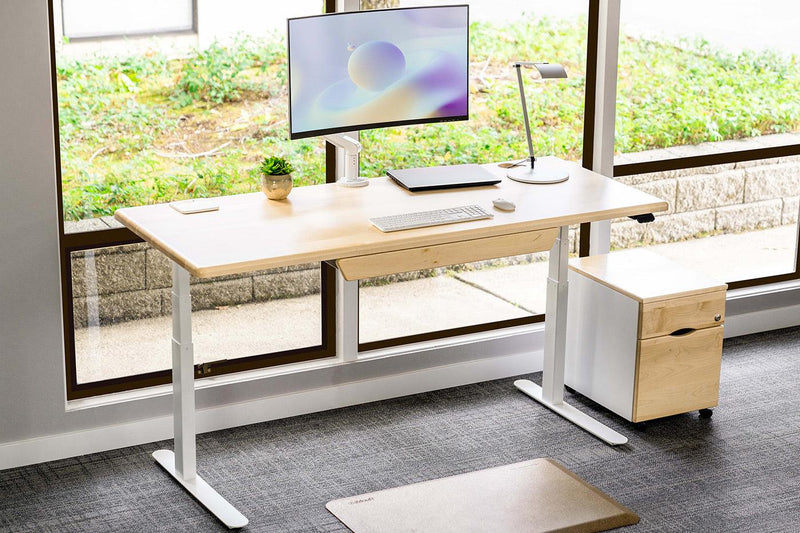
What if your workspace could adapt perfectly to the way you work instead of forcing you to adapt to it?
A growing body of research shows that prolonged sitting increases the risk of metabolic issues and musculoskeletal discomfort, which is why many professionals now switch to adjustable desks.
Designing your own workspace helps solve that problem. When you design your own desk, you choose the exact layout, materials, and features that match your daily routine.
For home office builders, this approach delivers one big advantage. Total control. From ergonomic heights to cable organization, every decision supports comfort and productivity.
And once you learn how to design your own desk, creating a functional and beautiful workspace becomes surprisingly straightforward.
What Is a Customized Standing Desk?
A customized standing desk is a workspace designed around the user’s workflow, body posture, and equipment needs. Instead of buying a standard desk, you plan every detail before the desk is built or assembled.
When you design your own desk, you choose the frame, desktop material, size, and accessories that match your daily tasks. Some people prioritize large surfaces for creative work, while others focus on compact layouts that support dual monitors and laptops.
A modern standing desk usually includes adjustable height mechanisms powered by electric motors or manual lifting systems. These systems allow users to move between sitting and standing positions throughout the day. That flexibility improves comfort and supports healthier working habits.
Customization also allows deeper personalization. You can choose wood textures, frame colors, and technology features like USB ports or programmable height controls. Those details may seem small. But together they create an ergonomic workspace that supports long hours of focused work.
For professionals who want complete control, tools such as the custom desk builder from iMovR make it easy to configure dimensions, materials, and accessories in one place.
And that is where the real advantage appears. Instead of adapting to a desk, the desk adapts to you.
Key Factors to Consider Before Designing Your Standing Desk
Before you design your own desk, a few practical factors shape the final result. Ignoring them usually leads to cramped layouts or uncomfortable workstations.
Careful planning prevents those issues.
Available Space in Your Room or Office
Room size determines everything from desk shape to monitor placement.
Measure your workspace carefully before you design a desk layout. Consider wall distance, nearby shelves, and walking space around the desk. Home offices often benefit from compact layouts that keep movement comfortable.
Corner desks work well in tight spaces because they maximize unused room angles. Straight desks suit open areas where width matters more than depth.
And remember one simple rule. Leave enough clearance for chair movement and standing transitions.
Work Style and Daily Tasks
Your workflow determines how large or complex your desk design should be. Someone who writes all day may need only a laptop, keyboard, and notebook space.
A designer or developer often requires dual monitors, external drives, and multiple peripherals. So when you design your own desk, map out your daily activities first. Then design around them.
This approach ensures the final custom desk design actually supports your work instead of limiting it.
Budget for Your Desk Setup
Customization can scale from simple to premium depending on the components you choose.
Basic setups may include a simple metal frame and a laminate desktop. High-end desks often use solid wood, dual motors, and advanced control panels.
Budget planning also helps prioritize accessories such as monitor arms or storage trays.
Required Equipment and Accessories
Before finalizing a layout, list every device that will sit on the desk.
Examples include:
-
laptops and keyboards
-
dual monitors
-
monitor arm mounts
-
microphones or cameras
-
lighting equipment
Planning around equipment helps you create an efficient ergonomic workspace without overcrowding the surface.
Choosing the Right Standing Desk Type
Standing desks come in several structural types. Choosing the right one shapes both comfort and durability.
When you design your own desk, understanding these differences helps you select the best configuration for your workspace.
Manual vs Electric Standing Desks
Manual desks use hand cranks or gas lifts to change height. They cost less but require physical effort each time the height changes.
Electric desks rely on motors that adjust the desk with the press of a switch. Many advanced models use dual motors that lift heavier desktops smoothly.
For home office builders who switch positions frequently, electric systems provide the most convenience.
Fixed Height vs Adjustable Height Desks
Fixed desks remain at a single height. They work in limited situations but rarely support ergonomic posture for long periods.
Adjustable desks allow users to set ergonomic heights for both sitting and standing positions. That flexibility improves posture and reduces fatigue.
Most modern standing desks use programmable controls that remember preferred heights.
Modular vs Fully Custom Desks
Modular desks allow users to mix components such as frames, desktops, and accessories. This approach offers flexibility without the complexity of a fully bespoke build.
Fully custom desks involve designing every component from scratch. That option suits specialized workstations or unusual room layouts.
So if you want a balance between flexibility and simplicity, modular systems usually deliver the best results.
Corner vs Straight Standing Desks
Desk shape affects both workspace efficiency and comfort.
While design your own desk, people often overlook how the shape changes productivity. But it matters more than most realize.
Benefits of Corner Standing Desks
Corner desks maximize surface area without occupying excessive floor space.
They allow users to position monitors on one side while keeping writing or creative space on the other. Many professionals prefer custom corner desk designs because they create a natural separation between tasks.
And corner layouts often support multi-monitor configurations comfortably.
Advantages of Straight Standing Desks
Straight desks offer a clean, minimal layout that works well in narrow rooms.
They also simplify cable routing and monitor placement. Many minimalist home offices use straight desks because they keep the workspace visually uncluttered. This simplicity often helps improve focus.
How to Choose the Best Desk Shape for Your Space
Start with room size and workflow.
If you need large surfaces for multiple devices, corner desks usually work best. If you prefer a streamlined layout, straight desks remain the simplest choice.
Either way, the goal remains the same. Create a workspace that supports both movement and productivity.
Selecting the Best Materials for Your Standing Desk
Material selection influences durability, appearance, and sustainability.
When you design your own desk, the desktop material often becomes the most visible design feature.
Solid Wood Standing Desks
Solid wood remains one of the most popular choices for custom desks.
It offers durability, natural beauty, and a long lifespan. Many premium desks use hardwood surfaces finished with protective coatings.
Wood also pairs well with adjustable frames and ergonomic accessories.
Bamboo Standing Desks
Bamboo provides a sustainable alternative to traditional hardwoods.
It grows quickly and produces strong yet lightweight desktops. Bamboo surfaces also resist warping better than many softwoods.
That makes bamboo ideal for environmentally conscious office builders.
Metal Frame Desks
The frame determines the desk’s structural strength.
Most standing desks rely on steel frames powered by electric motors. These frames support heavy desktops and large equipment setups. Quality frames also reduce wobble during height adjustments.
Laminate and Engineered Wood Desks
Laminate and engineered wood offer affordable alternatives to solid wood.
These materials resist scratches and stains while maintaining a clean appearance. Many office builders choose laminate surfaces because they combine durability with lower cost.
Choosing Durable and Eco-Friendly Materials
The best desks balance strength, sustainability, and aesthetics.
Materials such as responsibly sourced wood, recycled metal frames, and low-emission finishes reduce environmental impact.
Adding decorative surfaces like epoxy resin accents can also create unique visual designs while protecting the desktop.
Designing an Ergonomic Standing Desk Setup
Ergonomics determines whether a desk improves comfort or creates strain. When you design your own desk, posture should always guide the design.
Ideal Desk Height for Standing and Sitting
The ideal desk height depends on body height and arm position.
When standing, elbows should form roughly a 90-degree angle with the desk surface. That posture prevents shoulder tension and wrist strain. Programmable controls help store preferred sitting and standing heights.
Proper Monitor Placement and Eye Level
Monitor placement strongly affects neck posture.
The top of the screen should sit at or slightly below eye level. Many professionals use adjustable monitor arm mounts to position displays precisely. These mounts also free up valuable desk space.
Keyboard and Mouse Positioning
Keyboard placement should allow relaxed shoulders and straight wrists.
Position both keyboard and mouse close enough to avoid reaching forward repeatedly. That simple adjustment prevents many common ergonomic injuries.
Importance of Anti-Fatigue Mats
Standing for long periods can cause leg fatigue. Anti-fatigue mats provide cushioning that reduces pressure on joints.
Many professionals consider them essential for standing workstations.
Improving Posture with an Ergonomic Setup
A complete ergonomic setup often includes an ergonomic chair for sitting periods.
Switching between sitting and standing helps maintain circulation while preventing stiffness. Over time, this balance creates a healthier work routine.
Planning the Perfect Desk Layout
A well-planned layout improves both efficiency and visual clarity. When you design your own desk, layout planning prevents clutter and wasted space.
Organizing Monitors, Keyboard, and Accessories
Start with monitors as the central reference point. Position screens directly in front of the user, then arrange keyboards and accessories around that focal area.
This structure creates a balanced workflow. Dual monitors should align evenly to prevent neck twisting.
Cable Management Solutions
Cable clutter can quickly ruin an otherwise clean workspace.
Effective solutions include:
-
Cable Management Tray under the desk
-
cable clips and routing channels
-
built-in power outlets and USB ports
These features hide wires and protect devices from accidental damage.
Space for Storage and Desk Accessories
Many professionals underestimate storage needs.
Desk shelves, drawers, or under-desk mounts help organize notebooks, hard drives, and tools. Keeping accessories off the desktop creates more usable space.
Creating a Clean and Productive Workspace
A clean layout improves concentration.
When cables disappear and devices align neatly, the workspace feels calmer and more efficient. That subtle psychological effect often improves productivity.
Must-Have Accessories for a Customized Standing Desk
Accessories transform a basic desk into a complete workstation. When you design your own desk, adding the right components improves comfort and functionality.
Monitor Arms and Mounts
Monitor arms allow precise screen positioning and support multi-monitor setups.
They also free desk space by lifting screens off the surface. For professionals using dual monitors, adjustable mounts become essential.
Under-Desk Cable Trays
Cable trays keep power strips and cords organized under the desk.
A Cable Management Tray reduces clutter and simplifies maintenance when devices change.
Desk Shelves and Storage
Additional shelves create vertical storage for speakers, notebooks, or decorative items. These accessories keep the main desktop clear for active work.
Lighting for Productivity
Proper lighting reduces eye strain during long work sessions. Desk lamps with adjustable brightness allow users to adapt lighting conditions throughout the day.
Standing Desk Setup Ideas and Inspiration
Creative setups help inspire new workspace designs. When you design your own desk, seeing different styles can help refine your vision.
Minimalist Standing Desk Designs
Minimalist designs focus on simplicity. A clean wood surface, slim frame, and minimal accessories create a distraction-free environment.
Many writers and developers prefer this approach.
Gaming and Multi-Monitor Desk Setups
Gamers and video editors often require wide desktops with multiple monitors. These setups benefit from strong frames and advanced cable management systems that support heavy hardware.
Modern Home Office Standing Desk Ideas
Modern offices combine natural materials with sleek technology.
Wood desktops, matte metal frames, and integrated USB ports create visually balanced workspaces.
Small Space Standing Desk Inspiration
Small rooms benefit from compact adjustable desks.
Wall-mounted shelves and corner layouts maximize available space without sacrificing comfort.
Common Mistakes to Avoid When Designing a Standing Desk
Even the best plans can fail if common mistakes appear. When you design your own desk, avoid these issues early in the process.
Choosing the Wrong Desk Height
Incorrect height leads to wrist strain and poor posture.
Always measure ergonomic heights before finalizing the desk design.
A desk that sits too high forces your shoulders upward, while a desk that sits too low encourages slouching. Both situations slowly create neck and back tension during long work sessions.
Ignoring Ergonomics
Many people focus on aesthetics but forget body mechanics. Ignoring ergonomics often results in discomfort after long work sessions.
Your desk should support natural posture, not force awkward arm or neck positions. A well-planned ergonomic setup helps reduce fatigue and improves long term comfort.
Overcrowding the Desk Layout
Too many devices reduce usable workspace. Limit the number of accessories placed directly on the desk.
Leaving open surface space allows easier movement while working. It also creates a cleaner and more focused environment that supports productivity.
Poor Cable Management
Visible cables create clutter and increase accident risk. Integrated cable management systems prevent these problems and maintain a professional appearance.
Cable trays, clips, and routing channels help hide wires and protect devices. A clean cable layout also makes upgrading or moving equipment much easier later.
How to Build or Customize Your Standing Desk Step-by-Step
Designing a desk becomes much easier when broken into steps.
A clear process ensures every detail supports both ergonomics and workflow efficiency. Following these steps helps turn an idea into a practical and comfortable workspace.
Step 1: Measure Your Workspace
Start by measuring room dimensions and identifying available desk placement areas.
This step determines whether straight or corner desks work best.
Accurate measurements prevent buying desks that feel cramped or oversized. Always leave extra space for chair movement and comfortable standing transitions.
Step 2: Choose the Desk Frame
Select a strong frame with reliable electric motors.
Frames with dual motors typically provide smoother adjustments and higher lifting capacity.
High-quality frames also reduce wobbling during height changes. That stability becomes especially important when using dual monitors or heavy equipment.
Step 3: Select the Desktop Material
Choose materials that balance durability and aesthetics. Options include wood, bamboo, laminate, or composite materials.
Solid wood offers a premium look while laminate surfaces resist scratches and stains. The right material should match both your design preference and daily usage needs.
Step 4: Add Ergonomic Accessories
Accessories like monitor arms, anti-fatigue mats, and adjustable chairs improve comfort significantly.
These additions transform a simple desk into a complete workstation.
Accessories also help maintain proper posture throughout the day. Small upgrades often make the biggest difference in long-term comfort.
Step 5: Optimize Your Layout
Finally, arrange devices, cables, and accessories for maximum efficiency. The goal is a workspace that supports productivity without visual clutter.
Place frequently used tools within easy reach to reduce unnecessary movement. A balanced layout improves focus and keeps the workspace organized.
Benefits of Using a Customized Standing Desk
Customization provides several long-term advantages. When professionals design your own desk, they often notice improvements in comfort and efficiency.
A workspace built around personal workflow naturally supports better daily performance.
Improved Posture and Reduced Back Pain
Adjustable desks support healthier posture throughout the workday.
Switching between sitting and standing reduces pressure on the spine and improves circulation.
Over time, this movement helps prevent stiffness caused by long periods of sitting. Many professionals report noticeable comfort improvements after adopting adjustable desks.
Increased Productivity and Focus
A well-designed ergonomic workspace reduces distractions and discomfort.
When tools and screens remain within easy reach, tasks become easier to complete efficiently.
A clean layout also reduces mental clutter while working. When the environment feels organized, concentration becomes easier to maintain.
Better Workspace Organization
Custom layouts eliminate unnecessary clutter. Cable management systems and modular accessories keep everything organized and accessible.
Organized workspaces also make it easier to upgrade equipment later. With clear layouts, adding new tools does not disrupt the overall setup.
Conclusion
Designing a workspace that truly supports your workflow begins with intentional choices. When you design your own desk, every element from the materials and layout to ergonomics and accessories works together to create a workstation built around your needs.
That control leads to better posture, stronger focus, and a cleaner, more organized home office.
For home office builders, customization removes the limitations of standard furniture. Instead of adjusting your work habits to fit a desk, you create a desk that fits the way you work.
And that shift often improves productivity, comfort, and long-term efficiency.
Ready to build a workspace designed exactly for you? Explore the customization tools at iMovR and design your own desk with professional-grade components, premium materials, and ergonomic features built for modern work.
FAQs
What is the ideal height for a standing desk?
The ideal height for a standing desk keeps elbows at ninety degrees, wrists straight, and monitors at eye level for proper posture.
Are standing desks better than traditional desks?
Yes, a standing desk can reduce prolonged sitting, encourage movement, improve posture, and support healthier work habits during long office hours.
How much does a custom standing desk cost?
A custom desk design usually costs between three hundred and two thousand dollars, depending on materials, motors, desktop size, and accessories.
Can you convert a regular desk into a standing desk?
Yes, desk converters or adjustable frames allow users to design your own desk setup while transforming a regular desk into a standing workstation.
What materials are best for standing desks?
Durable materials like solid wood, bamboo, laminate, and steel frames provide stability, longevity, and visual appeal for modern standing desks.