Procrastination affects 80%-95% of people to some degree.
You ever stare at a report in your inbox for three full days. Then suddenly organize your desk drawer like it is a national emergency.
Yeah. That is procrastination. But here is the thing. It is not laziness.
Your brain just sees the task as a threat. So you build systems that make starting feel easier than dodging.
That is how to get out of the habit of procrastination.
Why We Procrastinate (and Why It Is Not Laziness)
Picture this. Your logical brain knows the deadline looms. You need to knock it out. But your emotional side spots discomfort and bolts for anything that feels good right now.
That is why Facebook wins over that tough email every time.
Three culprits keep the loop spinning. You hunt instant rewards. You duck pain even if avoidance hurts more later. Perfectionism locks you up because nothing matches the ideal in your head.
Pause for a second. What am I dodging right now? The work itself. Or the knot in your stomach. Name it. Watch the hold weaken.
The Psychology & Neuroscience Behind It
Your brain wired itself for quick relief over future payoffs. Evolution thing. Prefrontal cortex tries to plan. Amygdala flips out at stress. Override complete.
That explains why do I procrastinate so much. Even a five-minute job looks impossible when your tank runs low.
Add decision fatigue. Twelve open loops. Willpower drains just picking the next move. Notifications win. To-do list loses.
Then shame crashes the party. You delay. Feel bad. Delay more to escape the bad. Deeper hole.
Shame does not light a fire. It douses it. Procrastination is overload response, not broken character. See it that way. Start fixing. That is how to beat procrastination.
Name the Pattern: Types of Procrastinators
Recognizing your pattern helps you target the real issue.
-
First, we have the overwhelmed procrastinator who has too many priorities and cannot figure out where to start.
-
Then comes “The perfectionist” who delays everything. Why? Because the vision in their head feels unattainable.
-
The dopamine chaser? They jump between tasks hunting for stimulation, never finishing what they start.
-
Last but not the least, the "I will start when I feel ready" type waits for motivation that rarely arrives.
Break the Task, Not the Goal
Treat the whole project as one beast. Brain panics. “Quarterly report” equals shutdown. But “open file, jot three bullets” equals go.
Shrink that entry point. Laughably small. That is how to get out of the habit of procrastination.
Action sentences deliver. “Draft the opener.” “Brainstorm five topics.” Specific. Friction drops.
Micro-deadlines lock it in. “Wrap section one by ten.” “Call it done for today.” Wins pile up. Momentum kicks. These tricks? Science-backed ways to stop procrastinating.
Planning That Actually Reduces Friction
Most productivity advice overcomplicates planning. You do not need a color-coded system with seventeen tags. You need a 3-task daily plan and one deep-work block.
That is it.
Pick three things that matter today. Schedule one uninterrupted hour for the hardest task. Everything else is optional.
Batch similar tasks to cut decision fatigue. Answer all emails in one window. Make all your calls back-to-back.
Review documents in a single sitting. Every time you switch contexts, you lose focus and burn energy reorienting.
For repeat work like content creation, admin, or outreach, use checklists. When the steps are predefined, you eliminate the mental load of figuring out what comes next.
You just execute. That is how to overcome procrastination: remove as many micro-decisions as possible. Simple habits like these compound into better productivity without adding stress.
Learning how to get out of the habit of procrastination requires building systems that reduce friction at every step. The easier you make the next action, the less resistance you face.
Environment Engineering (Move So You Do Not Avoid Work)
Your setup steers you more than grit. Slump in a chair hours on end. Energy tanks. Resistance climbs. Stand up. Walk a bit. Brain reads “action time.”
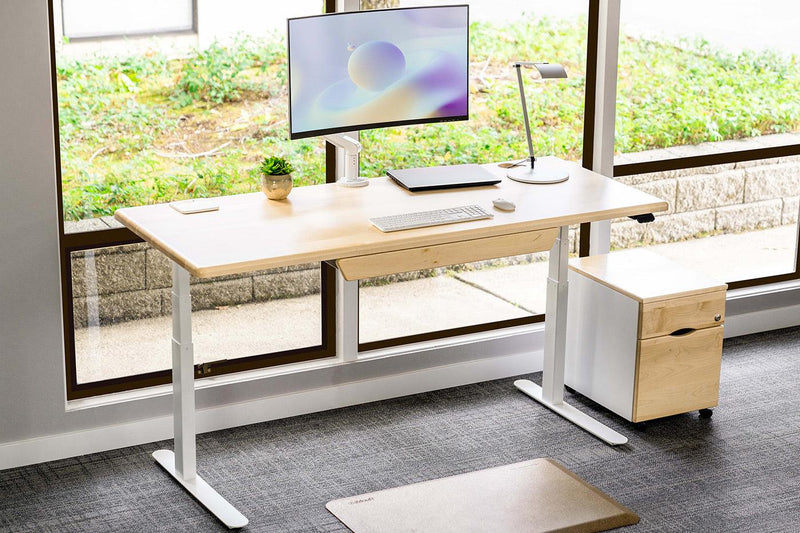
Standing desks, treadmill desks, drift killers keep your body moving. Scroll urge fades. “Up means start.” Easy trigger.
Craft a clean focus corner. Phone gone. Tabs shut. Switch rooms for deep dives. Spaces train habits.
Self-Compassion > Self-Bullying
Label yourself lazy. Guess what. You cement the habit. Criticism spawns shame. Shame fuels escape.
Flip the script. “This felt massive and fuzzy.” “Next time, slice it thinner.”
Tiny wins log. “File opened.” “One email fired.” “Ideas sketched.” Proof stacks. You shift from avoider to doer. Resistance shrinks. Solid science-backed way to stop procrastinating.
Self-compassion clears the deck. Tackle the real snag. That is the whole point.
Mindfulness & Urge-Surfing for Procrastination
Urge bubbles up. Spot it. Label it. Pick your play.
Five-minute breath or scan before the tough one. Settle the nerves. Resistance lingers. You push through anyway.
Surf the wave. Phone itch strikes. Stop. Feel the tug. Ten counts. Crest breaks. Back to work.
Repeat: “Resistance okay. Work anyway.” Flow strengthens.
Prioritization That Feels Realistic
Most people carry too many priorities, which creates analysis paralysis.
The solution is not better time management.
It is ruthless prioritization.
Use the Today, This Week, Not Now framework.
Match energy. Peak hours for heavy lifts. Emails for dips.
Three priorities max. Everything urgent means nothing moves. Clarity crushes chaos. How to beat procrastination boils down to real results.
Design Your Future Actions
Motivation ghosts you. Structure stays.
If-then cues. “Nine sharp, fire up Notion.” “Desk up, 200 words down.”
Lock in ahead. Twenty-five minute timer. Blockers on. Buddy work calls.
Quit day with tomorrow queued. Open the file. Scribble line one. Zero start drag. It is a long-game for “how to get out of the habit of procrastination” to stay healthy.
Implement a Proactive Productivity Framework
Beating procrastination is not a one-time fix. It is an ongoing practice. A weekly review helps you spot patterns before they spiral. What got done? What got avoided? Why?
Look for trends. Do you always delay client emails? That signals discomfort around confrontation or unclear boundaries.
Do you avoid long reports? That points to overwhelm or perfectionism. Once you name the pattern, you can build a workaround.
Add one movement tool to your week. A standing desk for morning deep work. A walk call for weekly check-ins.
A treadmill desk hour for administrative tasks.
Movement disrupts the drift that leads to procrastination. It keeps your brain engaged and your energy stable. I
MovR offers ergonomic solutions designed to support active work habits that reduce avoidance and improve flow.
Tracking these habits builds momentum. And momentum is what transforms scattered effort into consistent results.
When you know how to stop procrastination through systems and structure, productivity becomes automatic.
Start Today: 20-Minute Anti-Procrastination Routine
You do not need hours to make progress. You need a system that gets you started. Here is a 20-minute routine that works.
-
Two minutes: Clarify the task. What is the exact outcome? What is the first action? Write it down in one sentence.
-
Five minutes: Set up your environment. Stand if you have a standing desk. Remove your phone. Open the document or tool you need. Eliminate distractions before you start.
-
Ten minutes: Timeboxed work. Set a timer and commit to staying with the task until it goes off. You can stop after ten minutes if you want, but most of the time, momentum carries you forward.
-
Three minutes: Log progress and set the next step. Write what you did. Note what comes next. Leave your workspace ready for tomorrow.
Procrastination Is a System Problem, Not a Character Problem
You do not fix procrastination once and move on.
You manage it. Some days will be harder than others. Some tasks will trigger more resistance.
That does not mean you are failing. It means you are human.
Easy-start systems. Focus zones. Kind slips. Tweak flops.
Stop letting your workspace sabotage your productivity.
Explore iMovR's full collection and discover how small environmental changes can create lasting behavioral shifts.
FAQs
How do I stop procrastinating?
Break big tasks into smaller, doable steps and start with just one. Remove distractions and set short, timed work sessions (like the Pomodoro method).
Why do I procrastinate so much?
You likely avoid tasks due to fear of failure, perfectionism, or lack of motivation. Recognizing the root cause helps you replace avoidance with action.
What are the types of procrastination and how to beat them?
Types include perfectionist, overwhelmed, and deadline-driven procrastination. Beat them by setting realistic goals, prioritizing tasks, and using accountability systems.
How to beat laziness and procrastination?
Start with easy wins to build momentum and set clear daily routines. Reward progress instead of perfection and keep your workspace focused and clutter-free.