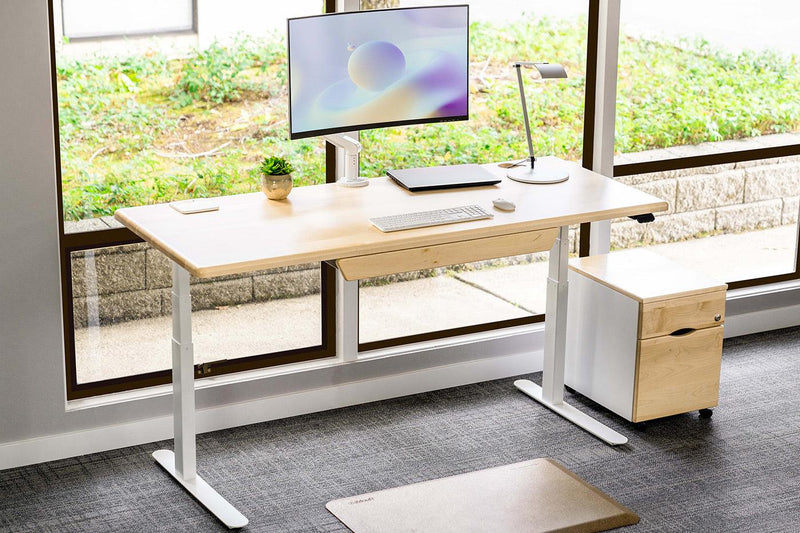
Is working from home really more productive, or does the office still win when it matters most?
According to a 2023 report by Stanford University, remote workers showed a 13% productivity increase in certain roles. That sounds convincing. But the full picture is more complicated.
This guide breaks down the most important hybrid work office trends shaping modern workplaces, comparing remote and in-office work in a way that actually helps you decide what works best.
You will see where each setup shines, where it fails, and how to build a workplace that supports real productivity.
Remote vs In Office Work: Why This Debate Isn’t So Simple Anymore
The conversation around hybrid work office trends has shifted. It is no longer about choosing one side. It is about understanding how different environments affect performance.
Remote work gained momentum quickly during global disruptions. Companies adapted. Employees enjoyed flexibility and experimented with telework. And for a while, it seemed like the future of remote work was fully remote.
But reality settled in. Some teams struggled with communication. Others missed collaboration. And many found that productivity depended less on location and more on environment.
That is why hybrid models are now dominating workplace strategies. They promise the best of both worlds. But as many organizations are learning, combining two imperfect systems does not automatically create a perfect one.
And that is exactly where things get interesting.
Why Remote Work Feels More Productive in Hybrid Work Office Trends
Remote work often feels like a productivity upgrade. At least in the beginning. And there are clear reasons why, because of fewer interruptions and more control over your environment.
Without constant office chatter, people can focus longer. There is no commute draining energy before the day even begins. And individuals can design a workspace that fits their preferences.
That sense of control plays a major role. When people adjust lighting, seating, and noise levels, they work more comfortably. And comfort often leads to better output.
This aligns with many hybrid work office trends, showing that remote work improves deep focus tasks. Writing, coding, and analysis often benefit from fewer interruptions.
But that initial boost does not always last. Over time, new challenges start to appear.
Where Remote Work Starts to Struggle
Remote work is genuinely effective within current hybrid work office trends. But it is not perfect, and its challenges become clearer over time.
Isolation is often the first issue. Short-term remote setups feel fine, but over months, the lack of casual interaction weakens team connection. Scheduled calls help, but they rarely replace natural, in-person moments.
Communication also slows down. A quick question in an office becomes messages and delays. Individually, this feels minor. Across teams, this leads to slower decisions and stalled progress in telework environments.
Then boundaries begin to blur. Without a clear end to the workday, many people work longer hours. Over time, this leads to fatigue and burnout, reducing overall productivity.
This shift is shaping the future of remote work trends. Companies now focus on keeping the benefits of remote work while adding structure that supports connection, communication, and balance.
In-Office Work: Still Relevant — But Not Always Productive
The role of the office is changing, but it is not disappearing. In many hybrid work office trends, companies still rely on in-person environments to bring teams together.
What The Office Still Does Better Than Remote
-
collaboration
-
faster decision-making
-
team energy
Face-to-face interaction speeds things up. Conversations happen naturally. Ideas flow more easily. And teams can solve problems in real time.
There is also something intangible about shared energy. Being around others can boost motivation and accountability. That is why many companies still value in-person work.
These strengths explain why hybrid work office trends still include office days. But those days are not always as productive as expected.
Why Many Workers Feel Less Productive In The Office
-
constant interruptions
-
open office noise
-
meetings overload
Offices can be distracting. Conversations, phone calls, and background noise break concentration. And open layouts often make it worse.
Meetings also consume a large portion of the day. Many employees spend more time discussing work than actually doing it.
So while the office supports collaboration, it often disrupts focus. And that tradeoff is becoming harder to justify.
The Biggest Complaint: Lack Of Privacy And Quiet Space
This is where the real issue lies.
Most modern offices are designed for interaction. But not all work requires collaboration. In fact, a significant portion of work requires deep focus.
Without quiet spaces, employees struggle to concentrate. And that reduces the value of being in the office.
This gap has become a key driver in hybrid work office trends. Companies are starting to rethink office design. And they are looking for solutions that support both collaboration and focus.
The Real Problem: Open Offices Are Designed for Collaboration — Not Focus
Open office layouts were introduced to improve teamwork and communication. And in many ways, they succeed.
But within modern hybrid work office trends, they also reveal a major flaw. They are built for interaction, not concentration.
Why Open Office Layouts Do Not Work For Deep Work
Deep work requires uninterrupted time. It demands concentration. And open offices rarely provide that.
Employees constantly deal with noise, movement, and visual distractions. Even small interruptions can break focus and reduce productivity.
How Noise And Interruptions Kill Productivity
Studies show that it can take over 20 minutes to regain focus after an interruption. That adds up quickly in a busy office.
And noise is not just annoying. It increases stress levels and reduces cognitive performance. That is a serious problem for knowledge-based work.
Why “Just Wear Headphones” Is Not A Real Solution
Headphones are a temporary fix. They block some noise, but they do not eliminate interruptions.
People still approach. Visual distractions remain. And wearing headphones all day is not comfortable or practical.
The Cost Of Constant Distractions
Fatigue increases. Stress builds. And work slows down.
This is why many employees prefer remote setups for focus. But that creates a new challenge in hybrid work office trends. How do you bring people back without sacrificing productivity?
Hybrid Work: The Best of Both Worlds — Or the Worst of Both?
Hybrid work sits at the center of current hybrid work office trends because it promises flexibility and balance. Employees can work remotely for focus and use the office for collaboration.
It sounds like the ideal setup, especially as the future of remote work continues to evolve.
But in practice, the experience is often inconsistent. Switching between home and office means dealing with different environments, noise levels, and setups. At home, people usually control their space.
In the office, distractions return. This leads to uneven productivity, where some days feel focused, and others feel disrupted.
Common frustrations appear quickly. Employees manage deep work at home but struggle to concentrate in the office. Video calls happen in noisy surroundings.
And many workplaces still lack quiet, dedicated areas for focused tasks. These issues are becoming more visible in the future of remote work trends as expectations rise.
The real gap is not in the idea of hybrid work, but in how offices support it. Most workplaces are still designed for collaboration, not concentration.
Without private, distraction-free zones, hybrid work cannot deliver consistent results. That is why hybrid work office trends are now shifting toward creating environments that support both teamwork and deep focus.
What Most Offices Are Missing: Private Spaces for Focused Work
In today’s hybrid work office trends, many offices still focus on collaboration but lack spaces for deep, focused work. This gap makes it harder for employees to stay productive in the workplace.
Not All Work Is Collaborative — And That’s The Problem
Many tasks need quiet and uninterrupted time. But most office setups create noise and distractions, making it difficult for employees to focus and complete important work efficiently.
Why Employees Need Both Collaboration And Isolation
A productive workforce needs both teamwork and individual focus. Employees should be able to switch between collaboration and quiet work without disruption. This balance is essential in modern hybrid work office trends.
The Shift Toward Flexible, Modular Office Design
Offices are moving toward flexible layouts with quiet zones and private spaces. These changes help support both collaboration and focus, improving overall workplace performance.
Office Pods: A Smarter Solution for Hybrid Workspaces
Office pods are becoming a key feature in hybrid work office trends. They offer a practical solution for employees who need quiet, focused spaces without losing the benefits of being in the office.
What Is An Office Privacy Pod?
An office privacy pod is a self-contained workspace designed for focus, privacy, and minimal distractions.
It provides employees with a dedicated area to work, take calls, or hold virtual meetings, all within the office environment.
How Office Pods Solve The Biggest Hybrid Work Problems
-
Noise reduction
-
Visual privacy
-
Fewer interruptions
-
Better video calls
Pods reduce the challenges that often come with open offices or hybrid schedules. They allow employees to concentrate on important tasks while staying connected to the workplace.
Why Pods Outperform Traditional Meeting Rooms
-
No booking required
-
Always accessible
-
Designed for individual focus
Unlike meeting rooms, pods are flexible and available on demand. They are built for solo work, eliminating the hassle of scheduling and providing a consistent quiet space.
Perfect Use Cases For Office Pods
-
Deep work sessions
-
Private calls
-
Virtual meetings
-
Focus blocks during office days
By incorporating office pods, organizations can support both collaboration and concentration, making hybrid work more effective for the entire workforce.
Remote vs Office Productivity: It’s Really About Your Environment
Productivity today depends more on the environment than the location. Whether employees work remotely or on-site, their workspace determines focus and output.
Modern hybrid work office trends and the remote future work movement show that the right environment is key.
Why Environment Matters More Than Location
A quiet, comfortable workspace improves performance. Remote workers do well when distractions are low.
Office workers succeed when spaces support focus. Simply being on-site does not guarantee productive work.
How Noise, Comfort, And Privacy Affect Output
Noise, poor ergonomics, and lack of privacy break concentration and increase fatigue. These issues directly reduce efficiency in both office and remote future work settings.
Why A Bad Office Setup Cancels Out The Benefits Of Being On-Site
Even with team collaboration, offices without private spaces and quiet zones limit deep work. Supporting both focus and teamwork is essential for effective hybrid work office trends.
How to Make Hybrid Work Actually Work (Without Losing Your Focus)
Hybrid work can succeed, but only if the office supports both focus and collaboration. Without the right setup, productivity suffers even in modern hybrid work office trends.
Design Your Office For Different Types Of Work
Different tasks need different spaces. Collaboration zones support teamwork, quiet zones allow deep work, and private pods give employees distraction-free areas. Each type of space is essential for a productive remote future work and office environment.
Give Employees Control Over Where They Work
Flexibility matters. Letting employees choose the space that fits their task increases satisfaction and output. Control over the work environment is a key factor in modern hybrid work setups.
Reduce Noise Instead Of Fighting It
Temporary fixes like headphones do not solve distractions. Investing in solutions that block or reduce noise at the source creates a more productive workplace.
Invest In Spaces Built For Focus — Not Just Meetings
Focus drives results. Offices should include areas for deep work, not just conference rooms. Supporting both concentration and collaboration ensures hybrid work delivers real value for the workforce.
So, Which Is Better: Remote or In-Office Work?
The answer depends on the type of work being done.
Remote work is better for tasks that require deep focus and independent effort. Employees can control their environment, minimize distractions, and complete complex tasks more efficiently.
In contrast, in-office work excels for collaboration and team alignment. Face-to-face discussions, quick decision-making, and shared energy help teams stay connected and productive.
Hybrid work works best when offices provide spaces that support focus as well as collaboration. Combining the strengths of remote and in-office setups is the key principle in modern hybrid work office trends.
Conclusion
The hybrid work office trends reshaping today’s workforce reveal one clear truth: productivity is not about where you sit, it is about how well your environment supports the work you do.
Remote work excels at focus and flexibility, while in-office work drives collaboration and team energy. Hybrid work can offer the best of both, but only if the office is intentionally designed to support both modes of work.
The companies getting it right are not just offering flexibility, they are designing for it. The real question is not remote vs in-office; it is whether your workspace, wherever you are, is built to help you do your best work.
If your office still struggles with noise, distractions, or inconsistent productivity, it is not a hybrid problem. It is a design problem. Explore iMovR’s office pods and ergonomic solutions built for modern hybrid work.