What if the missing piece in your ergonomic setup is not your desk, but what sits right under it?
Most people invest in a standing desk expecting instant comfort. Then wrist pain shows up, shoulders feel off, and typing starts to feel awkward.
So, this guide breaks down whether a keyboard tray for standing desk setups actually solves those problems, or just adds complexity.
What Is a Keyboard Tray and What Does It Do?
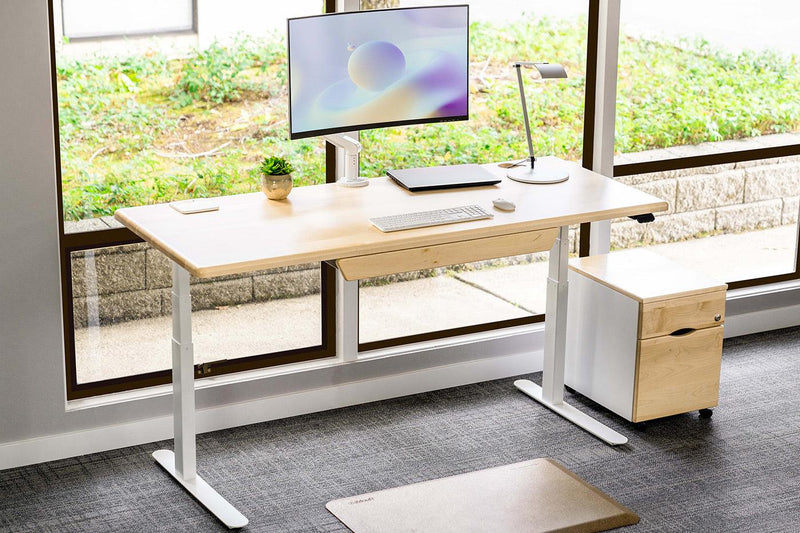
A keyboard tray for standing desk setups is a platform mounted under the desk that holds your keyboard and mouse. It can slide in and out, tilt at angles, and adjust height independently from the desk surface. That flexibility is the entire point.
Most standard desks fix your keyboard position at one level. That works fine for casual use, but not for long typing sessions. Your elbows, wrists, and shoulders all depend on precise positioning. And a fixed surface rarely aligns with your body.
An under desk keyboard tray changes that dynamic. It gives you control over how your hands sit while you work. You can lower it below desk height, tilt it slightly downward, and bring it closer to your body.
So instead of adjusting yourself to the desk, the desk adapts to you. That shift matters more than it sounds, especially if you type for hours every day.

Do You Actually Need a Keyboard Tray?
Answer one question and find out.
How do your wrists feel after a long typing session?
Understanding Ergonomics: Wrist Angle, Height, and Position
Typing comfort comes down to angles and alignment. And small deviations create big problems over time. That is where ergonomics enters the picture.
Your wrists should stay neutral. Not bent upward, not dropped too low. A keyboard tray for standing desk setups allows a negative tilt. That means the front edge tilts slightly downward. This keeps wrists straight and reduces strain.
Height matters just as much. Your elbows should sit at about 90 degrees. If your desk surface is too high, your shoulders lift. If it is too low, you hunch forward. Both lead to fatigue.
Position also plays a role. The keyboard should sit close enough that your arms stay relaxed. Reaching forward repeatedly adds tension to your upper back.
An under desk keyboard tray solves all three issues at once. It lets you fine-tune height, angle, and reach. And that level of control is what defines a truly ergonomic setup.
Benefits of Using a Keyboard Tray with a Standing Desk
Reduces Risk of Wrist Pain and Repetitive Strain Injuries
Wrist pain does not show up overnight. It builds slowly through poor positioning and repeated stress. A keyboard tray for standing desk setups helps reduce that risk by keeping wrists aligned.
When your keyboard sits flat on a desk, your wrists often bend upward. That position compresses nerves and strains tendons. Over time, this can lead to repetitive strain injuries.
With an adjustable tray, you can create a slight negative tilt. That keeps your wrists straight and relaxed. And that small adjustment makes a noticeable difference during long work sessions.
Allows Independent Adjustment of Keyboard and Monitor Height
Your monitor and keyboard do not always align at the same ideal height. That is where fixed desks fall short.
A keyboard tray for standing desk setups lets you separate those adjustments. You can keep your monitor at eye level while lowering your keyboard to elbow height.
This independence helps maintain proper posture. Your neck stays neutral, your shoulders stay relaxed, and your arms move naturally. Without that separation, you often compromise one area to fix another.
Solves Desk Depth and Reach Limitations
Not all desks provide enough depth for proper ergonomics. And even large desks can feel cramped once you add monitors and accessories.
An under desk keyboard tray creates extra space by moving your typing area below the surface. That frees up room for your monitor and allows better positioning.
It also reduces reach distance. Instead of stretching forward, your keyboard sits closer to your body. That small shift reduces strain on your shoulders and upper back.
Improves Comfort for Long Typing Sessions
Comfort is not just about posture. It is about how your body feels after hours of use.
A keyboard tray for standing desk setups allows micro-adjustments throughout the day. You can shift height slightly, change angles, or reposition based on fatigue.
That flexibility keeps your body engaged without stress. And it prevents the stiffness that comes from staying in one fixed position.
Who Benefits the Most from a Keyboard Tray
Not everyone needs a keyboard tray. But some users benefit more than others.
-
Heavy typists
-
Writers and coders
-
Users with wrist pain
-
Compact desk setups
-
Multi-monitor users
If your work involves constant typing, the benefits become hard to ignore. But if you use your keyboard occasionally, the impact may feel minimal.
Drawbacks of Using a Keyboard Tray
Compatibility Issues with Standing Desk Frames
Not every desk supports an under desk keyboard tray. Some frames have crossbars or structural components that block installation.
That limitation can restrict your options. And it may require additional modifications or specific tray models designed for compatibility.
Before buying a keyboard tray for standing desk setups, checking your desk frame is essential. Otherwise, you risk buying something you cannot install.
Reduced Desk Surface Space
While a tray frees up surface space in one way, it also introduces a new element below the desk.
Your knees and legs share that space. And poorly designed trays can feel intrusive, especially when sitting.
So while you gain ergonomic benefits, you may lose some legroom. That trade-off depends on your setup and personal comfort.
Stability Concerns During Height Adjustments
Standing desks move. And any attachment must move with them.
Some keyboard trays wobble slightly when adjusting height. Others may shift under pressure while typing.
A high-quality keyboard tray for standing desk setups minimizes this issue. But cheaper models often struggle with stability.
Added Cost vs Actual Benefit
Keyboard trays add cost to your setup. And not all users feel the benefits justify that expense.
If your desk already allows proper positioning, a tray may offer limited improvement. But if your current setup causes discomfort, the value becomes clearer.
So the decision depends on your starting point. And how much improvement you actually need.
Why Many Users Function Well Without One
Many people use standing desks without a keyboard tray and feel fine. That usually comes down to proper desk height and keyboard choice.
A low-profile keyboard and correct desk adjustment can create an ergonomic position without additional tools. That simplicity appeals to many users.
So while a keyboard tray for standing desk setups helps, it is not always essential.
Types of Keyboard Trays Explained
Fixed vs Adjustable Keyboard Trays
Fixed trays offer a single position. They are simple, affordable, and easy to install. But they lack flexibility.
Adjustable trays allow height and tilt changes. That adaptability makes them better for long-term use. And it supports proper ergonomics.
For most users, adjustable options provide more value.
Clamp-On vs Under-Desk Mounted Trays
Clamp-on trays attach to the desk edge. They require no drilling and are easy to remove. But they may feel less stable.
Under desk keyboard tray models mount directly underneath. They offer better stability and a cleaner look. But installation takes more effort.
Your choice depends on convenience versus performance.
Single Platform vs Split Ergonomic Trays
Single platforms hold both keyboard and mouse together. They are simple and compact.
Split trays separate the keyboard and mouse areas. That allows more precise positioning for each hand.
Advanced users often prefer split designs. But most people find single platforms sufficient.
Weight Capacity, Materials, and Build Quality
Build quality affects performance. Weak materials lead to wobble and shorter lifespan.
High-quality keyboard tray for standing desk setups use durable metal frames and sturdy platforms. They support consistent use without shifting.
Weight capacity also matters. Especially if you use heavier keyboards or accessories.
Are Keyboard Trays Compatible with All Standing Desks?
Compatibility depends on desk design. Some standing desks include crossbars or motors that interfere with installation.
Others provide open space underneath, making it easy to attach an under desk keyboard tray.
Before buying, measure the available space. Check mounting requirements. And confirm whether your desk model supports attachments.
Manufacturers often list compatible accessories. Reviewing those details saves time and avoids frustration.
Alternatives to a Keyboard Tray
Adjusting Desk and Chair Height Properly
Proper height adjustment solves many ergonomic issues. Your desk should align with your elbows. Your monitor should sit at eye level.
These adjustments create a balanced setup without extra accessories. And they form the foundation of any ergonomic workspace.
Using an Ergonomic or Split Keyboard
Keyboard design affects comfort. Ergonomic keyboards reduce wrist strain by changing hand positioning.
Split keyboards allow natural arm alignment. That reduces inward wrist bending.
Combined with correct desk height, these keyboards can replace the need for a keyboard tray for standing desk setups.
Wrist Rests and Desk Accessories as Partial Solutions
Wrist rests provide support during typing. They reduce pressure on your wrists and improve comfort.
Other accessories, like monitor arms, help optimize your workspace. They create better alignment without adding complexity.
These solutions do not replace a tray completely. But they offer practical alternatives.
Keyboard Tray vs No Tray: Which Setup Is Better?
There is no universal answer. The better setup depends on your work style and physical needs.
A keyboard tray for standing desk setups provides precision. It allows exact adjustments that improve posture and reduce strain.
Without a tray, you rely on desk height and keyboard design. That simplicity works for many users.
So the choice comes down to control versus convenience. If you need fine adjustments, a tray helps. If your setup already feels comfortable, you may not need one.
How to Decide If You Need a Keyboard Tray
Start by evaluating your current setup. Notice how your wrists feel after typing. Pay attention to shoulder tension and posture.
If you experience discomfort, a keyboard tray for standing desk setups may help. Especially if adjusting desk height does not solve the issue.
Also consider your workflow. Heavy typing demands better ergonomics. Occasional use does not.
Your decision should come from actual need, not assumptions.
What to Look for When Buying a Keyboard Tray
Adjustability and Range of Motion
Look for trays that offer height adjustment and tilt control. These features allow proper wrist positioning.
Greater range means better customization. And better customization leads to improved comfort.
Stability and Build Quality
Stability affects usability. A tray that moves while typing becomes frustrating quickly.
Choose models with solid construction. Metal frames and strong mounts provide consistent performance.
Ease of Installation
Installation should match your skill level. Some trays require drilling. Others use clamps. Consider how much effort you want to invest. And choose accordingly.
Compatibility with Your Standing Desk
Always confirm compatibility. Measure space under your desk. Check for obstructions. A keyboard tray for standing desk setups only works if it fits your specific desk model.
Conclusion
A keyboard tray for standing desk setups offers real ergonomic benefits. It improves wrist alignment, reduces strain, and gives you control over positioning.
But it is not essential for everyone. If your current setup feels comfortable, you may not need one. If it does not, the right tray can make a noticeable difference.
Explore ergonomic solutions that actually fit your workflow. And if you want a setup designed for performance, check out the best options at iMovR.