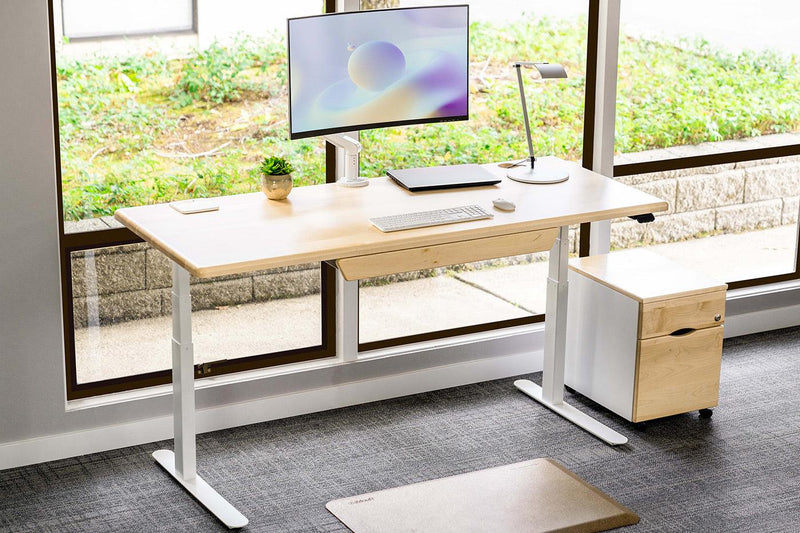
Choosing between a laptop and a desktop affects more than workflow and convenience.
It also has a huge impact on your posture, muscle strain, and long term comfort. Most people don’t think about ergonomics until discomfort shows up in subtle ways like shoulder tightness, wrist pain, or a stiff neck at the end of the day.
Your device choice naturally shapes how you sit, how you look at the screen, and how your body aligns for hours at a time. Understanding how each option affects posture helps you create a workspace that supports your health instead of harming it.
The Posture Problem With Laptops
Laptops are loved for portability, convenience, and minimal setup. But they are almost always a posture challenge because the screen and keyboard are attached. This forces you into a position where one of two things happens:
-
If you place the laptop where your hands feel comfortable, the screen is too low
-
If you raise the screen to eye level, the keyboard becomes too high
This creates what ergonomists call “the laptop trap,” where it’s impossible to maintain neutral posture without external adjustments.
Common posture issues with laptop use include:
-
A forward head position caused by looking down
-
Rounded shoulders from leaning in
-
Wrist extension when typing on elevated surfaces
-
Back strain from sitting without proper upper body support
-
Eye strain due to close viewing distance
Because laptops encourage you to hunch over naturally, long hours with them can lead to discomfort more quickly than desktops. This doesn’t mean laptops are unhealthy, but they require accessories and adjustments to become ergonomic.
The Natural Posture Advantage of Desktops
Desktops have a major structural advantage. The screen and keyboard are separate, so you can place each component at its ideal height. This alone dramatically improves posture.
When set up correctly, a desktop allows you to:
-
Position the top of the screen at or just below eye level
-
Keep the monitor at an arm’s length
-
Maintain elbows at a 90 degree angle
-
Keep shoulders relaxed
-
Rest feet flat on the floor
-
Sit with your spine in a neutral, supported position
A desktop does not push you into awkward bending or leaning positions. Instead, it creates an environment where your body naturally aligns. This makes it the more posture friendly option for long work sessions.
But desktops require thoughtful setup. A poorly arranged desktop can still cause discomfort if the monitor is too high, too far, or positioned off center. With the right adjustments, though, they are generally the superior ergonomic choice.
Looking at the Key Differences in How Each Affects Your Body
-
Screen height:
Laptops sit low, pulling your head downward
Desktops allow easy alignment with eye level
-
Keyboard positioning:
Laptop keyboards are cramped and shallow
Desktop keyboards can be placed at an ergonomic distance and height
-
Mouse usage:
Laptop trackpads force small wrist movements
Desktop mice allow larger, more natural arm movements
-
Viewing distance:
Laptops encourage close viewing
Desktops support proper distance that reduces eye strain
-
Portability:
Laptops allow work anywhere, including poor seating environments
Desktops keep you anchored to a setup that stays ergonomically consistent
These differences are important because small misalignments build up over time. The goal is to avoid repeating unhealthy positions for hours.
When Laptops Are Better for Posture and When They Are Not
Laptops can be posture friendly, but only when paired with the right tools. On their own, they limit your ergonomic options. With accessories, they become just as healthy as a desktop.
Laptops are better when:
-
You pair them with an external keyboard and mouse
-
You use a laptop stand or elevate the screen
-
You work at a stable desk, not a couch or bed
-
You adjust your chair height properly
-
You take breaks and change positions frequently
Laptops are not ideal when:
-
You work entirely from the built in keyboard
-
You use them on your lap for long periods
-
You work at cafés with poor seating
-
You hunch over while traveling
-
You frequently shift to awkward positions to see the screen clearly
If you rely on portability, the best solution is transforming your laptop into a desktop style station when you’re not on the go.
How to Make a Laptop Ergonomic
If a laptop is your main device, the goal is to break the screen and keyboard relationship by introducing external tools. This allows your body to stay aligned while still enjoying portability.
Simple ways to improve laptop posture:
-
Use a laptop stand to raise the screen
-
Connect an external keyboard
-
Add a wireless mouse
-
Keep the laptop at arm’s length instead of pulling it close
-
Adjust chair height so elbows stay level
-
Sit upright with your back supported
The biggest difference comes from elevating the laptop screen. A heavy duty, stable mount or stand helps you maintain a neutral neck position.
How to Make a Desktop Ergonomic
Even though desktops are naturally ergonomic, you still need correct alignment. A desktop that is too low or too far wastes the benefits.
For proper desktop posture:
-
Put the top of the monitor at or slightly below eye level
-
Keep the monitor an arm’s length away
-
Use a keyboard tray if your desk height doesn’t align with your elbows
-
Choose a mouse that fits your hand naturally
-
Use a chair with lumbar support
-
Keep the screen centered so you don’t twist
A great way to perfect monitor height is using an adjustable monitor arm. It helps you raise, lower, or tilt the screen based on your sitting or standing posture.
iMovR monitor arms are specifically designed for ergonomic positioning and stability, giving you the flexibility to fine tune your setup effortlessly.
The Role of Standing Desks in Fixing Posture Issues for Both Devices
Standing desks improve posture regardless of whether you use a laptop or desktop. They allow you to alternate your body position, reduce stiffness, and maintain better circulation.
Using a standing desk helps:
-
Keep your head and spine aligned
-
Reduce lower back compression
-
Prevent slouching from long sitting
-
Encourage more movement throughout the day
Whether you use a laptop stand or desktop monitor, pairing your setup with a sit to stand desk gives your posture better long term support. If you want a stable, quiet, and smooth lifting experience designed for ergonomics, explore iMovR’s standing desks.
They create a solid foundation for a healthier workstation and adapt easily to dual monitor arms, laptop mounts, and desktop configurations.
Which One Actually Wins for Posture
If we look strictly at ergonomics without accessories, desktops win easily. They naturally promote better posture because you can position each component correctly without compromise. Laptops, by comparison, require adjustments to avoid head and neck strain.
But with the right accessories, a laptop can become almost equally ergonomic. The key difference is that a desktop starts off posture friendly, while a laptop needs help to get there.
Best choice for posture in different situations:
-
For long hours at a desk: Desktop
-
For frequent movement or hybrid work: Laptop with external tools
-
For a mix of standing and sitting: Either device with a standing desk
-
For travel heavy work: Laptop with portable ergonomic accessories
The best option depends on what matches your lifestyle. You can always improve posture with the right setup, the right desk height, and the right accessories.
The Importance of Your Chair in the Posture Equation
Even the best screen setup fails if your chair works against you. A supportive, adjustable chair helps maintain neutral spine alignment while using either device.
Key things to look for:
-
Lumbar support
-
Adjustable height
-
A seat that allows your feet to rest flat
-
Armrests that support your elbows
-
A backrest that encourages an upright position
When working with a desktop, proper chair height becomes even more important because you want your forearms level with your keyboard. When working with a laptop, adjust so you are not lifting your shoulders or leaning forward excessively.
Creating a Posture Friendly Workspace No Matter What Device You Use
A posture friendly workspace is a combination of screen height, keyboard position, desk height, and consistent body alignment. Both laptop and desktop users benefit from tailoring each element.
Elements of a healthy setup include:
-
A stable surface with the correct height
-
A chair that supports your back and posture
-
Proper lighting to prevent leaning
-
A monitor or laptop screen at eye level
-
A keyboard positioned so arms stay at 90 degrees
Accessories that reduce strain on wrists and shoulders
For the most adaptable workstation, consider pairing your device with a height adjustable desk and ergonomic accessories.
iMovR offers complete ergonomic setups, including standing desks, monitor arms, keyboard trays, and cable management, allowing you to create a workstation that supports your posture through every workday.
Final Thoughts
Posture is not about sitting perfectly still. It’s about creating a workspace that helps your body maintain neutral alignment and encourages natural movement.
Desktops offer an inherent ergonomic advantage, but laptops can be made posture friendly with the right adjustments. The best choice depends on your working habits, desk environment, and comfort preferences.
Whether you upgrade with a standing desk, monitor arm, laptop mount, or ergonomic platform, small changes create long term comfort.
If you are ready to build a posture optimized setup that reduces strain and increases daily comfort, explore iMovR’s ergonomic desks and accessories designed to support healthier working habits and a more aligned workspace.