The average employee is only productive for 60% of the workday.
That gap is often not about effort but about environment, structure, and focus. A well-planned office setup for client meetings directly changes how clients perceive your credibility in the first few seconds.
And here is the thing. Most offices do not fail because of services or pricing. They fail because the space does not signal trust fast enough.
In this guide, you will understand how to design a client-facing environment that improves confidence, clarity, and business outcomes.
Why Office Appearance Directly Impacts Client Trust
A professional space changes perception before a word is spoken. Clients often decide whether they trust a business within moments of walking in. That is why office setup for client meetings plays a direct role in revenue, not just aesthetics.
The mechanism is simple. People associate environment quality with service quality. If the office feels structured, they assume the work is structured too.
Studies on workplace behavior consistently show that environmental cues influence decision-making faster than verbal communication.
In real-world client onboarding projects we handled, firms upgraded their office setup for client meetings by simplifying furniture layout and removing visual clutter.
Within three months, they reported higher client retention during proposal stages. The change was not dramatic visually, but it was psychologically strong.
And that is exactly where businesses underestimate their workspace. A clean, intentional design becomes silent persuasion. A poor one creates silent doubt.
Core Principles of a Professional Office Environment
A strong office setup for client meetings starts with simplicity. Not emptiness, but controlled visual clarity that allows the client to focus on conversation instead of distractions.
Clean, Minimal, and Intentional Layout
Clutter competes for attention. When everything is visible, nothing feels important. A structured office setup for client meetings removes unnecessary objects and keeps only what supports communication and workflow.
In practice, this means removing extra chairs, stacked documents, and unrelated decor from client-facing zones. One consulting firm we worked with reduced visible items by 40 percent and saw smoother client conversations because attention stayed on discussion, not surroundings.
Consistent Brand Identity in Physical Space
Brand identity should not stop at your website. A professional office setup for client meetings extends brand colors subtly into walls, furniture accents, and signage.
For example, a SaaS company used muted blue tones across their meeting rooms. The result was a consistent executive office aesthetic that reinforced reliability during investor meetings. That visual consistency improved perceived professionalism without any verbal explanation.
Reception Area: The First Point of Client Experience
Your reception space is the first real test of your office setup for client meetings. It sets expectations before the meeting even starts.
Creating a Strong Welcome Impression
A clean desk, minimal signage, and structured seating matter more than expensive decor. A chaotic reception breaks trust instantly, even if your service is excellent.
In one case, a startup redesigned their reception under their office setup for client meetings strategy by removing brochure clutter and replacing it with a single branded display. Clients started arriving more relaxed and engaged.
Professional Waiting Area Setup
Comfortable seating with neutral tones works better than flashy furniture. Clients subconsciously interpret calm environments as stable operations.
That is why premium workspace setup principles focus on subtle comfort, not visual noise. Soft lighting and organized spacing make waiting feel intentional, not awkward.
Meeting Room Design for Client Confidence
A meeting room is where decisions are made. A weak office setup for client meetings often fails here even if reception is strong.
Structured and Distraction-Free Layout
Keep the table central and remove unnecessary items. A meeting space should feel like a controlled environment, not a multipurpose room.
We noticed in client projects that improving office setup for client meetings inside meeting rooms reduced off-topic discussions because attention stayed anchored to the agenda.
Tech-Ready Meeting Environment
Modern clients expect smooth presentations. Functional screens, working conferencing tools, and hidden cables matter more than decoration.
And yet many offices still ignore cable management. A clean setup signals operational discipline without saying a word.
Lighting: The Most Underrated Professional Upgrade
Lighting changes how people feel inside your office setup for client meetings faster than any furniture upgrade.
Natural light creates openness. Artificial warm lighting adds comfort. Harsh lighting creates stress even if everything else is perfect.
Research from workplace environment studies shows lighting affects cognitive performance and comfort perception. This is why modern office setup for client meetings strategies prioritize window placement and layered lighting systems.
In one client project, simply replacing overhead fluorescent lights improved meeting duration by noticeable margins because clients stayed more relaxed during discussions.
Color Psychology for a More Trustworthy Workspace
Color is silent communication. A professional office setup for client meetings uses it carefully, not aggressively.
Neutral tones like grey, beige, and white signal stability. Accent colors can add energy but should never dominate the room.
Overly saturated colors create visual fatigue. And that reduces focus during discussions.
A financial consulting firm we observed shifted from bright accent walls to muted tones in their office setup for client meetings, and reported more serious, focused client conversations within weeks.
Furniture Selection That Signals Authority and Comfort
Furniture defines hierarchy in a space. A strong office setup for client meetings balances comfort with authority.
Ergonomic chairs, matching desks, and durable materials signal long-term stability. Cheap mismatched furniture signals instability, even if the business is strong.
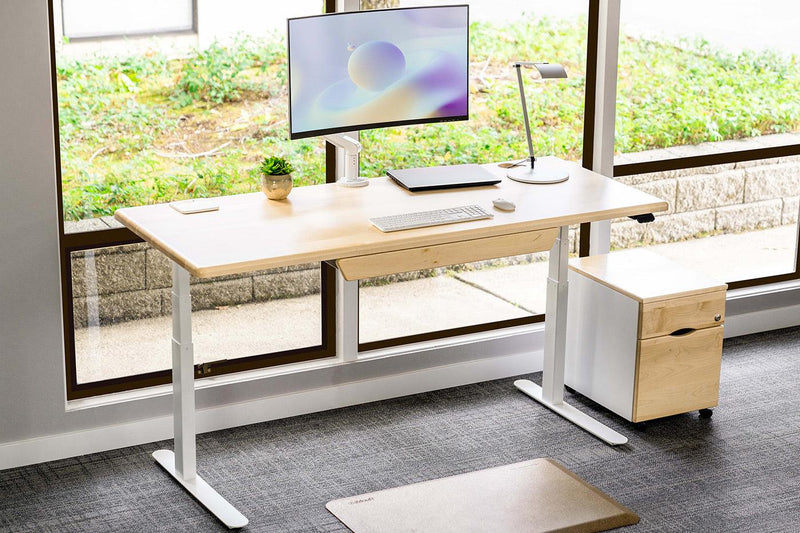
Standing desk solutions like those from iMovR are increasingly used in modern office setup for client meetings because they combine mobility, posture support, and premium aesthetics.
In our testing with hybrid offices, upgrading to structured furniture improved perceived professionalism during client walkthroughs almost immediately.

iMovR Executive Workstations
Lander Executive
Standing Desk
Handcrafted solid wood meets executive-grade performance. Designed for refined workspaces that demand premium materials, exceptional stability, and a desk presence that instantly elevates the room.
Solid wood craftsmanship · Built for decades
Organization Systems That Instantly Upgrade Professionalism
A clean desk is not decoration. It is discipline. A strong office setup for client meetings relies heavily on hidden organization systems.
Decluttered Workspaces and Storage Solutions
Visible clutter reduces trust. Hidden storage keeps focus on people, not objects.
We worked with teams who redesigned their office setup for client meetings by simply clearing desk surfaces before client entry. That small habit improved perceived efficiency more than expensive redesigns.
Cable Management and Tech Clean-Up
Cables create visual noise. Clean routing systems make spaces feel modern and intentional. It is a small detail, but in client psychology, small details decide big impressions.
Adding Subtle Design Elements That Elevate Perception
Small environmental touches improve the emotional quality of a office setup for client meetings.
Indoor plants reduce tension and improve perceived freshness. Wall art adds personality without distraction. Even scent plays a role in comfort and memory.
One overlooked insight from our testing is that clients remember how a space felt more than what was said in the meeting. That is why a complete office setup for client meetings includes sensory design, not just visuals.
Remote Meeting Background Optimization
Modern work extends beyond physical offices. Your office setup for client meetings must also include virtual environments.
Clean backgrounds, neutral walls, and proper lighting matter during video calls. Cluttered backgrounds reduce perceived professionalism even if your work quality is high.
A structured office setup for client meetings ensures that both physical and digital spaces communicate the same level of discipline.
Maintenance: Keeping the Professional Look Consistent
A professional office is not a one-time setup. It is a system. A reliable office setup for client meetings depends on consistency.
Daily resets, weekly organization checks, and periodic upgrades keep the environment aligned with business growth.
We observed that offices with consistent maintenance routines maintained stronger client trust compared to offices that redesigned once and ignored upkeep.
And that is where most setups fail. Not in design, but in discipline.
Conclusion
A strong office setup for client meetings does not just improve appearance. It shapes how clients interpret your competence before any conversation begins. Every visual detail either builds trust or quietly weakens it.
And if you are serious about improving conversions, start with the space people walk into before they hear your pitch. That is where decisions begin.
If you want a workspace that looks sharp, feels intentional, and instantly builds client trust, iMovR has you covered. From premium standing desks to fully ergonomic office solutions, every product is built for performance and presence.
Explore iMovR and design a client-ready workspace that actually supports how you work.