Standing for just three hours burns about 24 extra calories, roughly the same as eating a carrot.
That detail sounds small, but it hints at a bigger shift happening in home office design.But here's the thing: that tiny number actually points to something way bigger going on with how people are setting up home offices now.
People aren't looking for just any table to slap their computer on these days.
What they really want is a desk that keeps them from feeling totally wrecked by the end of the workday, fits into their room without looking stupid, and, here's the important part, doesn't become yet another thing collecting junk that they'll have to deal with later.
That's why this guide isn't just about which desk goes up and down, it's about finding something that actually works.
Why Choosing the Right Standing Desk Matters
Get the wrong standing desk and you'll feel it in your body way faster than you'd think. Crappy desks trap you in weird positions, your monitor's either too high or too low, and the whole thing wobbles when you're typing.
At first you think it's whatever, no big deal. Then three weeks in? Your neck's killing you. Wrists are sore. And forget about focusing on actual work when you're fidgeting around every five minutes trying to find a position that doesn't suck.
And aesthetics matter more than people admit. A desk that clashes with flooring, walls, or storage visually pollutes the room. That cluttered feeling does not stay visual.
It leaks into mental load and productivity. A well-proportioned standing desk for home office environments creates visual calm and physical alignment at the same time.
That is why desk choice is not about trends or price tags alone. It is about matching height range, surface material, and stability to your body and your space. When those align, the desk disappears into the workflow. And that is exactly what you want.
Benefits of Standing Desks for Long Work Hours
Having a standing desk at home breaks you out of sitting like a statue all day, which is basically what desk jobs force on you.
Park yourself in a chair for eight hours straight and your hips get compressed, hamstrings tighten up, and all that pressure dumps into your lower back.
Switch between sitting and standing throughout the day and you're spreading that stress around, keeping your joints moving instead of locked in one spot.
Long work hours also demand mental stamina. Standing periodically increases circulation and alertness, which supports sustained focus during deep work or long video calls. That does not mean standing all day. It means having a stand up desk for home office use that adjusts smoothly enough to encourage movement instead of discouraging it.
There is also the matter of space efficiency. Many modern standing desks for home office layouts integrate cable management and slimmer frames. That reduces floor clutter and keeps visual noise low, especially in multi-use rooms like bedrooms or living spaces.
Key Features to Consider
Height Adjustability
Can you adjust the height or not? That's literally the whole point. If the desk won't go low enough when you're sitting or high enough when you're standing,without making your shoulders hunch up or your wrists bend weird, then it's useless.
You need something that moves through a big range, especially if you're over six feet or if multiple people are gonna use it.
Motorized systems matter here. An electric standing desk with programmable controls removes friction from daily transitions. If changing height feels slow or unstable, people stop doing it. Smooth motors and precise increments make posture changes effortless, which is the entire point of owning a stand up desk for home office use.
Then there is monitor placement. The correct height range allows monitors to sit at eye level without risers. That keeps the desktop clean and preserves the desk’s visual design.
Stability and Durability
Stability separates premium desks from disposable ones. A desk that wobbles at standing height destroys confidence and focus.
Stability depends on frame geometry, motor synchronization, and weight capacity. A solid standing desk for home office setups should feel planted even with dual monitors and heavy desktop equipment.
Durability also ties directly to lifespan. High-quality steel frames, reinforced crossbars, and tested motors ensure the desk survives years of daily adjustments. Cheap desks often fail quietly. Motors slow down, controls misfire, and the frame loosens over time.
That is why evaluating stability upfront saves money and frustration later. A stable desk supports your equipment, posture, and peace of mind all at once.
Material Options
Look, standing desks exist for one reason: they stop you from turning into a pretzel at your chair. You sit there hunched over for a full workday and everything tightens up, hips, hamstrings, the works.
Your lower back ends up taking the brunt of it. But when you actually stand up for chunks of the day, you're not crushing the same body parts nonstop. Your joints get to move around different ways instead of staying frozen.
Bamboo looks nice, gives your setup some warmth instead of that cold tech vibe. Goes with modern rooms pretty well. Real wood tops look even better, sure, but they're fussy. You've got to baby them and watch out for humidity screwing them up.
The right material balances visual harmony with practical durability. A standing desk for home office use should complement the room rather than dominate it.
How We Evaluated the Best Standing Desks
Ergonomics and Comfort
Ergonomics begins with how the desk supports neutral posture. We evaluated desktop depth, edge comfort, and compatibility with common office chair heights. A desk that forces forward lean or cramped keyboard placement fails immediately.
Comfort also includes noise and vibration. Quiet motors matter during calls and focused work. Excess vibration travels through monitors and breaks concentration. The best standing desk for home office environments operates smoothly and silently.
We also considered long-session comfort. Rounded edges, adequate leg clearance, and consistent height positioning reduce micro-discomfort that accumulates over time.
Adjustability and Range of Motion
Adjustability is more than up and down movement. It is about how precisely the desk meets different tasks. Writing, typing, and video calls often require slightly different heights. A desk with memory presets encourages these subtle adjustments.
Range of motion matters for shared spaces. If multiple users rely on the same standing desk for home office tasks, the desk must adapt quickly. Narrow height ranges exclude users and force compromises.
Smooth transitions reinforce healthy habits. The easier it is to move, the more often people do it.
Build Quality and Durability
Build quality reveals itself in joints, welds, and finishes. We examined frame rigidity, motor housing, and desktop attachment systems. Loose tolerances lead to sway and long-term wear.
Durability also includes weight capacity. A modern office often includes multiple monitors, speakers, and accessories. A home office standing desk must handle that load without strain.
High build quality protects both the desk and the equipment it supports.
Ease of Assembly and Use
Assembly influences first impressions. Complex builds discourage careful setup and increase error risk. Clear instructions, labeled hardware, and logical steps matter.
Ease of use continues after assembly. Intuitive controls, responsive buttons, and readable displays reduce friction. A standing desk for home office use should feel straightforward from day one.
If a desk demands constant adjustment or troubleshooting, it interrupts work rather than supporting it.
Warranty and Support
Warranty reflects manufacturer confidence. Longer warranties usually indicate tested motors and frames. Support responsiveness matters when issues arise.
A standing desk is a long-term investment. Access to replacement parts and knowledgeable support extends its usable life.
Strong warranty coverage reduces risk and increases buyer confidence.
The Benefits of Using a Standing Desk
Improved Posture and Health
Standing desks for home office use encourage spinal alignment when set correctly. Alternating posture reduces prolonged spinal compression and hip flexion. That supports healthier movement patterns throughout the day.
Better posture also improves breathing mechanics. Upright positions allow fuller lung expansion, which supports focus and energy.
These benefits compound gradually. Consistent posture changes create noticeable comfort improvements over months.
Enhanced Calorie Burn
You burn a few extra calories standing versus sitting. Over weeks and months that adds up to, something. Don't fool yourself though, this isn't exercise. It just means you're not completely motionless all day.
More importantly, standing encourages micro-movements. Weight shifting and light motion keep muscles engaged.
That steady activity supports metabolic health without disrupting workflow.
iMovR P1 Elite Plus: Allrounder Premium Quality
The iMovR P1 Elite Plus stands out as a balanced solution for demanding home office builders. Its industrial-grade frame delivers exceptional stability even at maximum height. That stability matters for users running heavy monitor setups.
Design-wise, the desk integrates clean lines and refined finishes that fit modern interiors. It avoids the bulky, mechanical look common in cheaper desks.
For users prioritizing reliability, ergonomics, and visual cohesion, this desk delivers across all categories.
Uplift V3: Versatility for All Users
The Uplift V3 appeals to users who want flexibility. Its broad height range makes it suitable for tall individuals and shared home office setups. That inclusivity reduces compromise.
Customization options allow users to tailor desktop size and finish. This helps align the desk with room dimensions and visual preferences.
Easy height adjustment and responsive controls make daily transitions seamless, encouraging consistent posture changes.
Branch Duo: Compact Design for Small Spaces
The Branch Duo targets smaller home offices where space efficiency matters. Its compact footprint fits apartments and multi-use rooms without overwhelming them.
The sleek aesthetic integrates well with contemporary interiors. Clean surfaces and minimal hardware reduce visual clutter.
For limited workspaces, this desk balances function and form effectively.
Vernal Desk: Unmatched Stability
Vernal focuses on structural rigidity. The desk’s rock-solid construction eliminates sway, even at standing height. That stability supports confidence during focused work.
Customization options allow users to select finishes that match their environment. This flexibility helps maintain aesthetic cohesion.
For users prioritizing stability above all else, Vernal delivers consistent performance.
VariDesk: Ergonomic Excellence
VariDesk emphasizes quick transitions. Its mechanism allows rapid switching between sitting and standing without complex controls.
The space-efficient design suits users who want standing benefits without full desk replacement.
Executive and L-shaped styles adapt well to professional home office setups that demand surface area and organization.
Maximizing Workspace Efficiency
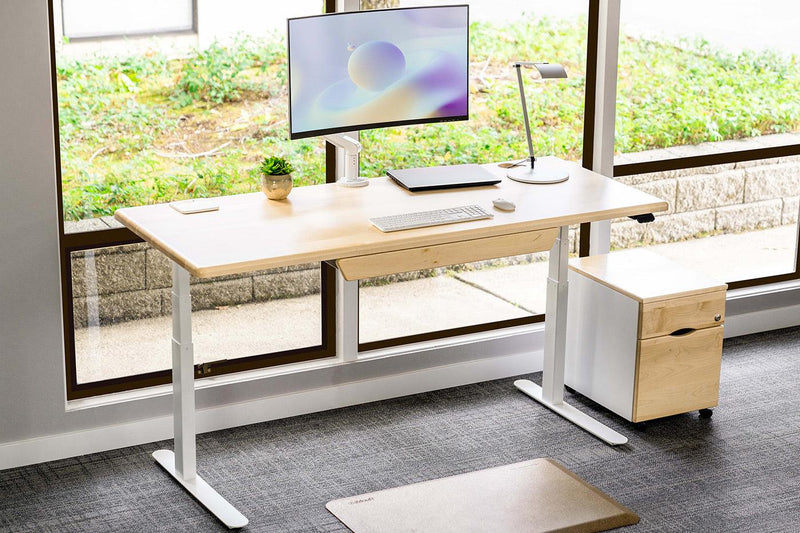
A standing desk for home office use works best when paired with thoughtful layout. Monitor arms free up desktop space and support ergonomic alignment. Cable management systems reduce visual noise and prevent tangling.
Lighting also matters. Adjustable task lighting complements posture changes and reduces eye strain.
Efficiency comes from integration. The desk should anchor the workspace, not compete with it.
Assembly and Maintenance Considerations
Ease of Assembly
Straightforward assembly saves time and reduces frustration. Well-designed desks include clear instructions and pre-drilled components.
Proper assembly ensures long-term stability. Skipping steps or overtightening hardware compromises performance.
Taking time during setup pays dividends in daily use.
Lifespan and Durability
Routine maintenance extends desk life. Periodic hardware checks and cable inspections prevent issues.
Quality desks withstand years of daily adjustments. Investing upfront reduces replacement costs later.
Durability protects both productivity and budget.
FAQs
How do you reset a standing desk?
Unplug the desk for 20–30 seconds, plug it back in, then hold the down button until it reaches the lowest position and resets.
How long will a standing desk last?
A high-quality electric standing desk typically lasts 10–15 years with regular use and proper maintenance.
What are the benefits of using a standing desk?
Standing desks help reduce back pain, improve posture, boost energy levels, and support better productivity.
Is standing at your desk healthier than sitting?
Yes, alternating between sitting and standing is healthier than sitting all day, improving circulation and reducing strain.
Finding Your Perfect Standing Desk
The best standing desk for home office environments aligns body mechanics, room design, and daily workflow. Stability, height range, and material choice define long-term satisfaction.
When those elements work together, the desk becomes invisible. Work feels easier, posture improves, and the space finally feels intentional.
Upgrade your workspace with a standing desk for home office from iMovR, designed for better posture, higher productivity, and all-day comfort. Explore iMovR’s premium standing desks today and build a healthier way to work from home.