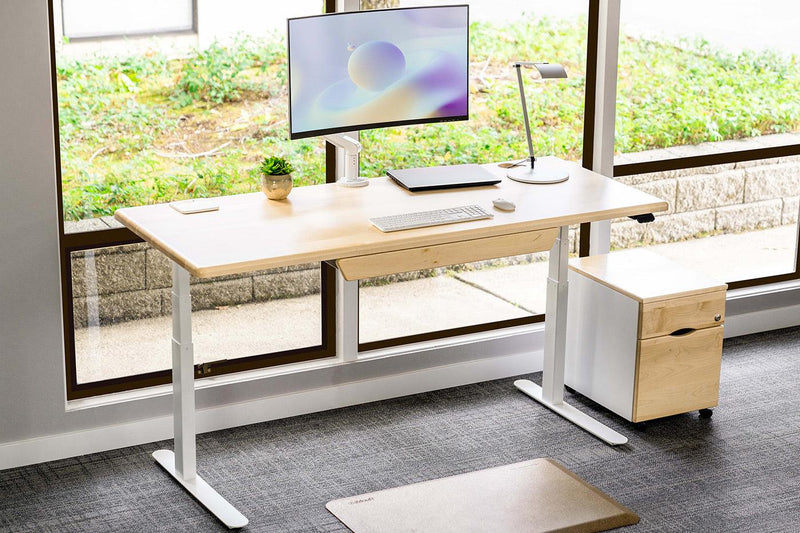
Your desk can do more than hold your computer.
Set it right, and it becomes a tool for comfort, focus, and energy.
Stand smart, move naturally, and glide through your workday, whether at home or in the office. Wrong setup causes tension and fatigue, but a properly arranged standing desk keeps posture aligned, wrists safe, and your body energized.
This guide shows you how to optimize your desk, adjust your position, and create a workspace that works with your body, not against it.
Why Standing Desk Ergonomics Matter
Ergonomic office desk beat trendy labels. They hand you control over comfort and output.
Sit too long and your spine flattens. Hip flexors knot. Shoulders cave. Energy tanks.
Stand smart and the damage reverses. Align the body. Support every joint. Work flows.
Then again, stand wrong and pain creeps in just like a bad chair slump. That is why solid ergonomics rules every inch of the setup.
Benefits of Using a Standing Desk
Burn More Calories
Stand smarter, not harder:
-
Standing beats sitting. Burns 88 calories per hour versus 80 seated.
-
Small gap. Big payoff over weeks.
-
Calories are not the point. Micro-movements are.
-
Shift weight. Pace on calls. Lean in while typing. Muscles stay loose. Blood flows.
-
Adjustable desks like the iMovR P1 Elite keep motion natural all day.
Boost Energy Levels
Long hours in a chair make you sluggish. Circulation slows. Oxygen delivery drops. And then you feel tired before lunch.
Standing improves blood flow. Employees using ergonomic standing desks reported a 45 percent increase in energy and focus.
So yes, standing does not replace coffee. But it makes everything else more effective. You stay engaged, and your mind does not wander as much.
Posture Improvements
Posture is more than how you sit or stand. It is alignment. Standing desks improve posture, but only if you adjust them properly.
Here is the posture that works:
-
Shoulders relaxed
-
Elbows at 90 degrees
-
Wrists straight
-
Eyes aligned with the top third of the monitor
And that alignment prevents chronic tension in your neck, shoulders, and back. It is simple, but powerful.
Reduce Back Pain
Back pain is the top complaint among office workers. Standing desks reduce disc compression in your spine. But it is not just standing that matters—it is alternating positions.
The CDC says alternate sit and stand every half hour. Back pain drops up to 54 percent. Hard numbers. Real relief.
Desks like the iMovR Lander glide up or down in seconds. No pause in your flow. Tap the button. Keep typing. Position changes. Pain fades.
Enhance Wrist Comfort
Typing all day can wreck wrists. Straight wrists fix it.
Drop keyboard and mouse to elbow level. Tuck arms against your sides. Strain hits when you reach or bend.
Electric height-adjustable desks like the P1 Elite let you dial in exact height. One touch. Wrists stay safe through long shifts.
Better Circulation
Sitting for long hours restricts blood flow. That is why legs swell, and feet get tired. Standing improves circulation naturally.
Shift your weight. Flex your ankles. And stand on an anti-fatigue mat. These subtle movements keep muscles engaged and blood moving. You might not notice it at first, but after a few weeks, your legs will thank you.
Improved Mood and Focus
Movement wakes your brain. Stand and dopamine surges. Serotonin climbs. Mood lifts. Focus sharpens.
Workers at standing desks stay engaged. Output rises.
And that is exactly why standing desk ergonomics matter. Not just comfort. Smarter work. Steady energy. Razor focus.
4 Standing Desk Adjustments to Reduce Pain
Find the Right Desk Height
Start with elbows bent at 90 degrees. Set the desk to match. Too high and shoulders lock. Too low and you slump.
Next, eye the monitor. Top edge hits eye level. Multiple screens go side by side. No neck twist.
Adjustable desks rule here. Dial sitting height. Dial standing height. Switch smooth. Posture stays solid all day.
Use Anti-Fatigue Mats
Standing on a hard floor tires your legs fast. Anti-fatigue mats reduce joint stress and promote subtle movements.
The right mat encourages you to shift weight naturally. That keeps muscles active and reduces fatigue. And that is exactly why mats are essential for long-term standing desk use.
Optimize Wrist and Eye Position
Wrists should stay straight. Keyboard and mouse close. Eyes should meet the top third of the monitor.
Monitor arms help fine-tune positioning. Even small adjustments make a huge difference over hours of work.
Avoid Common Mistakes
Even with a good desk, habits matter. Watch for:
-
Standing too long without breaks
-
Locking knees
-
Monitor too low or too high
-
Poor footwear
-
Ignoring micro-movements
Fixing these prevents fatigue, strain, and frustration.
Transitioning Between Sitting and Standing
Do not stand all day right away. Begin with 15 to 20 minutes each hour. Build up slowly. Pay attention to your body.
Soreness happens. Pain signals trouble. Tweak height. Fix posture. Sit when needed.
Alternate positions. That balance keeps muscles alive. Blood moves. Energy holds steady.
5 MUST HAVE Accessories to Improve Comfort
Ergonomic standing desk for programmers need to be more than a desk. Accessories matter.
-
Anti-fatigue mats: relieve feet and legs
-
Monitor arms: optimize screen height
-
Keyboard trays: protect wrists
-
Cable management trays: keep workspace tidy
-
Ergonomic chairs: support seated intervals
Small adjustments create a big difference. They help your body stay aligned, reduce strain, and improve focus.
Customizing for Your Height
Every body is different. Desk height should match your proportions.
-
Under 5'5": desk 36–38 inches
-
5'6"–6'0": desk 39–42 inches
-
Over 6'1": desk 43–47 inches
Adjust until elbows are at 90 degrees and eyes meet monitor top. That is how ergonomic standing desk setup works for real people.
The Science Behind Ergonomics
Studies confirm the benefits:
-
Improved posture
-
Less neck and back pain
-
Better circulation
-
Increased energy and focus
But movement is the real driver. Standing alone does not solve everything. Ergonomic setups encourage movement naturally. That is why they matter.
Creating a Routine That Works
Consistency matters more than fancy setups.
-
Set timers to switch positions
-
Hydrate regularly
-
Stretch during calls
-
Track standing vs. sitting time
Habit builds adaptation. And then working feels easier, more natural, and more productive.
When to Adjust Your Setup
Your body changes. Work habits change. Check posture regularly. Neck tension? Shoulder fatigue? Wrist strain?
Adjust desk height, monitor angle, or footwear. Small tweaks prevent bigger problems down the road.
Debunking Standing Desk Myths
-
Standing all day is healthy: false. Movement matters.
-
Any desk is ergonomic: false. Only correct setup works.
-
Chairs are unnecessary: false. Proper sitting still matters.
Balance is key. Not extremes.
Conclusion: Build Your Ideal Workspace
Standing desk ergonomics are not a trend. They are a smarter way to work. Proper alignment, movement, and setup reduce pain, boost energy, and improve focus.
iMovR desks combine precision, durability, and ergonomic design. From electric adjustable desks to mats and accessories, every tool helps you stay comfortable and productive.
Upgrade your workspace today with iMovR. Stand taller, work smarter, and feel the difference.
Explore iMovR’s collection for adjustable desks, ergonomic accessories, and guides to set up your perfect standing desk.
FAQs
Are height-adjustable standing desks worth it?
Yes, they allow switching between sitting and standing, which helps reduce the risks associated with long periods of sitting (like poor circulation and back strain). However, they’re not a magic fix, you still need to move, stretch, and maintain good ergonomics.
What should I consider when buying height-adjustable standing desks?
Look at the height range (so it suits both your sitting and standing posture), weight capacity, stability at full height, and how smooth/quiet the mechanism is. Also take into account how it fits your workspace (size, layout, cable management) and whether it supports good ergonomics (monitor height, keyboard angle).
Is the height-adjustable standing desk stable at all height levels?
Many good desks are stable when configured properly, but stability can vary especially at higher heights or if the desk has a heavy load or light build. To ensure stability: check for a solid base/frame (especially for tall setups), and use appropriate top size/load so it doesn’t wobble.
Are height-adjustable standing desks better for your health compared to traditional sitting desks?
They offer health advantages when used properly: improved circulation, reduced back/neck strain, and decreased sedentary time. But simply standing all day isn’t ideal either. Mixing sitting and standing with movement is key.
How should a sit/stand desk be set up?
Adjust the desk so your elbows are around 90° when typing and your monitor is at or slightly below eye level. Alternate between sitting and standing in comfortable intervals, use a supportive chair and footwear, and move frequently (stretch, walk etc.).
How long should a person sit or stand?
A good rule: alternate every 30-60 minutes between sitting and standing to avoid fatigue and maintain circulation. Avoid sitting or standing for extremely long periods without movement, both extremes have risks.