Do you ever stand up after a long stretch of work and realize your neck, shoulders, or back feel unusually tight?
That reaction is common.
According to the Mayo Clinic, sitting for extended periods is associated with muscle stiffness, poor posture, and increased discomfort in the back and neck.
Many office workers spend most of the day in one position, which gradually places stress on the spine, shoulders, and surrounding muscles.
But there is a simple way to counter those effects without leaving your workspace.
Regular desk stretches help loosen tight muscles, encourage circulation, and give the body a short reset during the day. These movements take only a few minutes and can be performed directly at your desk without equipment.
In this guide, you will learn practical desk stretches that fit naturally into a workday.
Practicing them consistently can help reduce tension, support better posture, and keep the body more comfortable during long hours at the office.
Why Desk Stretches Are Essential for Office Workers
Many people spend six to ten hours sitting at desks each day. Over time, this habit affects nearly every part of the body, from the neck and shoulders to the hips and lower back.
And the human body simply was not designed for that level of inactivity.
When a person remains seated for extended periods, the muscles around the spine tighten while others weaken. The hip flexors shorten. The upper back becomes rounded. Blood circulation slows in the legs and feet.
Regular desk stretches interrupt this cycle. They restore movement to joints and reduce tension in overworked muscles. Even short sessions of stretching during the workday help improve posture and reduce fatigue.
So small movement breaks matter more than many people realize.
Workplace ergonomics also plays a major role. Adjustable desks that allow sitting and standing throughout the day help reduce static posture.
Then there is productivity. Studies suggest that movement breaks improve focus and energy levels during long work sessions. So the equation becomes simple.
Movement supports posture. Posture supports comfort. And comfort supports productivity. That is why consistent stretches for desk workers should be part of every workday routine.
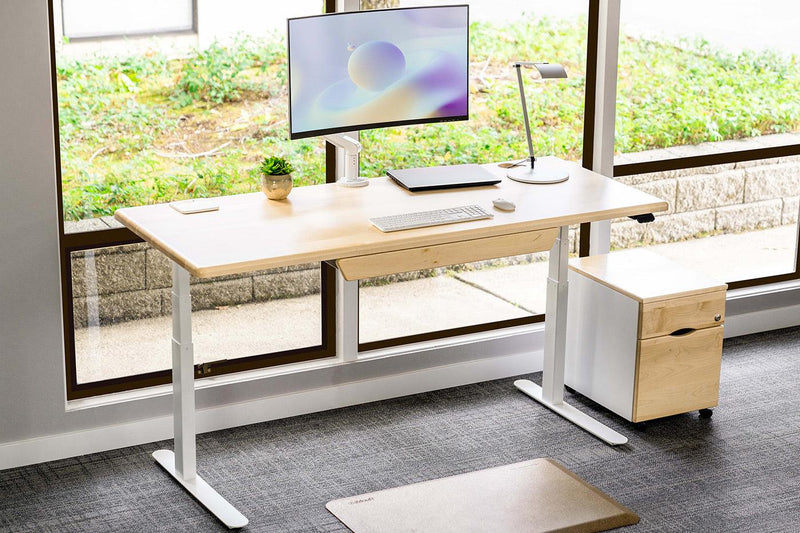
A workstation such as the P1 Elite Plus Standing Desk by iMovR can make it easier to add stretching breaks into a normal office routine.
Seated Desk Stretches for Neck and Shoulder Tension
Neck and shoulder discomfort remains one of the most common complaints among office workers. Hours of screen time encourage forward head posture and rounded shoulders.
And this creates pressure on the cervical spine and surrounding muscles.
Performing targeted desk stretches can reduce stiffness and restore mobility to these areas. These movements focus on relaxing tight muscles in the neck, shoulders, and upper back.
They are simple, safe, and effective when performed several times throughout the day.
Seated Neck Side Stretch for Stiffness Relief
This movement gently lengthens tight neck muscles that develop during long hours of screen use.
Sit upright with the spine neutral and shoulders relaxed. Slowly tilt the head toward one shoulder until a gentle stretch appears along the opposite side of the neck.
Hold for 15 to 20 seconds while breathing deeply. Then switch sides.
This simple movement is one of the most effective neck stretches for relieving tension around the cervical spine. Performing it several times daily helps prevent stiffness and improve posture alignment.
And it takes less than a minute.
Chin Tucks to Correct Forward Head Posture
Forward head posture occurs when the head drifts ahead of the shoulders during computer use.
Over time, this places stress on the neck and upper back.
Chin tucks help restore proper alignment. Sit upright and gently pull the chin backward while keeping the gaze forward.
Hold briefly, then release.
This movement strengthens deep neck muscles and reduces pressure on the spine. Regular practice alongside other desk stretches improves posture and prevents chronic tension.
Shoulder Rolls to Release Upper Trap Tightness
Shoulder tension builds quickly when typing and using a mouse.
To perform this movement, sit upright and slowly roll both shoulders backward in a circular motion. Focus on smooth movement rather than speed.
Repeat for ten slow rotations.
Shoulder rolls help relax the trapezius muscles and increase blood flow to the upper body. They are among the simplest stretches at your desk, yet they make a noticeable difference in comfort.
Seated Upper Trapezius Stretch
The trapezius muscle supports the head and neck but often becomes tight during long work sessions.
Sit tall and place one hand behind your back. Use the opposite hand to gently guide the head toward the side.
A gentle stretch should appear along the side of the neck and shoulder.
Hold for 20 seconds and switch sides. Combined with other desk stretches, this movement helps release upper-body tension that accumulates during computer work.
Wrist and Arm Stretches to Prevent Typing Fatigue
Typing, scrolling, and mouse use place continuous strain on the wrists and forearms.
And over time, this repetitive motion can contribute to discomfort or repetitive strain injuries.
Adding desk stretches for the arms and wrists helps counteract that strain. These movements improve mobility, reduce tension, and increase circulation through the forearms.
Wrist Flexor Stretch for Keyboard Strain
Extend one arm forward with the palm facing upward. Use the opposite hand to gently pull the fingers downward toward the floor.
A stretch should appear along the inner forearm. Hold the position for 15 seconds before switching arms.
This stretch helps relieve tension created by prolonged keyboard use and supports healthy muscle function in the forearms.
Wrist Extensor Stretch to Reduce Forearm Tightness
Now extend the arm forward again, but turn the palm downward.
Gently pull the fingers toward the body using the opposite hand.
This movement stretches the outer forearm muscles that remain active during typing and mouse use. Practicing it throughout the day keeps forearm muscles relaxed and supports effective desk stretches for office workers.
Overhead Triceps Stretch at Your Desk
Raise one arm overhead and bend the elbow so the hand rests behind the head.
Use the opposite hand to gently press the elbow backward. The stretch should appear along the back of the upper arm and shoulder.
This movement lengthens the triceps while opening the chest and shoulders. It also improves circulation in the upper body during long office work sessions.
Seated Arm Circles to Improve Blood Flow
Sit upright with arms extended out to the sides. Slowly rotate the arms in small circles for ten repetitions, then reverse direction.
This movement activates the shoulder joints and increases blood flow throughout the upper body.
And yes, it counts among the most effective desk stretches because it keeps muscles active without requiring you to leave your workstation.
Desk Stretches to Fix Rounded Shoulders and Tight Chest
Rounded shoulders appear frequently in people who spend long hours at computers.
The chest muscles tighten while the upper back weakens. Over time, this posture places stress on the spine, shoulders, and neck.
Regular desk stretches targeting the chest and upper back help restore balance. These movements open the chest and strengthen posture-supporting muscles.
Seated Chest Opener with Interlaced Fingers
Sit upright and clasp your hands behind your back. Gently straighten the arms while lifting the chest forward.
A stretch should appear across the chest and shoulders. Hold for 20 seconds while maintaining a tall posture. This stretch reverses the forward rounding created by computer work.
Doorway Chest Stretch (Office Variation)
Stand beside a doorway or tall partition. Place the forearm against the frame while rotating the body slightly away from the arm.
This movement stretches the chest muscles that tighten during desk work. Practicing it regularly complements other desk stretches designed to correct posture.
Seated Upper Back Stretch (Clasp-and-Reach)
Clasp the hands in front of the body and extend the arms forward. Round the upper back gently while pushing the hands away from the torso.
The stretch targets the muscles between the shoulder blades. These muscles support the spine and play a key role in maintaining upright posture.
Lower Back and Spine Stretches You Can Do in a Chair
Lower back discomfort often develops when the spine remains in one seated position for too long. Static posture compresses spinal discs and tightens surrounding muscles.
That is where targeted desk stretches become useful.
Seated Spinal Twist for Mid-Back Mobility
Sit tall in a chair with feet flat on the floor. Rotate the torso gently toward one side while holding the back of the chair for support.
Hold for 15 seconds, then switch sides. This stretch improves mobility in the middle section of the spine and relieves tension in the lower back.
Forward Fold Stretch for Lower Back Relief
Sit upright with feet flat. Slowly hinge forward from the hips and allow the torso to rest over the thighs.
Let the arms hang toward the floor and relax the neck.
This movement stretches the lower back muscles and decompresses the spine. It remains one of the most effective desk stretches for relieving stiffness.
Seated Cat-Cow Stretch for Spinal Flexibility
Place your hands on your knees while sitting tall. Arch the back and lift the chest slightly while inhaling.
Then round the back and drop the chin toward the chest while exhaling.
This movement mimics the yoga cat-cow sequence and improves spinal flexibility during long office sessions.
Hip and Glute Stretches for Tight Desk-Bound Muscles
Extended sitting shortens the hip flexors and weakens the glute muscles.
And tight hips often contribute to lower back discomfort and poor posture. Adding hip-focused desk stretches helps restore mobility and reduce strain throughout the lower body.
Seated Figure-4 Stretch for Piriformis Tightness
Place one ankle across the opposite knee while sitting. Gently lean forward while keeping the back straight.
A stretch should appear in the outer hip and glute region. This movement reduces tension in the piriformis muscle and improves hip mobility.
Seated Hip Flexor Stretch Variation
Sit at the edge of the chair. Extend one leg behind slightly while keeping the other foot flat.
Lean forward gently to feel a stretch along the front of the hip.
This stretch counteracts the hip shortening caused by prolonged sitting and complements daily desk stretches.
Knee-to-Chest Stretch for Lower Back and Glutes
While seated, bring one knee toward the chest and hold it with both hands. Maintain a tall spine while holding the stretch for several seconds.
This movement relaxes the glutes and lower back muscles while encouraging gentle spinal mobility.
Leg and Calf Stretches to Improve Circulation at Work
Long hours of sitting can slow circulation in the legs and feet.
Blood tends to pool in the lower body, which can lead to swelling around the ankles and heels.
Regular desk stretches targeting the legs help restore circulation and activate muscles that remain inactive while seated.
-
Seated leg extension holds
-
Standing quad stretch beside the desk
-
Calf raises for circulation
-
Ankle circles for mobility
Seated Leg Extension Stretch
Sit upright and extend one leg forward until it becomes straight. Flex the toes upward toward the body.
Hold the stretch briefly before lowering the leg. This movement activates the quadriceps and improves circulation throughout the lower limbs.
Standing Quad Stretch Beside Your Desk
Stand beside the desk and bend one leg backward. Hold the ankle behind the body while keeping the knee pointing downward.
This stretch lengthens the quadriceps muscles that tighten during prolonged sitting.
Calf Raises to Boost Circulation
Stand upright behind the desk. Slowly lift the heels off the floor and rise onto the toes.
Lower slowly and repeat several times. This simple movement activates the calf muscles and encourages blood flow back toward the heart.
Ankle Circles to Reduce Swelling
While seated, lift one foot slightly off the floor. Rotate the ankle in slow circles.
Then reverse direction. Ankle mobility exercises improve circulation and reduce stiffness in the feet and ankles during long work sessions.
5-Minute Desk Stretch Routine You Can Follow Daily
Many workers struggle to remember individual stretches throughout the day. A structured routine simplifies the process.
This short sequence combines several desk stretches into a five-minute routine that supports posture and energy levels.
Morning Desk Stretch Sequence
Start the workday by preparing the body for movement.
Perform these stretches after sitting down at your workstation.
-
Neck side stretch
-
Shoulder rolls
-
Chest opener
-
Seated spinal twist
These movements wake up the muscles and encourage better posture before the workday begins.
Using an adjustable workstation like the Lander Lite Standing Desk makes it easier to alternate between sitting and standing while performing these stretches.
Midday Reset Routine for Energy and Focus
After several hours of work, the body benefits from a reset.
Perform these desk stretches around midday.
-
Wrist flexor stretch
-
Wrist extensor stretch
-
Figure-4 hip stretch
-
Seated leg extension
This short routine restores circulation and helps reduce fatigue.
End-of-Day Stretches to Reduce Stiffness
At the end of the workday, focus on relaxing tight muscles.
Perform slower stretching movements to release tension.
Include:
-
Forward fold stretch
-
Upper trapezius stretch
-
Calf raises
-
Ankle circles
These movements help the body transition away from hours of sitting.
For additional ergonomic strategies, the iMovR blog provides helpful guidance on workstation health and posture optimization.
Desk Stretch Safety Tips to Avoid Injury
Although desk stretches are simple, performing them correctly helps prevent strain.
Many people rush through stretches without paying attention to alignment or breathing.
And that can reduce effectiveness.
Follow these safety guidelines when practicing desk stretches:
-
Move slowly and deliberately
-
Avoid bouncing during stretches
-
Stop if sharp pain appears
-
Maintain neutral spine alignment
-
Breathe steadily during stretching
Short breaks every 30 to 60 minutes also support muscle recovery. Even standing briefly beside the desk can relieve pressure on the spine.
Workstation ergonomics also plays a role in injury prevention. Adjustable desks and ergonomic seating encourage posture changes throughout the day.
If your workspace allows it, performing desk stretches beside an adjustable workstation such as the Q Desk Standing Desk can help reduce stiffness throughout the day.
Conclusion
Long hours at a desk gradually place pressure on the neck, shoulders, spine, and hips. Over time, limited movement can lead to stiffness, muscle fatigue, and poor posture during the workday.
This is why regular desk stretches matter. Taking a few minutes to stretch during the day helps release tension, improve circulation, and keep your muscles active even during long periods of sitting. These small breaks support better posture and help the body stay comfortable and energized.
Creating a workspace that supports movement can make these habits easier to maintain. Ergonomic solutions from iMovR are designed to encourage healthier desk stretches and make it easier to stay active throughout the day.
Start adding desk stretches to your daily routine and give your body the movement it needs to stay strong, flexible, and ready for the next task.
FAQs
What Stretches Can I Do While Sitting at my Desk?
Several simple desk stretches work well while seated, including neck stretches, shoulder rolls, seated spinal twists, wrist stretches, and leg extensions to reduce stiffness.
Can Sitting at a Desk All Day Cause Neck Pain?
Yes. Long hours of sitting can strain the neck muscles and spine. Regular desk stretches and good posture help reduce tension and prevent discomfort.
How Often Should I Do Desk Stretches at Work?
It is best to do desk stretches every 30–60 minutes. Even a quick stretch helps reduce stiffness, loosen tight muscles, and keep you feeling more comfortable during long hours of sitting.
Can Desk Stretches Really Help Me Feel Less Tired?
Yes. Doing desk stretches during the day relaxes your muscles, improves blood flow, and can make you feel more awake and focused while working.