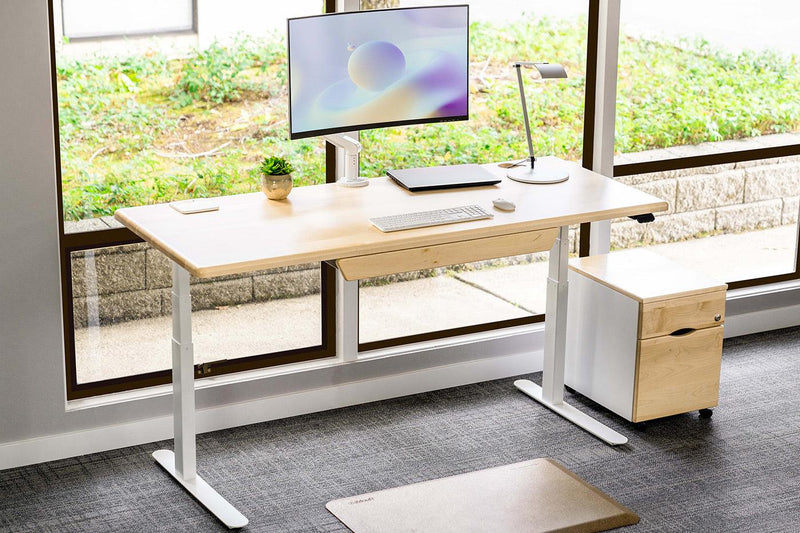
How big should a desk actually be to support a productive workspace?
According to the Occupational Safety and Health Administration (OSHA), poor workstation design can contribute to musculoskeletal strain and reduced productivity. Desk dimensions and monitor placement play a direct role in posture and comfort.
That is where the ideal desk size becomes important. The right desk size supports equipment, improves ergonomics, and keeps your workspace organized.
This guide explains how to choose the correct dimensions for a custom desk so your home office performs as well as it looks.
What Is the Ideal Desk Size?
The ideal desk size depends on how you work, the equipment you use, and the amount of space available in your room. A desk designed for writing requires far less surface area than one built for multiple monitors or design equipment.
Standard Desk Dimensions for Most Offices
Most office desks follow a rectangular shape because it fits against walls and allows efficient use of workspace. Typical office desk dimensions range from 48 to 72 inches wide and 24 to 36 inches deep. These measurements support a monitor, keyboard, and basic office accessories.
Why Workflow Changes the Ideal Desk Dimensions
The ideal dimensions change depending on the workflow. A laptop user needs minimal surface space.
A software developer or financial analyst often requires multiple screens and extra cable management solutions. That difference changes the ideal desk size dramatically.
Material and Adjustability Also Influence Desk Choice
Material also influences the decision. Solid wood or laminated desks offer durability, while modern standing desks integrate height adjustability for better ergonomics.
And that is exactly why custom desks work so well. They allow you to choose dimensions, materials, and layout based on how you actually work.
 Hover to explore
Custom Standing Desks
Hover to explore
Custom Standing Desks
iMovR Custom Desks
Built exactly the way you want it
Choose your size, finish, frame color, and features. Every desk is made to order — no compromises.
Starting from $1000
Build Your DeskIdeal Desk Width for Different Work Setups
Desk width determines how much equipment fits comfortably on the surface. Too narrow, and your keyboard competes with your monitor stand. Too wide and you waste valuable room space.
So the goal is simple. Find the width that matches your equipment and workflow. That measurement becomes a core factor in determining the ideal desk size.
Below are the most common setups and the desk widths that work best for each.
Minimum Desk Width for Laptop Users
Laptop-only workstations need the least desk space. Most users work with minimal accessories and depend on cloud storage instead of physical documents.
A desk width between 30 and 40 inches usually provides enough surface area for a laptop, mouse, and notebook. This range often represents the smallest practical ideal desk size for basic tasks.
But posture still matters. External keyboards or monitor risers help reduce neck strain and improve ergonomics. These additions may require slightly more desk width.
Home office builders often choose compact desks when space is limited. Smaller desks fit bedrooms or apartments while still creating an organized workspace.
Ideal Desk Width for Single Monitor Setups
Recommended Width for a Single Monitor Desk
A single monitor workstation represents one of the most common desk configurations in modern offices. Programmers, marketers, students, and writers frequently work with one central screen and a keyboard.
For this setup, the ideal computer desk size generally falls between 40 and 55 inches wide. This width provides room for the monitor, keyboard, and accessories like speakers or a desk lamp.
Desk Depth Matters Alongside Width
Depth also plays a role here. A monitor requires distance from the eyes for comfortable viewing. Most experts recommend placing the monitor roughly 20 to 30 inches from the user, depending on screen size.
That spacing makes desk depth important. A deeper desk allows the monitor to sit farther away without crowding the keyboard area.
So when designing a custom desk, width and depth must work together. That combination determines whether your workspace feels comfortable or cramped.
Recommended Desk Width for Dual Monitor Setups
Why Dual Monitors Require More Desk Space
Dual monitor setups have become common in both professional offices and home workspaces. They help users compare documents, track data, and multitask more efficiently.
But two screens require significantly more surface space. A desk that feels comfortable with one monitor can become cluttered quickly when another screen appears.
Ideal Width for Two-Monitor Workstations
For most users, the ideal desk size for dual monitors includes 55 to 70 inches of desk width. This allows monitors to sit side by side with space for speakers, accessories, or document holders.
Cable management also becomes critical here. Multiple monitors introduce additional power cords, display cables, and adapters. A well-designed desk includes integrated cable routing to keep the workspace clean.
These desks allow builders to customize width, material, and configuration to match specific workspace needs.
Desk Width for Multi-Monitor Workstations
Extra Width Is Essential for Three or More Monitors
Three or more monitors require a much larger desk surface. Designers, financial analysts, engineers, and content creators often work with large visual dashboards across multiple screens.
For these setups, desk width often reaches 72 inches or more. This width supports large monitors, audio equipment, and additional input devices without crowding the workspace.
Monitor Arms Improve Space and Flexibility
Multi-monitor environments also benefit from monitor arms rather than standard stands. Arms free up desk space and allow flexible screen positioning. That flexibility improves ergonomics and helps maintain good posture.
Desk width alone does not solve the problem. The entire workspace layout must support long work sessions comfortably. Lighting, chair height, and keyboard placement all influence the overall ergonomic setup.
When these elements align correctly, productivity increases noticeably. Users move less. Eyes strain less. Work flows more smoothly.
Ideal Desk Depth for Comfort and Proper Monitor Distance
Why Desk Depth Is Just as Important as Width
Desk depth influences how comfortable your monitor placement feels. Many people focus only on desk width, but depth determines viewing distance and keyboard positioning.
For most setups, the ideal desk size includes a depth between 24 and 30 inches. This range allows the monitor to sit far enough away while still leaving space for the keyboard and mouse.
Benefits of a Deeper Desk Surface
Deeper desks offer additional benefits. They allow larger monitors without pushing screens too close to the eyes. They also create space for accessories like drawing tablets, document stands, or speakers.
Standing desks often include deeper surfaces because users shift posture throughout the day. That extra space keeps equipment stable while changing heights.
Monitor Types That Benefit From Greater Depth
Monitor size also influences depth requirements:
-
Large 32-inch monitors
-
Ultrawide displays
-
Dual stacked screens
Each of these setups benefits from deeper desks.
How Proper Depth Supports Better Posture
Good depth also supports proper posture. Users can rest their forearms comfortably while maintaining neutral wrist alignment. That simple adjustment reduces strain during long work sessions.
So if your workspace includes large monitors or multiple screens, increasing desk depth becomes a practical design decision.
Ideal Desk Size for Dual Monitor Setups
Best Dimensions for a Balanced Dual Monitor Layout
Dual monitor workstations require thoughtful design because two screens change the entire desk layout. Without proper spacing, monitors push keyboards forward and create awkward wrist angles.
For most users, the ideal desk size for dual monitors includes 60 inches in width and 30 inches in depth. This configuration keeps screens centered while maintaining a comfortable keyboard distance.
Proper Monitor Placement Improves Ergonomics
Monitor placement matters just as much as desk size. Screens should sit directly in front of the user with the top edge roughly at eye level. That positioning supports good posture and reduces neck strain.
Dual monitor desks also benefit from integrated cable management systems. These channels hide power cables and display cords beneath the desk surface.
Customization Helps the Desk Fit the Workflow
These adjustable desks allow you to choose precise dimensions, materials, and ergonomic features designed for modern work environments.
And that customization ensures the desk truly fits your workflow rather than forcing you to adapt to generic dimensions.
Ideal Desk Size for Gaming Desks
Gaming Setups Need More Surface Space
Gamers often require larger desks because gaming setups include multiple accessories. Keyboards, large mouse pads, microphones, controllers, and speakers all compete for space.
For gaming environments, the ideal desk size for gaming usually ranges between 55 and 72 inches wide. Depth around 30 inches helps maintain proper distance from large gaming monitors.
Gaming desks also prioritize cable management and accessory mounts. Headset holders, RGB lighting strips, and microphone arms attach directly to the desk surface.
Choosing Between Standard and L-Shaped Gaming Desks
Then there is the question of shape. Some gamers prefer L-shaped desk configurations. These designs provide separate zones for gaming and productivity tasks.
Standing desks have also entered the gaming world. Adjustable desks allow players to shift posture during long sessions, reducing fatigue and improving comfort.
And yes, gaming desks can still look professional. Clean lines, neutral colors, and thoughtful cable routing create a workspace that works for both gaming and productivity.
Ideal Desk Size for Home Office Desks
Recommended Desk Size for Home Office Work
Remote work has transformed how people design home offices. A desk must now support video calls, productivity tools, and sometimes creative workspaces.
For most professionals, the ideal desk size for home office work falls between 48 and 60 inches wide. This range provides enough space for monitors, keyboards, and small accessories.
Storage Matters in Home Office Design
Home offices often require additional storage. Shelves, drawers, or wall-mounted organizers help maintain a clean desk surface.
Desk material also influences the room design. Solid wood desks create a warm environment, while laminated surfaces offer durability and easy cleaning.
Standing Desks Are Popular for Remote Work
Standing desks have become particularly popular in home offices. Adjustable height helps users alternate between sitting and standing during the day.
These desks allow homeowners to match desk size with room layout, workflow needs, and aesthetic preferences and that flexibility makes a major difference when designing a long-term workspace.
How to Choose the Ideal Desk Size for Your Workspace
Selecting the correct desk dimensions requires careful planning. You must consider the room layout, equipment, and long-term workflow needs.
The following steps help determine the ideal desk size for any workspace.
Measure Your Room and Available Space
Start by measuring the available floor space. A desk that fits perfectly in a showroom might overwhelm a small home office.
Leave room for movement around the desk. Experts recommend at least 36 inches of clearance behind the chair to allow comfortable movement.
Consider window placement as well. Natural light improves focus, but direct glare can affect monitor visibility.
A good desk layout balances functionality and open space.
Consider Your Equipment and Workflow Needs
Your workflow determines how much desk space you actually need.
Ask a few simple questions:
-
Laptop or desktop computer
-
Single monitor or multiple monitors
-
Drawing tablets or design tools
-
Speakers or audio equipment
Each piece of equipment increases the required surface area. And when everything fits comfortably, productivity improves immediately.
Plan Desk Space for Future Upgrades
Workspaces evolve over time. A single monitor setup today might expand into a dual monitor workstation later.
That is why many designers recommend choosing slightly larger desks when possible. Extra space allows future upgrades without replacing the entire desk.
Monitor arms, additional keyboards, or specialized equipment often appear later in a workspace’s life cycle.
Planning ahead prevents expensive redesigns.
Balance Desk Size with Ergonomic Comfort
Desk dimensions influence posture directly. A desk that sits too high forces shoulders upward. A desk that sits too low encourages slouching.
Standing desks solve many of these issues by adjusting height throughout the day. They support dynamic posture changes and reduce fatigue.
Ergonomic setups typically include:
-
Adjustable chair height
-
Proper keyboard positioning
-
Monitor at eye level
-
Neutral wrist posture
When these elements align with the correct desk size, the entire workspace feels comfortable.
And that comfort supports productivity for years,
Ideal Desk Size Chart for Different Setups
|
Setup Type |
Recommended Width |
Recommended Depth |
|
Laptop Setup |
30–40 inches |
20–24 inches |
|
Single Monitor |
40–55 inches |
24–30 inches |
|
Dual Monitor |
55–70 inches |
24–30 inches |
|
Gaming Desk |
55–72 inches |
28–32 inches |
|
Multi-Monitor Workstation |
72+ inches |
30–36 inches |
These measurements represent general guidelines. Custom desks allow builders to refine dimensions based on personal workflow and room layout,
Conclusion
Choosing the ideal desk size shapes how comfortable and productive your workspace feels every day.
Desk width determines how much equipment fits comfortably.
Desk depth controls monitor distance and posture. When these dimensions match your workflow, your workspace becomes easier to use and easier to maintain.
Home office builders benefit most from custom solutions because every workspace has different needs. Some require compact desks for laptop setups. Others need wider surfaces for dual monitors, gaming gear, or creative tools.
That is why designing the right desk dimensions from the beginning makes such a difference.
So if you want a desk that fits your equipment, supports ergonomics, and adapts to your workflow, explore the customizable standing desks available at iMovR.
Build the workspace you actually need with a custom desk from iMovR and design the ideal desk size that works for you.
FAQs
What Is the Most Common Desk Size?
Most offices use desks around 48 to 60 inches wide. This range often represents a practical ideal desk size for single-monitor workspaces.
Is a 24-Inch Deep Desk Enough?
Yes, a 24-inch desk depth works for laptops and smaller monitors. Larger screens may require deeper surfaces for proper ergonomics.
What Size Desk Do I Need for Two Monitors?
A desk around 55 to 70 inches wide typically supports dual monitor setups comfortably while leaving space for keyboard and accessories.
What Is the Best Desk Size for Gaming?
The ideal desk size for gaming usually includes at least 55 inches of width to accommodate monitors, keyboards, and accessories.
How Large Should a Home Office Desk Be?
Most professionals choose desks between 48 and 60 inches wide as the ideal desk size for home office productivity setups.