Sitting 2 more hours a day increases obesity risk by 5% and diabetes risk by 7%.
And yet the average office worker sits for over 9 hours daily without thinking twice about it. Sitting disease at work is not a dramatic label.
It is a clinical term that describes what happens when the body stays inactive for too long, and the effects build faster than most people expect.
In this article, you will know exactly what is happening inside your body during a standard desk day and what small changes actually make a difference.
Most Desk Workers Do Not Realize How Much Sitting Costs Them
Sitting disease at work does not announce itself. It builds quietly through posture changes, slowed circulation, and metabolic dips that most people chalk up to stress or bad sleep. The average worker sits for 9.5 hours a day, which is more time spent in a chair than in a bed.
The problem is that most office workers have no reference point for what healthy movement looks like during a workday.
They assume that a morning run or an evening gym session cancels out 8 hours of stillness. But that is not how the body works, and understanding the gap is where fixing sedentary office health actually starts.
Drag to how many hours you have been sitting today.
You are in a healthy activity range. Your circulation is moving, your muscles are engaged, and your spine is not under excessive load. Keep this up and your body will thank you at the end of the day.
Occasional stiffness starts here. Your hip flexors are beginning to tighten and LPL enzyme activity is dipping. A two-minute walk every 30 minutes keeps you out of this range — but most people skip it.
Posture problems are actively developing. Your lumbar discs are under sustained compression, your pelvis is tilting forward, and blood is pooling in your lower legs. This is where most desk workers spend most of their day.
Chronic issues develop at this level. Research links this sitting duration to elevated cardiovascular risk and all-cause mortality — regardless of whether you exercised this morning.
You are in the highest risk category studied. Sitting disease effects are compounding — structural disc damage, deep vein thrombosis risk, and measurable metabolic disruption. Your environment needs to change, not just your habits.
The Science Behind Sitting Disease
Sitting disease at work has a specific biological mechanism that most general health articles skip over. When you sit for long periods, your large leg and core muscles go almost entirely inactive. That inactivity triggers a chain reaction.
What Happens Inside Your Body When You Stay Still
Lipoprotein lipase, the enzyme that processes fat in your bloodstream, drops sharply within just 20 to 30 minutes of sitting.
That slowdown is one reason sitting too long is believed to slow metabolism significantly, even in people who are otherwise active. Your body essentially switches into a low-power mode that prioritizes stillness over fat processing.
Sitting health risks compound with time. A study published in the Annals of Internal Medicine found that prolonged sitting raises the risk of cardiovascular disease, type 2 diabetes, and all-cause mortality, regardless of whether participants exercised regularly. That last detail matters. The gym session does not reset the clock.
Who Is Most at Risk
22.3% of men spend at least 8 hours a day sitting. That group includes software engineers, call center reps, financial analysts, and HR managers who spend most of their day in meetings or at a screen.
The inactive workday is not a blue-collar risk. It is concentrated precisely where knowledge workers spend their time.
Physical Effects: Back, Hips, and Circulation
The physical cost of sitting disease at work shows up first in the lower back and hips. When you sit for hours, your hip flexors shorten and tighten, pulling your pelvis forward and forcing your lower spine into a compressed curve. That is the mechanical root of lower back pain in most desk job workers.
How Your Spine Takes the Hit
Research by orthopedic surgeon Dr. Alf Nachemson found that sitting creates more pressure on lumbar spinal discs than standing does.
Held for hours, that pressure compresses the discs and irritates the surrounding nerves. The dangers of sitting all day are not just about discomfort.
Repeated disc compression over months and years leads to structural damage that becomes harder to reverse.
What Happens to Circulation When You Sit
Blood pools in the lower legs when you stay seated for extended periods. Your calf muscles, which act as a secondary pump to push blood back up toward your heart, go inactive the moment you stop moving.
That pooling raises the risk of deep vein thrombosis in severe cases and contributes to varicose veins and general heaviness in the legs in everyday ones.
Prolonged sitting effects on circulation also mean less oxygen reaching the brain, which directly connects to the mental fog many office workers feel by mid-afternoon. That is not a caffeine problem. It is a movement problem.
Quick Checklist: Signs Sitting Disease at Work Is Affecting You
-
Lower back tightness by 11am
-
Afternoon energy crash before 3pm
-
Tight hip flexors when standing up
-
Swollen or heavy legs by end of day
-
Difficulty focusing for more than 45 minutes at a stretch
Quick check
Which of these do you experience on a typical workday?
iMovR Sit-Stand Desk
If you checked 2 or more, your desk is part of the problem
These are not random aches. They are textbook signs of prolonged sitting. iMovR's height-adjustable desks remove the biggest barrier to better movement — without interrupting your workday.
See sit-stand desk options →
Mental Effects: Focus and Fatigue
Sitting disease at work does not stop at the spine. The mental effects are just as measurable and arguably more disruptive to daily performance.
Why Focus Drops After Sitting Too Long
Alternating between sitting and standing during work improved both cognitive performance and physical health markers.
The mechanism is straightforward. Movement increases cerebral blood flow. Stillness reduces it.
Your brain needs a constant supply of oxygenated blood to sustain attention, and a desk job body locked in one position for 90-plus minutes is not getting enough.
The Fatigue Loop Most Workers Never Break
When you sit too long, you feel tired. When you feel tired, you sit more. That loop is the behavioral trap behind sedentary office health decline in most office environments. The tiredness feels like a signal to rest, but the actual fix is movement. In our experience working with companies transitioning to ergonomic office setups, workers who introduced one standing period before lunch reported measurably better afternoon focus within the first two weeks.
Small Changes That Reduce Sitting Time
The good news about sitting disease at work is that the threshold for improvement is lower than most people expect. You do not need an overhaul. You need a consistent pattern of interruption.
The 20-8-2 Rule
Dr. Alan Hedge of Cornell University developed the 20-8-2 framework: sit for 20 minutes, stand for 8, then move for 2, every 30-minute block. The 2-minute movement window is the part that actually resets circulation before the next sitting period begins. Most people skip it. That is the wrong place to cut corners.
Simple Habits That Work
-
Set a phone timer for every 30 minutes
-
Take walking calls instead of sitting ones
-
Position a printer or water station away from your desk
-
Use standing for email, sitting for deep focus work
These are not dramatic interventions. But applied consistently, they reduce prolonged sitting effects significantly over weeks and months.
Where Standing and Treadmill Desks Fit In
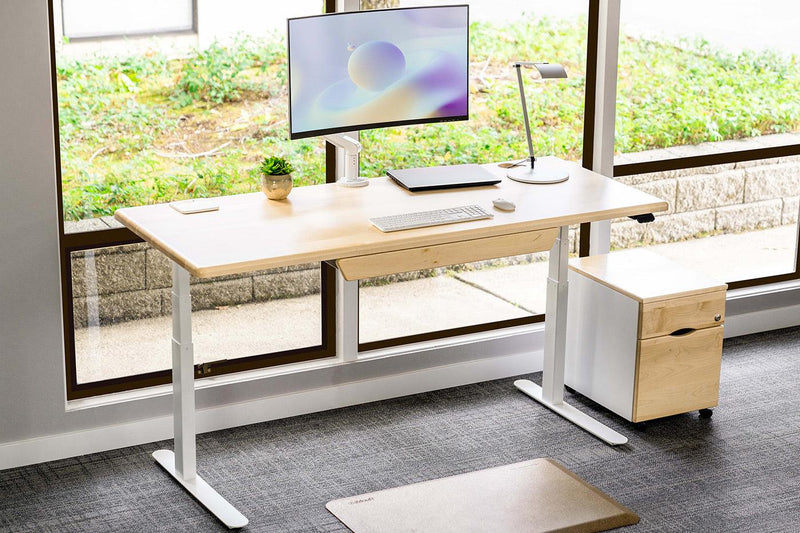
A sit-stand desk removes the friction from the most important habit shift: changing positions without leaving your workflow.
The dangers of sitting all day do not disappear with a desk upgrade alone, but the desk eliminates the main barrier, which is that switching from sitting to standing requires effort and disrupts work.
What the Research Shows on Sit-Stand Desks
Call center workers with sit-stand desks were 46% more productive than those with traditional desks over a 6-month period.
Productivity and sitting disease at work are directly connected. When workers feel physically better, output improves.
When a Treadmill Desk Makes Sense
For workers in fully inactive workday environments, a treadmill desk takes the movement piece further. Walking at 1 to 2 mph while working adds 5,000 to 10,000 steps per day without any additional time commitment.
iMovR's Unsit Treadmill Desk is built specifically for this use case, combining a height-adjustable frame with a quiet, low-speed treadmill designed for sustained work sessions.
iMovR × InMovement
Office TreadmillUnsit Desk Treadmill
The quietest, widest, and most ergonomic under-desk treadmill built specifically for office use — not the gym.
Motor
2.75 HP High-Torque
Speed Range
0.3 – 2.0 mph
Lifetime
Frame
2 Years
Parts
1 Year
Labor
100 Days
Returns
Conclusion: Awareness Is the First Step to Fixing It
The most important shift is recognizing that sitting disease at work is not a dramatic health event you can track on a calendar.
It is a daily accumulation of small compromises your body makes to keep you comfortable in a position it was not built for. The fix is not complicated. It is consistent.
If you are ready to make the environment work with you instead of against you, explore iMovR's full range of sit-stand desks and treadmill desks built around exactly this problem.