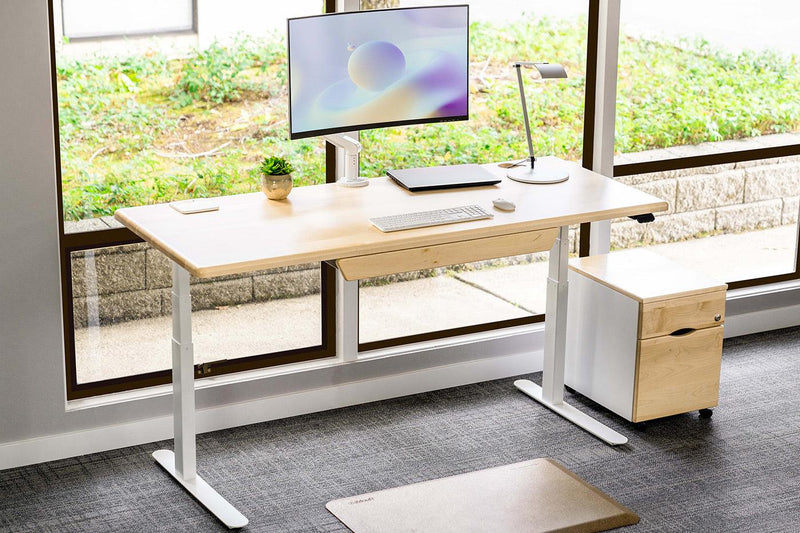
What if a simple change in your child’s study setup could improve how they learn each day?
Research shows that many children today spend a large part of their day sitting mainly at school, doing homework, and using screens, and many sit for more than 7 hours a day.
Extended sitting can affect posture, concentration, and even mood over time. Without opportunities for movement, children may develop slouching habits, tiredness, or discomfort that makes learning less effective.
If you are a remote or travel-oriented worker building a flexible home environment, your child’s workspace matters just as much as yours. A well-designed standing desk for kids can transform the way your child approaches homework, art projects, and digital learning.
This guide explains how the right standing desk kids setup improves posture, focus, and energy, and how to choose one that grows with your child.
How Standing Desks Improve Focus, Posture, and Classroom Engagement
Movement fuels learning. Research published in the American Journal of Public Health found that students using standing desks burned more calories and showed improved classroom engagement compared to traditional seated desks. That shift may sound small but over time, it adds up.
A standing desk for kids encourages subtle movement throughout the day. Children shift weight, stretch, lean, and adjust naturally. Those micro-movements keep blood flowing and reduce the stiffness that long sitting causes.
Then there is posture. Poor sitting habits often start early. Slouching over a tablet or leaning too close to a notebook strains the neck and shoulders. A properly sized kid standing desk promotes upright alignment.
When the desk height matches elbow level, the spine stays neutral, and the shoulders relax.
Focus improves when the body feels balanced. Standing does not replace exercise but it supports light movement during learning hours.
For families where parents already use a standing desk, introducing a standing desk for your child creates alignment. Your child mirrors what you model. If you value healthy work habits, they will too.
What Makes a Standing Desk Truly Kid-Friendly
Not every adjustable desk works for children. Adult models often start too high. Others lack safety features suited for younger users. A true standing desk for kids accounts for growth, movement, and daily wear.
So, what should you look for? Stability, height range, and thoughtful details that support safety and comfort. And yes, durability matters, because children test furniture in ways adults do not.
Height Range That Adapts From Early Elementary to Pre-Teen
Children grow quickly. That is obvious. But many parents underestimate how important Adjustable Height truly is when choosing a standing desk for kids solution.
An effective kid standing desk should start low enough for a six-year-old and extend high enough for pre-teens. Look for a height-adjustable range that covers roughly 22 to 42 inches. That ensures elbow-level alignment, whether your child is sitting or standing at a standing desk kid setup.
If the desk rises too high at its minimum setting, posture suffers. And if it cannot rise enough later, you will replace it too soon. Investing in an adjustable desk with a wide range extends the lifespan of your child's standing desk workspace for years.
At iMovR, collections like the Jaxson Desk offer electric height-adjustable options with precision controls. While designed for adults, certain compact configurations can suit older kids and teens, especially in shared home offices, where a flexible standing desk arrangement makes sense.
And that flexibility supports families who move often. A desk that adapts prevents constant upgrades and keeps your kid's standing desk setup practical through every growth phase.
Stability at Standing Height Without Frame Wobble
Children lean. They push. They fidget. A desk that wobbles at standing height becomes frustrating fast, especially in a standing desk for kids meant to encourage movement.
Frame stability separates high-quality standing desk kid models from budget alternatives. Steel legs, reinforced crossbars, and solid leveling feet matter far more than decorative finishes or trendy colors.
If the desk shakes when your child writes or types, focus drops. Over time, that instability discourages standing altogether and defeats the purpose of investing in a standing desk for kids solution.
That is why commercial-grade bases, like those used by iMovR, are built to provide stronger, consistent support compared to lightweight frames.
And stability does not just affect comfort. It directly affects safety. A solid structure reduces tipping risk when kids shift weight, lean forward, or rest their arms on the desktop.
Safety Design: Rounded Corners, Anti-Collision, and Locking Casters
Safety features deserve attention. Especially in shared home spaces where a standing desk kids setup becomes part of daily family life.
Look for rounded desktop edges to prevent bumps. Anti-collision sensors in electric models stop the desk if it meets resistance. That feature protects small hands, nearby furniture, and keeps your child's standing desk environment safer during height adjustments.
If the desk includes wheels, locking casters are essential. A mobile standing desk for kids solution should move easily when needed but remain fully secure during homework or creative projects.
Clear instructions and a visible warranty also matter. Brands that publish detailed instructions signal accountability. And a strong warranty provides reassurance that your standing desk investment is built to last.
Surface Depth for Books, Tablets, and STEM Projects
Children multitask differently from adults. Their desktop holds books, tablets, art supplies, and sometimes robotics kits.
A narrow surface limits engagement. For most homes, a depth of at least 24 inches provides enough workspace for reading and writing simultaneously.
Some standing desk for kid models also include built-in storage. Small drawers or shelves reduce clutter and help with organization. Storage keeps the home environment clutter-free. And that benefits everyone working remotely.
An angle-adjustable desktop can help with drawing or reading. Slight tilts reduce neck strain during art projects or handwriting practice.
Best Standing Desks for Kids That Support Active Learning
Choosing the right desk depends on space, budget, and how your child learns. Below are three reliable options that fit different needs.
Best for Active Learners
The Jaxson Collection from iMovR offers premium electric standing desk configurations with strong lifting columns and smooth height transitions. For older children or shared parent-child offices, this option delivers long-term durability.
Benefits include:
-
Wide Adjustable Height range
-
Solid steel frame
-
Smooth electric lift
-
Long warranty coverage
And for remote professionals who value design, these desks match adult setups seamlessly.
Best for Smaller Rooms and Tight Spaces
Compact rooms require efficient footprints. The Height Adjustable Desk for Kids MI-10204 model offers manual height adjustment in a smaller frame. It fits bedrooms or study corners where space remains limited.
It includes a tilting desktop and a basic storage shelf. That makes it practical for homework sessions without dominating the room.
Best Mobile Solution for Dynamic Classrooms
For highly active learners, mobility changes everything. Kore Kids Sit-Stand Mobile Desk includes wheels and an active seating perch. It allows children to move between rooms or shift positions easily.
A mobile desk works well in travel-oriented households where furniture must adapt quickly. Especially in temporary housing or flexible learning spaces.
Matching the Desk to Your Child’s Learning Style
Every child learns differently. Some prefer structure. Others thrive with movement.
If your child struggles to sit still, a standing desk kids configuration paired with a balance board may help channel energy productively. If they prefer focused quiet time, a sit-stand desk with preset height memory simplifies transitions.
Visual learners benefit from larger desktop surfaces. They spread materials out. Tactile learners appreciate angle-adjustable tops for drawing or building.
And consider the home dynamic. If you work remotely, your child likely sees your workflow daily. Matching desk styles creates visual consistency. It reinforces the idea that focused work deserves proper support.
A thoughtfully chosen standing desk for kids setup becomes part of the family rhythm.
Introducing a Standing Desk Without Resistance
Change can trigger resistance. Especially with children.
Start gradually. Introduce standing for short intervals. Fifteen to twenty minutes at a time works well. Then increase duration as comfort improves.
Encourage movement, not rigid posture. The goal is flexibility. Not forced standing.
Make the setup collaborative. Let your child adjust height. Show them how the adjustable desk moves. Explain why posture matters. Children respond better when they understand the purpose.
And celebrate small wins. If homework feels easier, acknowledge it. Positive reinforcement strengthens new habits.
Cost vs. Longevity: Is a Kids Standing Desk Worth It?
Parents often pause when they see the price of a quality standing desk for kids setup. It costs more than a basic fixed table. That is true. But price and value are not the same thing.
A well-built height-adjustable desk can support your child through multiple growth stages. Elementary years turn into middle school quickly. A durable standing desk for kids solution adjusts along the way, instead of being replaced every few years.
Cheaper desks may seem practical at first, but wobbles, limited height range, and weak frames often shorten their lifespan. And repeated replacements quietly increase total cost.
Then there is daily use. Your child will read, write, build, and learn at that desk almost every day. A stable adjustable desk encourages better posture and more movement during study hours.
While no piece of furniture replaces outdoor play or exercise, a standing desk for kids reduces long, uninterrupted sitting during homework time. That shift alone makes a difference in routine.
For remote or travel-oriented workers who already invest in ergonomic tools, extending that same standard to your child creates consistency at home. It reinforces healthy work habits early.
And when evaluating long-term value, review the warranty carefully. A strong warranty reflects confidence in materials and construction. That reassurance matters when a desk supports years of learning, growth, and daily activity.
Conclusion
Children develop work habits early, and their environment plays a quiet but powerful role in shaping those routines. A thoughtfully selected standing desk for kids ,supports healthy posture, encourages natural movement, and grows alongside your child.
For remote and travel-oriented workers, flexibility is key, and furniture that adapts with your family makes daily life easier and more productive.
If you are ready to give your child a workspace that truly supports learning and activity, explore the durable, height-adjustable standing desk kids options at iMovR and create a setup that works for years to come.
FAQs
How tall should your standing desk be?
A standing desk kids setup should position the desktop at elbow height to maintain neutral posture and comfortable arm support.
Why do not we have a budget standing-desk pick?
Most low-cost options lack durability, stability, and growth range required for a reliable standing desk kids investment.
Are standing desks good for kids?
Yes, a properly sized standing desk kid model encourages movement, supports posture, and reduces prolonged sitting during study time.