What actually improves your workday faster, better posture or fewer distractions?
If you are upgrading your setup, this is not a small decision. Choosing between a standing desk vs office pod directly affects how you work, how long you stay focused, and how your body feels after hours at your desk.
This guide breaks it down clearly so you can invest where it matters first.
Why This Decision Matters More Than Most People Realize
When people think about productivity, they usually jump to tools, apps, or workflows. But the real driver of consistent performance is your physical environment. The way your workspace is designed quietly shapes your energy, focus, and output throughout the day.
A standing desk and an office pod both fall under office productivity furniture, but they solve very different problems. One improves how your body functions while you work, and the other controls what is happening around you while you try to focus.
That is why this ergonomic office comparison matters. If you choose the wrong upgrade first, you might not feel any noticeable improvement. But if you solve the right problem, the difference shows up almost immediately in your work quality and consistency.
What Is a Standing Desk and How Does It Improve Work?
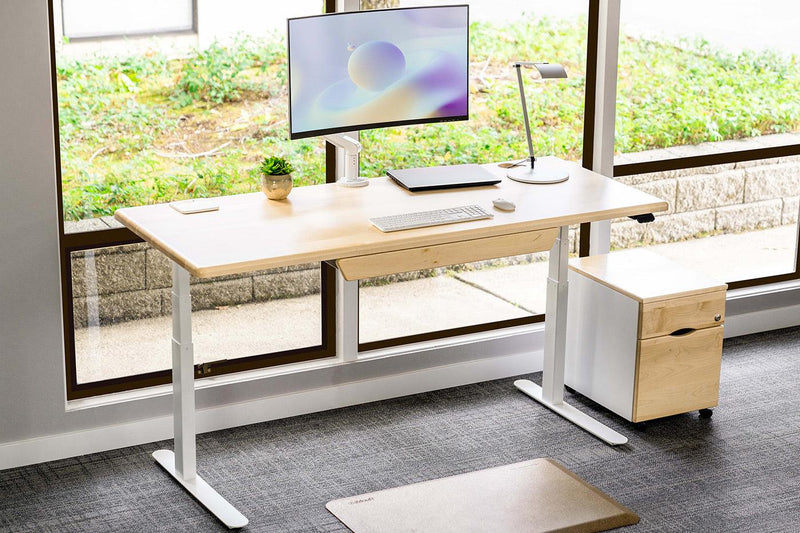
A standing desk is an adjustable workstation that allows you to shift between sitting and standing positions during your workday. That flexibility might seem small, but it changes how your body behaves over long hours.
When you sit continuously, your muscles tighten and your posture starts to collapse. Over time, this leads to fatigue, reduced circulation, and a steady drop in energy. A standing desk interrupts that pattern by encouraging movement and posture shifts.
This is where standing desks stand out in any ergonomic office comparison. They actively support your body instead of letting it adapt to unhealthy positions. And the benefit is not just physical comfort, it directly affects your mental clarity as well.
Why Standing Desks Are a Popular First Upgrade
-
Reduced strain on back and neck
-
Better energy during long work sessions
-
Improved posture without constant effort
-
Fits into existing workspace setups
Most users notice the difference within the first week. Not because they stand all day, but because they move more often. That movement keeps the body engaged, which helps maintain focus over longer periods.
If you look at high-quality options like those available at iMovR, you will notice features like stability, smooth height adjustment, and durable build. These are not minor details. They directly affect how often you actually use the desk as intended.
So, in the standing desk vs office pod discussion, the standing desk clearly addresses physical fatigue and low energy levels.
What Is an Office Pod and When Does It Make Sense?
An office pod is a compact, enclosed workspace designed to give you privacy and reduce external distractions. It creates a controlled environment where noise, interruptions, and visual clutter are minimized.
This becomes especially valuable in open offices or shared living spaces where distractions are constant. Even small interruptions can break focus, and getting back into deep work often takes more time than people expect.
That is where office pods become a strong option in office productivity furniture setups. They do not change how your body works, but they dramatically improve how well you can concentrate.
What Makes Office Pods Effective for Focus
Office pods improve your work environment by isolating you from distractions. Most models include acoustic insulation, which reduces surrounding noise, and a closed structure that gives you visual privacy.
Some also include built-in lighting and ventilation, creating a consistent workspace regardless of external conditions. This makes them particularly useful for tasks that require deep focus, such as writing, coding, or strategic thinking.
So, in the standing desk vs office pod comparison, office pods clearly win when your biggest challenge is maintaining concentration in a noisy or busy environment.
Standing Desk vs Office Pod: Understanding the Core Differences
To make the right choice, you need to look beyond features and focus on what each option actually solves. Both improve productivity, but they approach it from completely different angles.
A standing desk improves internal performance by supporting better posture, movement, and energy levels. It directly affects your physical state during work.
An office pod improves external conditions by reducing noise and distractions. It changes how your environment interacts with your focus.
This is the core of the ergonomic office comparison. You are choosing between improving your body or improving your surroundings.
Cost also plays a role here. Standing desks are generally easier to integrate and require less investment. Office pods require more space and a higher upfront cost, which makes them a more deliberate purchase.
Flexibility is another factor. A standing desk fits into almost any workspace and can be adjusted or moved easily. An office pod is more permanent and becomes a defined part of your workspace.
So, the standing desk vs office pod decision is not about which one is better overall. It is about which limitation is affecting you more right now.
Which One Improves Productivity Faster?
The answer depends entirely on your current bottleneck. Different people will experience different results based on how they work and where they work.
If your workday feels physically draining, with stiffness or low energy setting in early, a standing desk will likely deliver faster results. The ability to switch positions keeps your body active and prevents that gradual decline in focus.
If your workday is constantly interrupted by noise, conversations, or distractions, then an office pod will have a more immediate impact. It creates a boundary that allows you to focus without interruption.
Situations Where a Standing Desk Makes More Sense
If you spend most of your day sitting and experience discomfort or fatigue, a standing desk becomes the logical first step. It addresses a foundational issue that affects every hour of your work.
Situations Where an Office Pod Is the Better Choice
If your environment makes it difficult to concentrate, an office pod becomes more valuable. It removes the external barriers that prevent deep, focused work.
So, when comparing standing desk vs office pod, the faster productivity gain comes from solving the problem that disrupts your workflow the most.
Real-World Use Cases and Buying Patterns
Looking at how different professionals approach this decision can make things clearer. Most people follow a similar progression based on their needs.
Remote workers often start with a standing desk because their main challenge is long hours of sitting. Once that issue is addressed, they consider office pods if distractions become a problem.
Corporate offices often prioritize office pods first, especially in open layouts where noise levels are high. After that, they introduce standing desks to improve employee comfort and health.
Freelancers and creators usually begin with flexible upgrades like standing desks. As their workload increases and focus becomes more critical, they explore acoustic office pods for deeper work sessions.
This pattern shows that the standing desk vs office pod decision is rarely permanent. It evolves as your work environment and demands change.
Ergonomics vs Environment: What Should You Fix First?
This is where the decision becomes practical. You need to identify what slows you down more on a daily basis.
If your body feels tired, stiff, or uncomfortable, then ergonomics should be your priority. A standing desk helps correct posture and encourages movement, which supports long-term health and consistent performance.
If your environment feels chaotic, noisy, or distracting, then controlling that environment becomes more important. An office pod creates a space where you can focus without interruption.
In this ergonomic office comparison, one improves long-term sustainability while the other improves immediate focus. That distinction helps you decide where to invest first.
Cost vs Value: Making a Smart Investment
Budget is always part of the decision, especially when comparing larger workspace upgrades. Standing desks generally require a smaller investment and offer benefits that apply to almost any work setup.
Office pods require a larger commitment, both in terms of cost and space. But they deliver strong value in the right conditions, particularly in shared or high-noise environments.
From a value perspective, standing desks offer broader benefits because they improve how you work physically. Office pods offer targeted benefits by improving where you work.
That is why many people start with a standing desk and expand their setup later. If you are looking for durable and performance-focused options, exploring solutions at iMovR can be a practical starting point.
Should You Eventually Invest in Both?
For many professionals, the answer becomes yes over time. As work demands increase, both ergonomics and environment start to matter equally.
A well-balanced workspace often includes a standing desk for movement and posture, along with an office pod for focused, distraction-free work. Each plays a role in maintaining productivity across different types of tasks.
But timing matters. Investing in both at once is not always necessary. It is more effective to start with the upgrade that solves your biggest problem and then build from there.
This approach keeps your investment aligned with actual needs instead of assumptions.
Final Verdict: Standing Desk vs Office Pod
Choosing between a standing desk vs office pod comes down to understanding your current work challenges. If physical discomfort and low energy affect your performance, a standing desk should be your first investment.
If distractions and lack of privacy are your biggest obstacles, an office pod will deliver more noticeable results.
Both options improve productivity, but in different ways. The key is to solve the right problem first and build your workspace step by step.
If you are ready to upgrade your setup, start with reliable ergonomic solutions from iMovR and create a workspace that actually supports how you work every day.