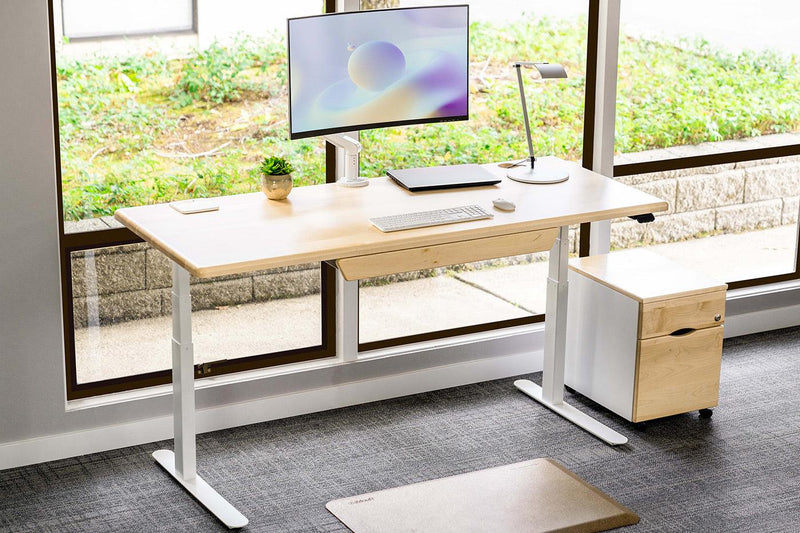
More than half 58.5% of people working from home work from a desk.
That number alone explains why desk choice matters more than ever.
But choosing the wrong one can quietly damage posture, reduce productivity, and waste valuable space. And that happens often with L-shaped desks.
This guide walks office workers through the most common mistakes when choosing an L-shaped setup, especially a standing desk L shaped, and shows how to get it right the first time.
Common Mistakes When Choosing an L-Shaped Desk
An L-shaped desk looks simple on paper. Two surfaces. A corner connection. Plenty of space.
But in real offices and home offices, mistakes show up fast. Poor measurements. Wrong orientation. No room to move. Or worse, a desk that looks great but feels terrible after three hours of work.
That is why understanding these mistakes upfront saves money, space, and daily frustration. And it sets the foundation for better posture, cleaner workflow, and long-term comfort.
Mistake 1: Not Measuring the Room Properly
Forgetting Wall, Door, and Window Clearance
Many people measure only the footprint of the desk. They forget everything around it. Doors that need to open fully. Windows that need access. Walls that are not perfectly square.
An L shaped corner desk that technically fits can still block natural light or prevent doors from opening properly. That quickly turns a workspace into a daily annoyance.
And when choosing a standing desk L shaped, clearance matters even more. The desk must move up without hitting shelves, window sills, or wall-mounted accessories.
Ignoring Walking Space Around the Desk
Then there is walking space. A desk that fits tightly leaves no room to move.
Office workers need space to pull out chairs, step back when standing, and shift positions during the day. Lack of clearance affects posture and increases strain.
A good rule is to maintain at least 36 inches of clear walking space around primary movement paths. That small planning step protects comfort and keeps the office functional.
Mistake 2: Choosing the Wrong L Orientation
Left-Hand vs Right-Hand Desk Confusion
Not all L-shaped desks are symmetrical. The return can sit on the left or right side.
Many buyers skip this detail. They order quickly. And then the desk arrives with the return blocking movement or facing the wrong direction.
Orientation affects where monitors, keyboard, drawers, and accessories sit. For multi monitor setups, the wrong return side can force awkward neck angles.
Buying Before Checking Room Layout
Room layout determines orientation. Wall placement, window direction, and power outlet locations matter more than personal habit.
A L shaped adjustable desk must align with the room first, then with the user. Otherwise, cable management becomes messy and workflow suffers.
Mapping the desk orientation with painter tape on the floor prevents this mistake before it happens.
Mistake 3: Picking the Wrong Desk Size
Desk Too Large for the Space
Bigger feels better until it overwhelms the room.
Oversized L-shaped desks dominate small offices. They reduce walking space and make the room feel cramped. That affects focus and comfort over time.
Large desks also amplify mistakes. If orientation or height is wrong, the impact feels worse because everything is harder to adjust later.
Desk Too Small for Work Needs
The opposite mistake happens just as often. Desks that look fine online arrive with shallow depth and limited surface area.
Office workers using multiple monitors, keyboards, or writing space quickly run out of room. A standing desk L shaped should support all daily tools without stacking items.
Work needs should define desk dimensions, not aesthetics alone.
Mistake 4: Ignoring Ergonomics
Poor Monitor and Keyboard Placement
Ergonomics fail when surface depth is ignored.
Stick your monitor too close and you'll be squinting and craning your neck all day. Keyboard height's wrong? Your wrists and shoulders are gonna hate you. And the kicker is, all this stuff adds up, what feels fine for an hour turns into legit pain after eight.
An ergonomic L-shaped setup allows monitors at eye level and keyboards at neutral height, whether sitting or standing.
No Support for Comfortable Sitting or Standing
Standing desks promise movement. But many fail to deliver comfort because ergonomics are an afterthought.
Without proper height ranges, transitions feel awkward. Without space for foot movement, standing becomes uncomfortable fast.
That is why standing desks, especially L-shaped models, must support both postures equally well.
Mistake 5: Overlooking Desk Height and Adjustability
Fixed Height Desks That Limit Comfort
Fixed height desks lock users into one posture. That creates strain over time.
Every body is different. Height differences matter. Desk height that works for one person may harm another.
For shared offices or growing teams, fixed height desks become unusable quickly.
Not Considering an Adjustable or Standing Option
An adjustable L shaped desk adapts to real workdays. Sitting. Standing. Shifting between tasks.
Height flexibility improves posture and reduces fatigue. Research consistently links sit stand movement with improved comfort and productivity.
For long-term use, height adjustability is not a luxury. It is a requirement.
Mistake 6: Forgetting About Cable Management
No Space for Power Strips and Cables
L-shaped desks support more equipment. That means more cables.
Without built-in cable channels or space for power strips, cords pile up fast. That looks bad and creates safety risks.
Cable clutter also limits desk height movement on standing models.
Messy Wires Affecting Daily Work
Messy wires distract and slow down work. They snag chairs. They tangle feet. They complicate equipment upgrades.
Good cable management keeps the workspace clean, safe, and adaptable. It supports both productivity and aesthetics.
Mistake 7: Choosing Style Over Function
Looks Good but Is Hard to Work On
Sleek designs sometimes sacrifice depth, durability, or comfort.
Thin surfaces vibrate. Narrow desktops limit equipment placement. Sharp edges dig into arms during long sessions.
Office furniture must work first. Style comes second.
Shallow Depth or Sharp Edges
Shallow desks force monitors too close. Sharp edges increase pressure points.
High quality L-shaped desks balance form and function. Rounded edges, proper depth, and solid materials matter more than visual trends.
Mistake 8: Underestimating Weight Capacity
Desk Not Built for Multiple Monitors
Many desks fail under real loads. Multiple monitors. Mounts. CPUs. Accessories.
Weight adds up quickly. A weak desk sags or shakes. That affects focus and equipment safety.
Weak Frames and Wobble Issues
Wobble kills confidence. Especially on standing desks.
A standing desk L shaped needs a strong frame, quality motors, and solid materials. Stability should remain consistent at every height.
Mistake 9: Ignoring Storage and Accessories
No Room for Drawers or Shelves
Storage affects workflow. Without drawers or shelves, clutter moves onto the desktop.
That reduces usable surface area and increases distraction.
Integrated storage keeps tools accessible without crowding the workspace.
Limited Space for Monitor Arms and Accessories
Accessories require mounting points. Monitor arms need clearance. Shelves need support.
An L shaped adjustable desk should accommodate accessories without modification or compromise.
Mistake 10: Not Thinking About Future Needs
Desk Cannot Grow With Your Setup
Work evolves. Equipment changes. Responsibilities grow.
A desk that barely fits today will fail tomorrow. Planning ahead prevents costly replacements.
No Flexibility for New Equipment
Flexible layouts support growth. Modular components. Adjustable height. Expandable surface area.
That future-proof mindset protects both comfort and budget.
How to Choose the Right L-Shaped Desk the First Time
Choosing correctly starts with a checklist.
• Measure room, walls, doors, walking space
• Confirm left or right orientation
• Match surface area to equipment needs
• Prioritize ergonomics and height range
• Verify weight capacity and stability
• Plan cable management and accessories
A standing desk L shaped that meets these criteria supports productivity, posture, and long-term comfort.
Conclusion
Most desk mistakes feel small at first. But they compound every workday. Poor posture. Limited movement. Constant adjustments.
Choosing the right L-shaped desk means thinking beyond looks and focusing on how work actually happens. And that makes all the difference.
Ready to build a workspace that actually works? Explore iMovR’s industry-leading standing desk solutions and upgrade your workday today.
If your desk determines how you feel eight hours a day, why settle for average? Experience iMovR’s standing desk L shaped systems and work the way high performers do.
FAQs
Should You Be Left or Right-Side Aligned for Your Workflow?
Choose the side that matches your dominant hand and main task flow, such as writing, mousing, or using extra monitors. Also factor in room layout so movement, lighting, and cable access stay natural and uncluttered.
How to Set Up an L-Shaped Desk?
Place primary monitors and keyboard on the main surface and use the return for secondary tasks or devices. Adjust desk height, monitor level, and walking clearance so both sitting and standing feel comfortable.
Can I Fit an L-Shaped Desk in a Small Office?
Yes, if you choose compact dimensions and the correct left or right orientation for the corner. Maintain clear walking space and avoid oversized returns that overwhelm the room.
What Common Mistakes Do You Need to Avoid When Trying an L Shaped Standing Desk?
Skipping room measurements, choosing the wrong orientation, and ignoring height range cause most issues. Also avoid weak frames, poor cable management, and desks that cannot support your full equipment load.