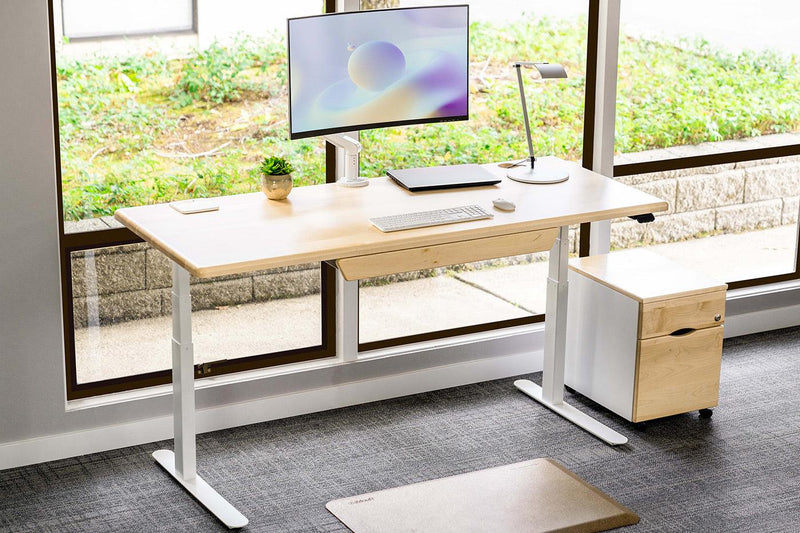
Back pain does not start with a bad chair. It starts with hours of stillness.
If your workday leaves your lower back tight, your energy low, and your focus fading, a standing desk can change the way your body experiences work.
This guide explains how to choose the best standing desks for back pain solution and how to use it correctly so relief actually lasts.
Standing desks and back pain
Standing desks help your back when you actually move, not when you trade sitting still for standing still. Sit for hours and the pressure on your lower spine builds up.
Blood flow to your postural muscles drops. Stiffness and fatigue set in, and no chair fixes that once it starts.
Standing desks work because they let you shift positions all day. Your spine needs movement, not one locked posture held forever.
Switch between sitting and standing and you stop compressing the same vertebrae for eight hours straight. Your muscles stay active instead of shut off.
But standing desks only help when the setup fits you. Get the height wrong, buy a wobbly desk, or ignore ergonomics and you trade back pain for wrist strain, neck tension, or shoulder problems. Desk quality decides whether standing helps or just creates new issues.
You need a desk that does not wobble when you stand. It has to hold two or three monitors without tipping over.
And it needs to adjust in small enough increments that your wrists, elbows, and eyes all line up right. Get those things dialed in and your back stops hurting without wrecking your concentration or dragging down your productivity.
How to choose the right standing desk
Picking the best standing desk for back pain means more than buying whatever shows up first on Amazon. The desk has to fit you, your workspace, and hold up through an entire workday.
Office work means you need a desk that holds up and adjusts right, not just feels good for ten minutes. Buy one that shakes every time you type or slowly sinks while you work and you just traded one problem for three new ones.
Height range comes first. A back pain standing desk must lower enough for proper sitting posture and raise high enough to support standing without shoulder lift or wrist extension. Taller users often need desks with extended height ranges or four leg designs for stability.
Stability follows closely behind. Desk wobble forces small stabilizing muscles to work constantly, increasing fatigue and discomfort. Dual motor or four leg frames generally offer better rigidity, especially for heavy monitors and accessories.
Desktop size and material also affect posture. Crowded surfaces pull monitors too close and force awkward wrist angles. Durable surfaces reduce vibration and noise, which helps maintain focus during long work sessions.
Then there is control precision. Memory keypads allow consistent height changes, which supports a reliable sitting and standing routine. For office ergonomics, consistency is not optional. It is how habits form and pain decreases.
Standing desk vs converter (which should you buy?)
A standing desk converter appeals to buyers seeking a lower upfront cost or quick setup. But for back pain standing desk outcomes, converters come with tradeoffs that matter over time.
Converters sit on top of an existing desk and raise the monitor and keyboard together. That design often forces compromises in monitor height or wrist alignment. Many users end up elevating shoulders or bending wrists, which shifts discomfort from the lower back to the neck and arms.
Full standing desks allow independent adjustment of desk height and monitor arms. That flexibility supports better posture and reduces injury risk. For office professionals working full days, that difference compounds quickly.
Converters also limit workspace. Heavy computer workstation setups, multiple monitors, and accessories feel cramped. And clutter leads to awkward posture shifts that undermine the goal of standing desk back pain relief.
Converters do fine if you only stand part of the day or need something temporary. But if you want real long term relief and actually work at a desk all day, a full standing desk beats a converter every time.
Our top picks (best standing desks)
Best overall: iMovR P1 Elite
The iMovR P1 Elite stands out as a purpose-built standing desk back pain solution for full-day office use. Crank this desk to max height and it does not shake when you type.
Taller workers finally get a desk that does not force them to hunch. The top holds dual monitor arms without sagging or bouncing around.
What matters most is consistency. The P1 Elite maintains smooth, repeatable height transitions that support a sustainable sitting and standing routine. And that reliability reduces decision fatigue, which helps professionals stay focused while protecting their spine.
For office professionals prioritizing comfort, durability, and clean professional design, this desk sets the benchmark.
Best for small spaces: iMovR Lander
The iMovR Lander targets compact offices without sacrificing ergonomics. Smaller workspaces often force poor posture due to limited surface area and shallow depth. This desk solves that by optimizing usable workspace within a compact footprint.
Stability remains a priority. Even in smaller sizes, the Lander minimizes wobble, which protects muscles and reduces discomfort during standing work. The height range supports correct sitting and standing posture, which keeps the spine neutral.
For professionals working in apartments or shared offices, the Lander offers a standing desk back pain solution that fits both the body and the room.
Best value and stability mid-range: FlexiSpot E7 and E7 Pro
The FlexiSpot E7 and E7 Pro hit a sweet spot between price and what you actually get. Dual motors lift the desk smoothly and the frame handles more weight than cheaper models that max out with just a laptop and monitor.
Stability remains acceptable at standing height, especially with proper floor leveling. The desk supports multi monitor setups and basic ergonomic accessories.
While desktop materials vary, the E7 series delivers dependable daily use for professionals focused on posture and productivity without high customization needs.
Best eco-friendly desktop: iMovR Q Desk
The iMovR Q Desk prioritizes sustainability without compromising performance. Its four leg frame offers exceptional stability, which benefits taller users and heavy workstation setups.
The eco-friendly desktop materials reduce environmental impact while maintaining durability and vibration resistance. That combination supports office ergonomics and long-term back pain standing desk use.
For professionals who value sustainability alongside performance, this desk delivers both without tradeoffs.
Best quick setup: Vari Electric Standing Desk
The Vari Electric Standing Desk appeals to users who want fast deployment with minimal assembly. Pre assembled components reduce setup time and errors that can affect stability.
The desk offers consistent height adjustment and sufficient surface area for typical office work. Stability is solid for moderate loads, making it suitable for professionals who value convenience and reliability.
For back pain standing desk users who want results without complex setup, this desk performs well.
Best budget: Autonomous SmartDesk
The Autonomous SmartDesk targets cost conscious buyers. While stability and materials do not match premium options, proper setup can still support posture improvements.
Users should pay close attention to monitor height, wrist position, and weight limits. With careful configuration, this desk can serve as an entry point into sitting and standing routines.
Best cheap alternatives fall into this category. They require more ergonomic assessment and adjustments to avoid discomfort.
Best heavy duty and most stable: ApexDesk Elite Series
The ApexDesk Elite Series supports high weight capacities and wide desktops. That makes it suitable for complex computer workstation setups.
Stability remains strong under heavy loads, which reduces micro movements that fatigue muscles. For professionals using multiple monitors or specialized equipment, this desk protects posture throughout the day.
Setup for comfort (this is where most people get it wrong)
Standing desk back pain relief fails when setup is rushed or guessed. Small height errors compound over hours, leading to discomfort and injury risk.
Desk height must support neutral wrist position, relaxed shoulders, and eye level monitor alignment. Standing too high elevates shoulders. Standing too low forces wrist extension.
Lighting also matters. Poor lighting causes forward head posture, which strains the spine. Proper workstation lighting reduces neck and upper back tension.
Ergonomic assessment should not be optional. It ensures the desk supports posture instead of undermining it.
Dial in your heights (sitting and standing)
When you sit, your feet should hit the floor flat with your knees roughly level with your hips. Your lower back needs support that follows its natural curve, not something that pushes you forward or lets you slump.
Standing height should position elbows near ninety degrees with wrists neutral. The monitor top should sit near eye level to avoid neck flexion.
Small adjustments matter. Measure once, save presets, and use them consistently.
Your sit and stand routine
The body prefers variation. Extended standing causes fatigue just as prolonged sitting does.
A common guideline suggests alternating every thirty to sixty minutes. The exact ratio varies by individual comfort and task.
Movement between positions keeps muscles active and reduces discomfort. And that consistency drives long term standing desk back pain improvement.
Accessories that actually matter
Accessories support posture when chosen carefully. Not all ergonomic add ons deliver value.
-
Anti fatigue mats
-
Monitor arms
-
Footrests
-
Lumbar support
These tools reduce strain and improve comfort when integrated into a well adjusted workstation.
Cable management (make it clean, safe, and adjustable)
Cable management affects safety and usability. Poor routing creates hazards during desk movement and limits height range.
Flexible cable trays and slack loops protect cords while allowing full desk travel. Clean routing also improves focus by reducing visual clutter.
For office ergonomics, cable management supports both safety and efficiency.
Common Mistakes
-
Monitor sits too high or too low, forcing your neck into bad angles
-
Standing all day without breaks wears you down just like sitting all day
-
Wearing flat shoes or heels on hard floors kills your feet and back
-
Set your desk presets so you can switch between sitting and standing without thinking
-
Add a footrest or anti fatigue mat to take pressure off your lower back
-
Check your posture once a week and adjust when things start feeling
Conclusion
Standing desk back pain relief comes from quality equipment and correct use. The right desk supports movement, posture, and focus throughout the workday.
If comfort and productivity matter to your work, investing in a professional standing desks protects both your spine and your performance.