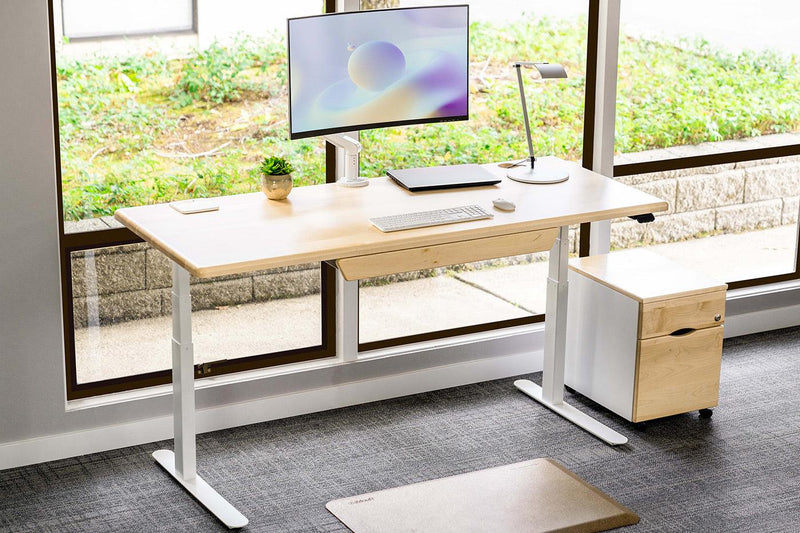
The average office worker sits more than 9 hours per day. That single habit quietly reduces energy, focus, and long-term health.
A standing workstation changes that dynamic. Instead of locking your body into one posture, it allows movement throughout the day.
In this guide, we’ll explain what a standing workstation is, how it works, and why it’s becoming the modern office standard in 2026.
What Is a Sit-Stand Workstation?
A standing workstation is a height-adjustable desk system that allows you to alternate between sitting and standing throughout the day. It improves circulation, reduces fatigue, and supports better posture during long work sessions.
Why Sit-Stand Workstations Exist
Long sittings cause fatigue, low energy, and back strain. A seat stand computer station allows movement, improves circulation and comfort, and improves productivity during long work hours.
Sit-Stand Workstation vs Traditional Desk
Traditional settings desk forces static posture which causes neck and back strain. Sit stand workstations, cable management, and anti fatigue mats offer economic alignment. For more details, read this guide to standing desk ergonomics.
How a Sit-Stand Workstation Works
Height Adjustment Mechanisms Explained
Height adjustable desks use gas springs, manual cranks, or electric motors. Electric bases provide smooth movement and stability for heavy setups.
Manual vs Electric Sit-Stand Systems
Manual seats and stations are cost-effective but require effort. An electric desk offers memory presets, stability, fast adjustment, and frequent transitions.
How Programmable Memory Controls Improve Daily Workflow
Memory controls save users’ sitting and standing positions. These allow quick transitions, which maintain ergonomic alignment of the monitor, keyboard, and accessories.
Core Components of a Sit-Stand Workstation
Adjustable Desk Frame and Lifting Columns
Powder-coated steel frame and adjustable lifting columns provide stability. Rollable wheels and sturdy bases maintain mobility with structural integrity.
Desktop Surface Materials and Sizes
Desktop laminate are available in wood or composite finishes. Large desktops are perfect for multiple monitors whereas small desktops are good for the home offices or for the compact spaces.
Control Panels, Keypads, and Safety Features
Digital keypads adjust height accurately. Anti-collision sensors and soft stops prevent accidents. Programmable buttons improve daily convenience.
Cable Management and Power Integration
Build-in cable trays and power modules organize cords. Desktop sit stand station offers outlets and USB ports for docking stations, monitors, and email devices.
Why Sitting All Day Quietly Damages Your Focus and Energy
What Happens to the Body During Prolonged Sitting
Long sitting reduces blood circulation which causes neck and back strain and low energy levels. This can affect metabolism and musculoskeletal health.
How Alternating Between Sitting and Standing Helps
Switching positions improves blood circulation and engages core muscles which reduces fatigue. Sit to stand workstations, maintain energy and focus for long hours.
Why Movement Matters More Than Standing Alone
Research shows that there are many benefits of standing desks, and people using them experience up to 43% less blood sugar spikes, which improves overall energy and focus. Only standing does not reduce fatigue; small movements also help to get ergonomic and cardiovascular benefits.
Sit-Stand Workstations and Workplace Ergonomics
Neutral Posture in Sitting vs Standing Positions
The spine should be neutral while standing or sitting, which easily supports a standing workstation easily. It means shoulders should remain relaxed, neck should not move forward, and no extra pressure goes on lower back while working for long hours.
Monitor Height, Keyboard Position, and Arm Alignment
If the monitor is at eye level and the keyboard elbow is at height then there is less neck and shoulder strain. Wrists and arms move naturally which reduces fatigue and repetitive stress issues.
Common Ergonomic Mistakes and How to Avoid Them
More leaning wrong height and static posture are ergonomic mistakes, which can be avoided by sit stand stations. It can be controlled with regular movements and height adjustments without disturbing the workflow.
How a Standing Workstation Improves Daily Performance
Energy Levels and Focus Throughout the Workday
Blood flow improves with position switching, which maintains focus and energy.
Reduced Physical Fatigue During Long Work Hours
A standing workstation distributes body load, and it reduces fatigue.
Cognitive Performance and Task Switching
Light movement improves brain alertness, and task switchings become faster.
Health Benefits Associated With Sit-Stand Workstations
Musculoskeletal Comfort and Reduced Strain
Sit and stand computer stations reduce pressure from the neck, shoulder, and back.
Circulation, Metabolism, and Light Activity
Standing and movement keep circulation and metabolism active.
Long-Term Wellness Considerations for Office Workers
Daily movement reduces chronic pain risks and long term posture issues. Studies show that standing desks reduce lower back pain and boosts energy level.
Who Should Use a Sit-Stand Workstation?
Office Professionals Working 8+ Hours Daily
Professionals who work 8+ hours a day must use the standing workstation for desk.
Remote and Hybrid Workers
In 2026, workplace wellness is no longer optional. Hybrid teams expect flexibility, and companies are investing in adjustable workstations to reduce fatigue and increase performance.
Creative, Technical, and Knowledge-Based Roles
For designers, analysts and developers this sit stand station is suitable for better focus.
Sit-Stand Workstations in Professional Environments
Corporate Offices and Enterprise Workspaces
In corporate setups ergonomic desks increase employee satisfaction and productivity.
Healthcare, Education, and Research Settings
Standing workstations are ideal for long shifts and focused tasks.
Home Offices Built for Full-Time Work
Full time home offices need a stable desktop sit and stand station.
Key Features to Look for in a High-Quality Sit-Stand Workstation
Stability at Standing Height and Weight Capacity
The desk should be wobble-free when it is at full standing height. For multiple monitors and accessories the height and weight capacity are important.
Speed, Noise Level, and Reliability
Quiet and fast motors do not disturb the work flow rather it ensures smooth transitions. A reliable standing workstation for desk gives consistent performance without vibrations.
Precision Height Range for Sitting and Standing Users
An accurate height range helps users to maintain proper sitting and standing postures specially when different body weights and daily posture changes are involved.
Sit-Stand Workstations vs Desk Converters
Structural Differences and Stability
A standing workstation for desk is a full frame system which takes the full support from the floor, whereas standing desk converters rest only on the table top and wobble more.
Workflow Limitations of Desk Converters
A desk converter provides a limited work surface, restricted mouse movement, and weak cable management that disturbs the workflow during long working hours.
Long-Term Value and Performance Comparison
Standing workstations for desk are more durable, stable, and ergonomically reliable for the long term as compared to temporary desk converters.
| Feature | Sit-Stand Workstation | Desk Converter |
|---|---|---|
| Stability | High | Moderate |
| Weight Capacity | High | Limited |
| Workspace Area | Full Surface | Restricted |
| Long-Term Value | Strong | Temporary |
The Ideal Sit-Stand Ratio (And What Most People Get Wrong)
Recommended Sit-Stand Ratios
Experts recommend standing for 15-20 minutes after sitting for every 30- 45 minutes for better blood circulation, energy level and focus.
Signs You Need to Change Positions
Shoulder stiffness, leg numbness, lower back stiffness, and focus drop are the signals to change the position.
Building Sustainable Sit-Stand Habits
Height adjustable standing workstation for desk gradual switching and reminders helps to make sustainable daily habits.
Common Myths About Sit-Stand Workstations
“Standing All Day Is Better Than Sitting”
Standing the entire day also causes joint pressure and fatigue that's why balance between standing and sitting and movements is important.
“Sit-Stand Desks Are Only for Health Reasons”
This desk not only improves health and productivity but also improves focus and work consistency.
“Any Adjustable Desk Delivers the Same Results”
Low quality adjustable desks don’t deliver real ergonomic benefits because they have limited height range and poor stability.
How Sit-Stand Workstations Support Long Workdays
Reducing End-of-Day Fatigue
Changing the posture from standing to sitting relaxes the muscles and improves circulation. It gives a noticeable change in end of day exhaustion because it reduces constant pressure on shoulders, lower back and legs. A standing workstation for a desk keeps the body active, and keeps the energy good even after office work.
Supporting Consistent Performance Across Hours
When the body is not locked in a single posture, then energy crashes get reduced. A standing workstation for desk keeps the mind alert and maintains focus and productivity remains stable during deep work sessions.
Designing a Workstation for Real-World Workloads
Real office work is not limited to laptops. A balanced worksurface, strong workframe and effective cable management give stable support to multiple monitors and accessories. This allows to complete a heavy workload even without moving from the desk.
Choosing the Right Sit-Stand Workstation for Your Needs
Desk Size, Layout, and Equipment Requirements
Desk selection should depend on workspace size and daily equipment use. Selecting a standing workstation for desk keeps your body comfortable and active. Your productivity and focus improves because of better blood flow.
Single-Monitor vs Multi-Monitor Setups
Single monitor users can use the compact desk. For multi-monitor setup, a wider surface, a stronger frame and higher weight capacity are important for long term stability.
Personal Height, Reach, and Workspace Constraints
A desk height range should be according to the body proportions of the user and aligns with the available space, so sitting and standing positions remain ergonomic.
Why Sit-Stand Workstations Are Becoming the Modern Work Standard
Modern employees expect movement, flexibility, and wellness which is why sit stand workstation replacing fast with traditional sitting desks. Companies are considering the ergonomics not only as a comfort but also as a productivity and long-term performance investment.
In the active work culture a standing workstation for desk is not an optional upgrade but it is becoming a standard workplace.
If you spend more than six hours at your desk each day, posture should not be an afterthought. Explore iMovR’s height-adjustable workstations engineered for stability, precision, and long-term performance.
FAQS
What is a height-adjustable desk?
A height-adjustable desk is a workstation that allows you to change the desk height so you can work comfortably in both sitting and standing positions throughout the day.
How should a sit-stand desk be set up?
Your monitor should be positioned at or slightly below eye level, while your keyboard and mouse should sit at elbow height so your arms remain relaxed and your wrists stay neutral.
How long should a person sit or stand at a desk?
The healthiest approach is to alternate regularly between sitting and standing, changing positions every 30 to 60 minutes instead of staying in one posture for too long.