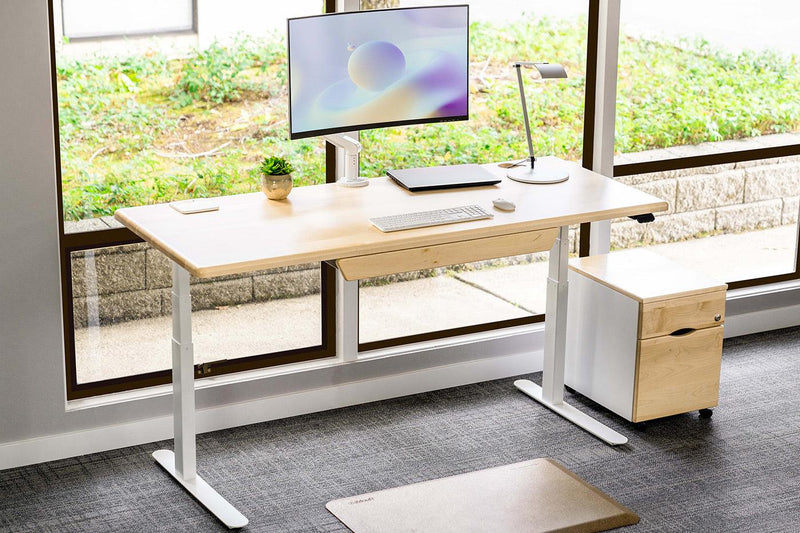
The standing desk market is growing fast as remote work becomes permanent for millions of professionals. More people are upgrading their workspaces. And more people are asking the same thing.
How hard is it to assemble standing desk models at home?
If you are a remote or travel-oriented worker trying to figure out how to make a standing desk setup without turning your living room into a hardware store, this guide walks you through exactly what to expect. No fluff. Just practical insight.
What Determines How Hard a Standing Desk Is to Assemble?
Not every standing desk assembly feels the same. Some desks go together like flat-pack furniture. Others feel more like a weekend project.
If you want to understand how to make a standing desk without frustration, four factors matter most.
Desk Type: Electric vs. Manual vs. Converter Models
The type of standing desk you choose directly affects how complex the assembly will be.
An electric standing desk includes a motor, control box, wiring, and programmable keypad. That means more components and more steps. You will connect cables, mount the motor, and test height adjustments.
Manual crank desks remove the motor but still require frame alignment and mechanical assembly. Converter models sit on top of your existing desk and require minimal assembly. They are the easiest option if portability matters.
If you are constantly moving between cities or working from temporary spaces, understanding how to make a standing desk portable is important. Converter models win for simplicity. But electric standing desk models offer smoother desk height transitions and stronger ergonomic support long term.
Frame Weight and Desktop Size
Weight changes everything.
A high-quality steel frame can weigh 70 to 90 pounds. Add a large desktop and you are easily lifting 120 to 160 pounds once fully assembled.
If you are learning how to make a standing desk that you can assemble alone, size matters. A 48-inch laminate desktop is far easier to manage than a 72-inch hardwood surface.
Wider desktops increase stability, but they also increase lifting difficulty during standing desk assembly. Flipping the desk upright is usually the hardest part.
Plan accordingly.
Pre-Drilled vs. Non-Drilled Tabletops
Pre-drilled desktops simplify the process significantly.
When holes align perfectly with the frame, attaching the desktop feels straightforward. You simply secure the screws and tighten the bolts.
Non-drilled surfaces require measuring and drilling pilot holes. That adds time and risk. And if alignment is off by even a few millimeters, stability suffers.
If your goal is to understand how to make a standing desk installation easier, choose a model with factory-drilled holes.
Number of Components and Moving Parts
The more moving parts, the more detailed the assembly.
A premium electric standing desk may include dual motors, cable trays, adjustable feet, control boxes, and multiple cross supports.
That does not mean it is impossible. It means attention to detail matters.
And when it comes to standing desk assembly, detail equals stability.
How Long Does It Take to Assemble a Standing Desk?
On average, it takes 45 to 120 minutes to assemble standing desk models.
Manual desks usually fall on the shorter end. Electric standing desk models require closer to 90 minutes, especially if this is your first time learning how to make a standing desk.
If you are a remote worker with limited time between meetings, block two full hours. Give yourself a margin. Rushing leads to stripped screws and uneven frames.
After the first assembly, future disassembly becomes much faster. That is important for travel-oriented professionals who relocate often.
Standing desk assembly gets easier with experience. The second time feels half as long.
Tools You Will Need (And When Included Tools Are Not Enough)
Most standing desk packages include basic Allen wrenches and a small Allen wrench key. They work. But they are slow.
If you want to simplify how to make a standing desk installation smoother, gather better tools ahead of time.
-
Power drill with hex bit
-
Socket wrench
-
Rubber mallet
-
Measuring tape
-
Bubble level
A drill at low torque speeds up assembly dramatically. Just avoid overtightening bolts into laminate or wood surfaces.
Proper tools turn standing desk assembly from a chore into a manageable project.
5 Common Assembly Mistakes That Make the Process Harder
If you want to assemble standing desk models without frustration, avoid these mistakes. They are common. And they are preventable.
Tightening All Bolts Too Early
This is the most common mistake in Desk Assembly.
If you fully tighten one side before attaching cross supports, the frame can twist slightly, then holes no longer align perfectly.
Lightly tighten bolts first. Align the frame. Then fully secure everything.
Small adjustment. Big difference.
Mixing Up Hardware Sizes
Many desks include multiple screw lengths. They often look nearly identical.
Using the wrong screws can damage the desktop or reduce support strength. Lay out hardware before starting. Separate by size. Keep screws and bolts organized.
And do not rush this step.
Skipping the Leveling Adjustment
Leveling feet exist for a reason.
Most floors are not perfectly flat. If you skip leveling adjustments, the desk may wobble at standing height.
Proper leveling improves stability and protects the motor over time.
Ignoring the Instruction Order
Instruction manuals are written in sequence for structural reasons.
Installing the control box before routing cables can create tangling problems. Mounting crossbars too early can block other components.
Follow the order. It prevents rework.
Not Testing the Motor Before Final Setup
Before placing your monitor, laptop, and accessories, test the electric standing desk fully.
Raise to maximum desk height. Lower completely. Listen for unusual sounds.
Catching motor issues early prevents full disassembly later.
Can One Person Assemble a Standing Desk Alone?
Yes. In many cases.
But it depends on desk size and weight.
If you are learning how to make a standing desk setup by yourself in an apartment or rental, consider the following.
Scenarios Where Solo Installation Is Realistic
Smaller desks with laminate desktops and compact frames are manageable alone.
If the total assembled weight stays under 130 pounds, most healthy adults can assemble standing desk units solo with careful lifting technique.
Compact Sit Stand Desk models are particularly solo-friendly.
Safety Risks of Lifting and Flipping Alone
The flipping stage is where problems occur.
You assemble the desk upside down. Then you flip it upright. That motion requires strength and control.
Clear space first. Lift with your legs. Avoid twisting your back.
If the desktop is large or solid wood, ask for help. Protect your health.
When Professional Installation Makes Sense
Premium desks with thick hardwood desktops or complex motor systems may justify professional setup.
If you are investing in a high-end ergonomic solution and want perfect stability from day one, professional installation can save time and stress.
Especially if your schedule is packed with client calls and deadlines.
Time matters.
How to Make Standing Desk Assembly Easier
Now let us talk about strategy.
If you truly want to know how to make a standing desk installation simple, preparation is everything.
Pre-Assembly Checklist
Before opening the box:
-
Clear a 6-by-6-foot space
-
Protect flooring with cardboard
-
Confirm all parts are present
-
Charge your drill batteries
This five-minute setup prevents mid-assembly frustration.
Organizing Hardware Before You Start
Open every hardware bag.
Group screws by length. Separate bolts from wood screws. Keep Allen wrenches accessible.
Standing desk assembly flows faster when you can see everything clearly.
Disorganization creates delays.
Watching the Brand Video Tutorial First
Many brands provide video walkthroughs.
Watching the full process before starting helps you visualize the order of assembly. It prevents surprises.
Especially helpful if diagrams feel unclear.
Performing a Stability and Reset Test
After assembly, test both seated and standing positions.
Adjust leveling feet if necessary. Confirm smooth motor movement. Reset the motor system if required by the manual.
Then place your monitor and equipment.
A stable desk supports better posture. Better posture supports productivity.
Conclusion
So, how difficult is it to assemble standing desk models?
For most remote professionals, it is a manageable one-to-two-hour project. Electric models require more steps. Manual desks move faster. Converters are the simplest.
If you prepare tools, organize hardware, and follow instructions carefully, learning how to make a standing desk setup becomes straightforward.
And once complete, you gain flexibility, improved ergonomic support, and a workspace built for focus.
Ready to upgrade your setup? Explore premium options at iMovR and find the right standing desk for your remote lifestyle.
FAQs
What are the benefits of using a standing desk?
Improves posture, reduces back pain, boosts energy, increases productivity, burns more calories, and lowers risks linked to prolonged sitting.
Is standing at your desk healthier than sitting?
Alternating between standing and sitting is healthiest; constant standing can strain joints, while prolonged sitting increases metabolic and cardiovascular risks.
How long should you stand at a standing desk?
Aim for 15–30 minutes per hour, gradually increasing. A balanced sit-stand ratio of 1:1 or 2:1 works well.
What is a good standing desk height?
Desk height should allow elbows at 90 degrees, wrists straight, shoulders relaxed, and monitor top at eye level.
What size standing desk should I get?
Choose a desk wide enough for monitors and keyboard, typically 48–60 inches wide and 24–30 inches deep.