Active workstations are no longer a niche concept reserved for fitness enthusiasts.
As office workers spend more hours sitting than ever before, the interest in alternatives that support movement, posture, and long-term health continues to grow.
Two of the most discussed solutions are standing desks and treadmill desks. Both aim to reduce sitting time, yet they support very different work styles, physical demands, and productivity patterns.
This guide compares standing desks and treadmill desks in depth so you can decide which setup fits your workflow, health goals, and daily routine. You will learn how each option impacts movement, focus, posture, energy expenditure, and long-term comfort.
The goal is not to push one solution universally, but to help you choose based on how you actually work.
What Are Standing Desks
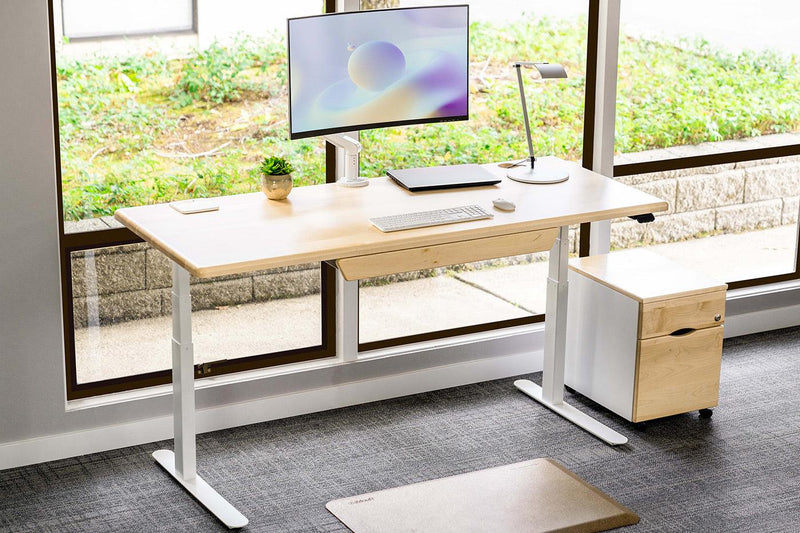
Standing desks are height-adjustable workstations designed to allow users to alternate between sitting and standing throughout the day. Instead of remaining seated for long stretches, users raise the desk surface to a standing height, creating a more upright posture while working.
Sit-stand desks use either manual or motor-driven lifting mechanisms to move the desktop vertically.
This adjustability allows users to match desk height to their body proportions, helping support better posture and circulation. Standing desks do not require movement to operate. Once raised, the desk remains static until adjusted again.
Key features of standing desks include structural stability, minimal mechanical complexity, and quiet operation. Since there are no moving belts or motors underfoot, standing desks integrate easily into traditional office environments without introducing noise or vibration.
This simplicity also reduces maintenance requirements.
Standing desks are commonly used in offices, remote work setups, and home workspaces where focus and fine motor tasks are essential. Many people use them intermittently, standing for portions of the day and sitting for others, rather than standing continuously.
What Are Treadmill Desks
Treadmill desks combine a height-adjustable desk with a low-speed treadmill positioned underneath the workstation.
This creates a walking workstation where users can move at a controlled pace while performing work tasks. The defining feature of this setup is movement during work rather than static standing.
A desk treadmill setup uses a motor-driven treadmill designed specifically for walking, not running. Speeds are typically limited to slow ranges that allow typing, reading, and light cognitive tasks without excessive disruption. The walking surface remains level and stable, making it suitable for extended use at low speeds.
Key features of treadmill desks include integrated movement, adjustable walking speed, and higher energy expenditure compared to standing alone. The treadmill component is designed to operate quietly and smoothly, although some noise is unavoidable due to mechanical motion.
Typical users of treadmill desks are people who want more movement than standing desks provide. This includes individuals focused on increasing daily steps, improving circulation, and reducing prolonged sedentary behavior during work hours.
Health Benefits Comparison
Standing desks provide measurable health benefits compared to prolonged sitting.
Standing burns more calories than sitting and encourages subtle muscle engagement throughout the legs and core. Standing may also help improve posture by promoting spinal alignment and reducing forward head position when desk height is properly adjusted.
Many users report reduced shoulder and lower back discomfort when alternating between sitting and standing, especially when supported by ergonomic positioning. Standing desks can help reduce pressure on the hips and encourage better blood flow through the lower body.
Treadmill desks extend these benefits by adding continuous movement.
Walking increases daily step counts and raises overall energy expenditure beyond what standing alone provides. Regular walking during work hours can contribute to improved circulation, better glucose regulation, and increased caloric burn over the course of the day.
Research on sedentary behavior consistently shows that reducing sitting time matters, but how that time is replaced also matters. Standing desks reduce sitting without adding movement, while treadmill desks replace sitting with walking.
Both approaches reduce sedentary exposure, but they do so in different patterns with different physical demands.
Impact on Productivity and Cognitive Work
Productivity outcomes differ between standing desks and treadmill desks depending on task type. Standing desks tend to support focus-heavy work such as writing, coding, and detailed problem solving.
Because the body remains stationary, fine motor control is preserved, making precise keyboard and mouse use easier.
Treadmill desks introduce movement, which can increase alertness and reduce boredom during repetitive or passive tasks. Walking while working may help sustain energy levels during long workdays, particularly for tasks such as reading, reviewing documents, or attending virtual meetings.
However, walking can affect precision. Fine motor tasks may feel less stable at higher walking speeds. For this reason, many users alternate between walking and stationary periods depending on the nature of their work.
Workflow fit matters more than raw productivity metrics. People performing deep cognitive work for long uninterrupted periods often prefer standing desks, while those performing mixed or lower intensity tasks may benefit more from treadmill desks.
Comfort and Ergonomic Considerations
Standing for extended periods can lead to fatigue, particularly in the feet, calves, and lower back.
Without proper footwear or anti-fatigue support, prolonged standing may reduce circulation rather than improve it. This is why most ergonomists recommend alternating positions rather than standing all day.
Walking desks introduce a different set of ergonomic considerations than standing desks. Slower walking speeds are easier to sustain and reduce balance challenges. Most users find that speeds below typical walking pace work best for maintaining comfort and control.
Proper setup is critical for both options. Monitor height, keyboard positioning, and desk height should support neutral posture. Regular breaks remain important regardless of workstation type.
Space, Noise, and Practical Constraints
Standing desks require minimal space beyond the desk footprint itself. They integrate easily into existing offices and shared work environments. Noise is not a concern since there are no moving parts during use.
Treadmill desks take up more space due to the treadmill base. Floor clearance, room size, and power access become relevant factors. Noise levels are higher than standing desks, although many modern treadmills are designed for quiet operation.
Installation and setup complexity is greater for treadmill desks, especially when aligning desk height with treadmill deck height.
Cost and Budget Considerations
Standing desks are available across a wide price range, from budget models to premium designs. Cost differences are often related to materials, motor quality, and weight capacity.
Treadmill desks typically cost more due to additional components and moving parts. Long-term value depends on usage consistency. A treadmill desk that is rarely used does not justify its higher cost.
Workflow-Specific Recommendations
For knowledge work requiring sustained focus and precision, standing desks often provide a better balance of comfort and productivity. They allow posture changes without introducing movement that could interfere with detailed tasks.
Active lifestyle seekers who struggle to meet daily movement goals may benefit more from treadmill desks. Walking during work can significantly increase daily steps and energy expenditure without requiring separate workout sessions.
Many users adopt a hybrid approach, starting with a standing desk and later adding a treadmill component once standing becomes habitual.
Who Should Choose Which
Standing desks are ideal for people new to active workstations, those with concentration-heavy roles, and anyone prioritizing simplicity and quiet operation.
Treadmill desks are better suited for users seeking consistent movement, higher calorie burn, and increased daily activity. They work best for tasks that allow some movement without precision loss.
If neither option fits perfectly, sit-stand cycles, scheduled walking breaks, or compact walking pads can offer partial benefits.
Tips for Transitioning Smoothly
When starting with a standing desk, increase standing time gradually. Short intervals help the body adapt without excessive fatigue.
When easing into a treadmill desk for office workers, start with low speeds and short sessions. Gradual progression helps prevent strain and improves long-term comfort.
Conclusion
Standing desks and treadmill desks both reduce sedentary time, but they do so in different ways.
Standing desks emphasize posture and stability, while treadmill desks emphasize movement and energy expenditure. The right choice depends on workflow demands, physical comfort, and consistency of use.
If your priority is focus and simplicity, standing desks may fit better. If your priority is movement and daily activity, a desk treadmill may align more closely with your goals.
FAQs
Can I lose belly fat by walking on a treadmill?
Walking on a treadmill helps increase daily calorie burn and supports overall fat loss. It does not target belly fat specifically, but consistent walking can reduce total body fat over time, including the abdominal area.
Is walking on the treadmill 30 minutes a day enough?
Walking for 30 minutes a day meets minimum physical activity guidelines. It can improve circulation, support cardiovascular health, and help reduce the negative effects of prolonged sitting.
What is the 12 3 30 rule on a treadmill?
The 12 3 30 rule involves walking on a treadmill at a 12 percent incline, at 3 miles per hour, for 30 minutes. It is a fitness routine designed for exercise rather than work, and it is not suitable for desk treadmill use.
Are treadmills as effective as walking?
Treadmills can be as effective as walking outdoors when used at similar speeds and durations. The main difference is the environment, not the physical movement itself.
What are the disadvantages of a standing desk?
Standing desks can cause foot, leg, or lower back fatigue if used for long periods without breaks. Standing all day without movement is not recommended, and posture still matters.
Do doctors recommend standing desks?
Many health professionals recommend standing desks as part of a sit stand routine. Most advise alternating between sitting, standing, and moving rather than staying in one position all day.