Research shows visual clutter reduces focus and cognitive performance, with some estimates suggesting productivity losses of up to 40%.
That single number says a lot.
If you want deeper focus, faster workflow, and less mental fatigue, your desk layout matters more than you think.
This guide breaks down the desk layout principles that help you concentrate longer and work smarter.
Importance of Desk Layout in Productivity
Your desk layout quietly controls how you think, move, and execute tasks. Most people underestimate it. They focus on tools and ignore positioning.
A smart desk setup really lowers the mental noise. Your brain wastes less time hunting for stuff and more time actually working. That leads to sharper decisions and far fewer breaks when you are deep in focus.
That tiny change adds up fast. Everything stays where it belongs, distractions drop, and the whole workday flows better without constant resets.
There is a physical side to all this too. A bad layout has you twisting your back, reaching too far, or fighting screen glare all day. It quietly drains you over time.
A properly arranged desk does the opposite, it lets your body move naturally, your eyes stay comfortable, and the whole workflow just feels lighter and easier.
Think of your desk setup as a command center. Every item should serve a purpose and live within logical reach. When your environment supports your goals, focus becomes easier. Almost automatic.
Factors to Consider in Desk Layout
Building a decent desk layout is all about balancing what looks good, what actually works, and how you personally get stuff done.
No perfect template exists for everyone. But a handful of smart choices usually make the biggest difference in how well it serves you.
Desk Shape and Its Impact
Desk shape determines how you interact with your workspace. Rectangular desks favor linear workflows. L-shaped desks support multitasking. Curved desks wrap tools around you for faster access.
Shape also affects room layout. A bulky desk in a tight space creates visual pressure. But a streamlined design opens movement paths and improves mental clarity.
That is why modern standing desks often feature modular shapes. They adapt as your workflow evolves. And flexibility drives focus.
Ergonomics and Comfort
Ergonomics is the science of fitting furniture to the human body. And it is central to any high-performance desk layout.
When posture aligns with neutral joint positioning, muscle strain drops. Circulation improves. Fatigue slows down. Even small ergonomic upgrades, such as monitor height adjustments create measurable productivity gains.
Comfort does not mean softness. It means support. Proper keyboard placement, screen distance, and elbow angles allow sustained concentration without physical distraction.
Workspace Organization
Organization shapes attention. Visual clutter competes for mental bandwidth.
A focused desk layout uses zoning. Work tools in one area. Reference materials in another. Personal items limited and intentional.
Storage also plays a role. Drawers, cable trays, and monitor arms keep surfaces clear. That physical clarity translates into mental clarity. And that is exactly what focus demands.
Types of Desk Layouts
Different workflows require different desk layout ideas. Choosing the right configuration depends on task complexity, available space, and movement needs.
1. Rectangular Desks
Rectangular desks remain the most common office desk layout for a reason. They are simple, versatile, and easy to position within most room layout designs.
This layout supports single-monitor workflows, writing tasks, and focused computer work. Everything aligns in front of you, reducing head and torso rotation.
Rectangular standing desks add movement to the equation. You can shift posture throughout the day without altering your desk layout structure. That consistency helps maintain workflow rhythm.
And simplicity has its own psychological benefit. A clean rectangular surface encourages minimalism. Fewer distractions. Sharper focus.
2. Curved Desks
Curved desks wrap your workspace around your body. Tools, monitors, and accessories sit within arm’s reach.
This desk layout reduces repetitive reaching. That saves time and lowers shoulder strain. Designers, editors, and traders often prefer curved setups because they handle multiple screens and devices.
The curved edge also softens room layout aesthetics. It breaks harsh lines and creates a more fluid visual field. That subtle shift can lower stress levels during long work sessions.
Focus thrives when friction disappears. And curved desks remove physical friction.
3. L-Shaped Desks
L-shaped desks excel in multitasking environments. One wing handles computer work. The other manages writing, planning, or secondary devices.
This desk layout idea creates functional zones without needing extra furniture. You pivot instead of relocate. That preserves cognitive momentum.
They also optimize corner room layout areas that would otherwise go unused. More surface area. Same footprint.
For professionals juggling calls, screens, and documents, L-shaped layouts offer balance between expansion and organization.
Enhancing Desk Ergonomics
Even the best desk layout fails without ergonomic alignment. Layout and body mechanics must work together.
Ideal Desk Height
Desk height determines wrist angle, elbow position, and spinal posture. Too high and shoulders tense. Too low and the back rounds.
Height-adjustable standing desks solve this problem. You align desk height to elbow level whether sitting or standing. That flexibility supports movement and circulation throughout the day.
And movement matters. Alternating positions reduces fatigue and sharpens attention during long tasks.
Monitor Positioning
Monitor placement directly affects neck strain and visual comfort. Screens should sit at eye level, about an arm’s length away.
A monitor arm improves adjustability. You fine-tune height, tilt, and depth without altering the entire desk layout. That micro-adjustment preserves ergonomic posture across tasks.
Screen glare is another factor. Position monitors perpendicular to windows to reduce reflections. Visual comfort sustains focus longer than most people realize.
Incorporating Ergonomic Accessories
Accessories complete the ergonomic equation. Consider integrating:
-
Monitor arms for adjustability
-
Ergonomic chair with lumbar support
-
Keyboard trays for wrist alignment
-
Anti-fatigue mats for standing work
These additions refine your desk setup without expanding footprint. Small upgrades. Large productivity returns.
Creating a Clutter-Free Workspace
Clutter fragments attention. Every visible item competes for cognitive processing.
A focused desk layout removes unnecessary stimuli and prioritizes functional tools.
Minimalist Setups
Minimalism does not mean sterile. It means intentional.
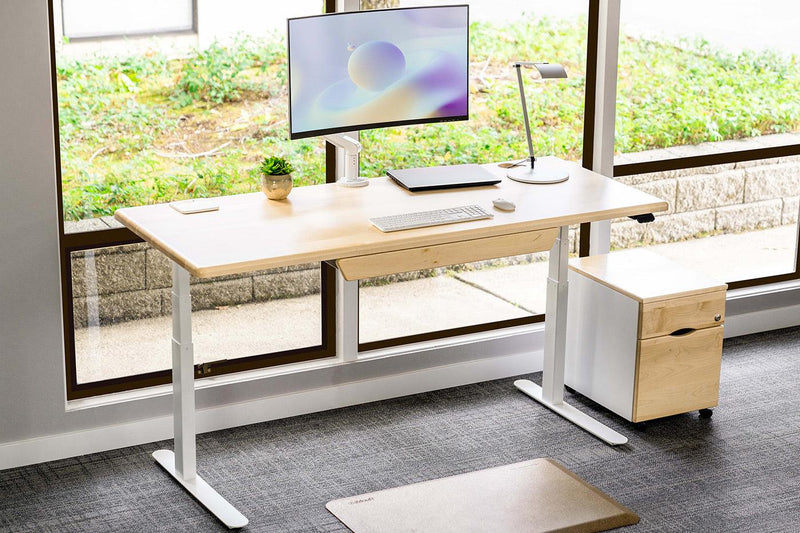
Limit desk surfaces to daily essentials. Monitor, keyboard, mouse, task lighting. Everything else moves to storage zones.
This desk layout idea reduces visual noise. When your eyes scan less, your brain processes less. That preserves mental energy for meaningful work.
Minimalist office desk layout designs also photograph well. Clean lines. Clear workflow. Professional presence.
Effective Cable Management
Cables quietly destroy clean desk layout aesthetics. Tangled wires create visual clutter and physical interference.
Cable trays, under-desk mounts, and wireless accessories restore order. They also improve safety by removing trip hazards.
An organized cable system supports movement. Especially in standing desk environments where height shifts frequently.
Focus improves when your workspace looks controlled. Order outside encourages order inside.
Integrating Natural Elements
Biophilic design introduces nature into the workspace. And science supports its benefits.
Benefits of Biophilic Design
Bringing in natural elements actually cuts stress and sharpens your thinking. Research keeps showing that adding some greenery to the workspace lifts productivity noticeably.
Plants soften hard furniture lines. They also improve air quality and humidity balance.
Natural materials such as wood desk surfaces add warmth to your desk layout. That sensory comfort supports longer focus sessions.
Adding Plants to the Workspace
Start small. Desk plants such as snake plants or pothos require minimal maintenance.
Position greenery within peripheral vision. Not blocking monitors. Not crowding workflow zones.
When paired with natural light from a nearby window, the effect multiplies. Light, greenery, and airflow create an energizing workspace ecosystem.
Personalizing Workspace without Clutter
Personalization strengthens emotional connection to your workspace. But excess personalization weakens focus.
Balance is key.
Choose a few meaningful items. A framed photo. A small artwork. A functional desk accessory with character.
Avoid covering every surface. Negative space matters. It gives the eye a place to rest.
Your desk layout should reflect identity without sacrificing performance. Personality in moderation. Focus on priority.
Applying Feng Shui Principles
Feng Shui office layout principles center on energy flow. While philosophical, many concepts align with modern productivity psychology.
Desk Placement for Energy Flow
The command position is foundational. Place your desk where you see the door without sitting directly in line with it.
This placement reduces subconscious vigilance. You feel in control of your space. That psychological safety enhances focus.
Avoid facing walls if possible. If unavoidable, add depth with artwork or shelving.
Balancing and Harmonizing the Space
Symmetry promotes calm. Balanced lighting, paired objects, and proportional furniture stabilize visual energy.
Keep sharp corners away from direct body alignment. Curved desk edges or plants soften harsh spatial lines.
A Feng Shui office layout is ultimately about comfort, awareness, and flow. Concepts that modern ergonomics also values.
Tailoring Layouts to Individual Needs
No universal desk layout fits everyone. Workflow, profession, and personality shape optimal design.
Writers prefer minimal surfaces. Designers need multi-monitor curved layouts. Executives often favor expansive L-shaped command desks.
Home office environments add another layer. Shared spaces, room layout constraints, and lighting limitations require creative adaptation.
So experiment.
Test monitor positions. Adjust desk height. Reorganize storage. Observe focus patterns.
The best desk layout is the one that disappears beneath your workflow. Invisible support. Maximum output.
Conclusion
The desk layout that helps focus best combines ergonomics, organization, and intentional design. Shape influences workflow. Position affects posture. The environment shapes cognition.
When your workspace aligns with how you think and move, focus stops feeling forced.
Explore ergonomic solutions and performance-driven designs at iMovR to build a workspace that works as hard as you do.
FAQs
What is the ideal desk size for an office?
The ideal office desk size ranges from 48 to 72 inches wide and 24 to 36 inches deep, providing enough surface for monitors, accessories, and comfortable movement.
How can you organize cables for a cleaner desk appearance?
Use cable trays, under-desk mounts, Velcro ties, and cable sleeves. Route wires along desk edges, label cords, and choose wireless accessories where possible.
What is the best lighting for an office desk?
Natural light works best when positioned beside the desk to reduce glare. Combine it with adjustable LED task lighting for consistent brightness during evening work hours.
How does plant life impact focus in an office?
Plants reduce stress, improve air quality, and create visual calm. Studies show greenery in workspaces boosts concentration, cognitive performance, and overall productivity levels.
What are some ways to minimize distractions on your desk?
Keep only daily essentials visible, store extras in drawers, manage cables, silence notifications, and position the desk away from high-traffic areas or visual clutter.
What about standing desks?
Standing desks promote movement, improve posture, and reduce fatigue. Alternating between sitting and standing throughout the day helps maintain energy, comfort, and sustained focus.