What if one adjustment in your correct standing posture could ease your back pain, enhance how you move, and safeguard your spine for years?
Most people stand just once a day, for roughly 47 minutes. And then wonder why their body feels stiff and worn down.
That possibility centers on correct standing posture. For anyone using a standing desk or considering one, learning how to stand with good posture becomes essential. Your alignment influences your muscles, joints, energy, and overall health.
This resource breaks down what good posture looks like. It explains how to stand for good posture and shows how ergonomics helps your body during work hours.
What Does Correct Standing Posture Actually Mean?
Good posture refers to how your body positions itself against gravity. Your spine, muscles, and joints distribute weight evenly when alignment stays neutral.
Correct standing posture places the head above the shoulders, shoulders above hips, and hips above feet.
This arrangement reduces stress. It prevents excess muscle tension. When your alignment shifts, your body adjusts to compensate.
Those adjustments eventually cause pain and tiredness. They reduce movement quality over time.
Proper standing posture avoids stiffness. It avoids strain too. Instead, it remains balanced and comfortable. It adapts during movement. That difference makes the real impact.
Why Correct Standing Posture Matters for Health
Correct standing posture shields your spine from unnecessary compression. It decreases strain on your neck, back, and knee joints during extended standing periods.
Studies link poor posture to ongoing back pain and neck discomfort. This is especially true for desk workers who spend hours at their workstation.
Slouching changes how muscles activate. It stresses connective tissue in ways that build up over weeks.
Standing with the right standing posture enhances circulation throughout your body. Blood moves more efficiently when muscles stay relaxed. They should not be tense or locked in place.
Your alignment also affects breathing. A neutral spine lets your rib cage expand completely. This improves oxygen intake during long work sessions. It boosts stamina too.
Beyond that, posture shapes your energy levels. When your body functions efficiently, fatigue accumulates more slowly. You finish work feeling less drained.
The Anatomy of Correct Standing Posture
Understanding the specific body parts involved helps you make precise adjustments. Each section of your body plays a distinct role. That role matters for maintaining proper alignment throughout the day.
Head and Neck Alignment
Your head belongs directly above your shoulders. Not jutting forward like a turtle. Not tilting backward either.
Forward head positioning dramatically increases neck strain. Most people never realize this until pain develops.
Even a slight forward shift multiplies the load on cervical muscles. To locate neutral alignment, picture a thread pulling the top of your head upward.
Your chin remains level. Your eyes look straight ahead at your monitor. This placement supports how to stand good posture without creating tension.
Shoulder and Upper Back Position
Your shoulders should rest down and subtly back. Not forcefully pulled like a military stance. Not hunched forward either. Rounded shoulders tighten chest muscles. They weaken upper back muscles over time.
That imbalance contributes to shoulder discomfort. It causes upper back stiffness that many desk workers accept as normal. Proper standing posture keeps shoulder blades lying flat against your rib cage.
This happens without excessive effort. Movement stays unrestricted, not rigid. That equilibrium lets your upper body support itself naturally.
Spine and Core Stability
Your spine has built-in curves. These exist for important biomechanical reasons. Correct standing posture honors them. It does not eliminate or exaggerate them through forced positioning.
Your core muscles offer gentle support. Not rigid bracing that restricts breathing. Consider it engaged yet relaxed. Like holding a cup of coffee without spilling it.
Excessive core tightening limits breathing and movement. Insufficient engagement leads to collapse. It causes slouching that stresses your lower back.
Neutral alignment lets your spine absorb force evenly. This happens throughout your day without overloading specific joints.
Hips, Knees, and Feet Positioning
Your hips should line up over your ankles. This creates a vertical relationship. Knees stay slightly bent, never fully locked. Locked knees transfer stress upward into your lower back and hips. That stress compounds over hours of standing.
The pattern increases tiredness during standing work. It can lead to joint problems over time. Your feet should rest about hip-width apart. This creates a stable base. Weight spreads evenly between heels and the front of your feet.
Not leaning too far forward or backward. This foundation supports how to stand with good posture for prolonged periods.
Correct Standing Posture vs Poor Standing Habits
Poor posture frequently feels comfortable at first. But immediate comfort does not equal proper support. Typical posture mistakes include leaning on one hip. Also locking knees and pushing the neck forward toward your screen.
These behaviors create uneven weight distribution. Your body tolerates this in the short term. With time, muscles adapt to incorrect positioning. Some become tight while others grow weak. This creates imbalances that are difficult to reverse.
Correct standing posture restores equilibrium across all muscle groups. It permits movement instead of enforcing stillness. That distinction influences long-term health results.
How to Stand With Good Posture at a Standing Desk
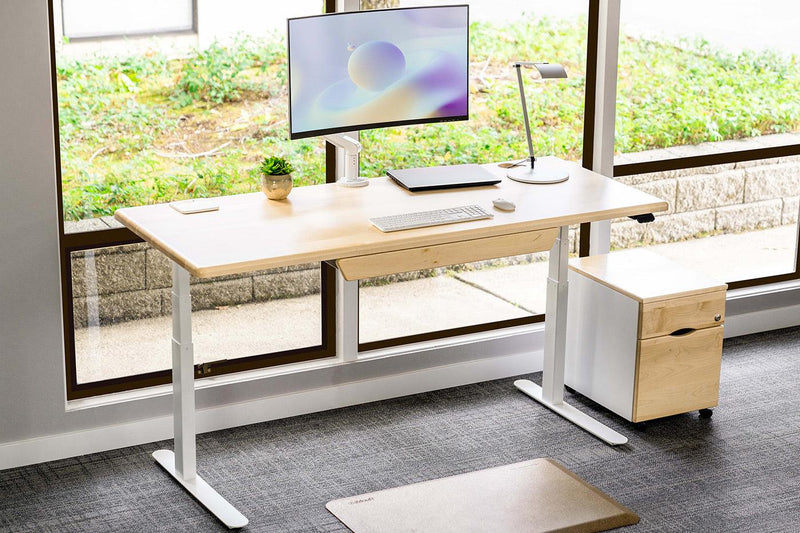
A standing desk promotes better posture only with proper setup. Height matters. Monitor location matters. Accessory arrangement matters too. Your desk surface should match your elbow height. This measurement comes when your arms hang naturally at your sides.
Forearms rest horizontal to the floor while typing. This creates a 90-degree angle at the elbow. Your monitor should sit at or just below eye level. This prevents neck strain. It stops excessive neck bending that accumulates damage over time.
A footrest promotes subtle shifts in stance. It keeps muscles active. Switching foot placement decreases lower back strain. It allows micro-movements throughout the day.
iMovR standing desks enable these modifications with accuracy. They provide stability that cheaper alternatives cannot match. That adaptability supports correct standing posture all day long.
Proper Standing Posture Requires Movement, Not Stillness
Remaining motionless for hours generates its own challenges. Movement keeps muscles engaged. It keeps joints flexible in ways that static standing cannot achieve.
Weight shifts help. Light stepping helps. Stance variations reduce tiredness far more effectively than perfect stillness.
These small adjustments carry real significance. Research continues to validate this. Proper standing posture evolves as you move throughout the day. It does not maintain one fixed position. It does not lock your body like a statue.
Research suggests alternating between sitting and standing every 30 to 60 minutes. That pattern supports circulation. It supports joint health better than extended periods in either position.
A height-adjustable desk makes this switch effortless. It encourages you to change positions regularly. It permits posture changes without interrupting workflow.
How Sitting Posture Affects Standing Posture
Your sitting posture influences how you stand. Most people never consider this connection. Negative sitting habits transfer into standing alignment.
Muscle patterns carry over between positions. Slouched sitting tightens hip flexors. It weakens glutes over time through constant repetition.
That pattern disrupts pelvic alignment when you stand. It creates compensations throughout your body. Using an ergonomic chair promotes better sitting posture.
It prepares your body for transitions. Your body readies itself for upright alignment instead of fighting against tight muscles.
iMovR ergonomic seating solutions support neutral sitting posture. They do this through thoughtful design features. That foundation improves transitions to standing posture. It maintains better muscle balance.
Muscles Involved in Correct Standing Posture
Multiple muscle groups collaborate to support posture. Balance relies on coordination rather than strength alone. That is why bodybuilders can still have terrible posture.
Essential muscles include core stabilizers. Upper back muscles matter too. So do glute muscles and lower leg muscles. They work in concert.
Weakness in any group affects alignment across your entire body. Tightness does the same.
That imbalance frequently leads to discomfort. It leads to pain that seems to come from nowhere. Basic exercise routines improve posture awareness. They strengthen weak links in the chain.
Yet posture during daily work holds the most importance. You spend more time at your desk than exercising. Standing correctly for hours naturally builds endurance.
It develops the specific muscles that maintain proper alignment. This functional strength translates directly to better posture.
How to Stand for Good Posture During Long Workdays
Sustainable posture differs from short-term posture. It must remain manageable throughout the day. The objective is comfort without slumping into poor positions. Support without stiffness that restricts your breathing.
Using anti-fatigue mats decreases pressure on joints. They provide cushioning. They promote subtle movement.
They encourage gentle movement that keeps muscles active. Monitor your posture signals throughout the day. Check in with your body regularly.
Neck tension indicates adjustment needs. So does back pain. Knee discomfort signals the same. Address these before damage accumulates.
Correct standing posture adapts moment by moment. It responds to what your body needs right now. That flexibility prevents ongoing issues.
Ergonomics and Correct Standing Posture
Ergonomics matches tools to your body. It does not force your body to adapt to poorly designed tools. It eliminates obstacles to good posture. A well-designed workstation supports neutral alignment automatically. You do not require constant reminders to sit up straight.
Monitor arms reduce strain. Keyboard trays do too. Desk height modifications put everything where it should be. They support how to stand with good posture effortlessly.
iMovR designs emphasize movement-friendly ergonomics. They accommodate natural human behavior. That philosophy aligns with lasting health objectives.
Standing Desk Myths That Hurt Posture
Standing by itself does not correct posture automatically. Incorrect standing habits can still trigger pain.
They do this just as easily as poor sitting. Another misconception claims standing all day enhances health. Extended standing creates joint stress. It creates fatigue that rivals sitting for negative health effects.
Correct standing posture depends on balance. This means balancing sitting, standing, and movement throughout the day. Movement matters. Setup matters. Standing burns about 95 calories per hour compared to 80 calories per hour when sitting, an increase of over 10 % in calorie burn simply by standing
Awareness holds equal importance in determining outcomes. Standing desks promote better posture only with deliberate use. That recognition prevents frustration.
Signs Your Standing Posture Needs Adjustment
Pain offers valuable feedback. You should never ignore it. Dismissing it worsens results. It can lead to chronic problems that require medical intervention.
Typical warning signs include ongoing back pain. Neck stiffness is another. Knee discomfort that persists between workdays signals trouble too.
Rapid fatigue buildup also signals problems. Your alignment or setup needs attention. Check your alignment regularly.
Do quick body scans throughout the day. Minor corrections prevent long-term harm. That harm develops slowly over weeks and months.
Posture awareness develops over time. You learn what good alignment feels like in your body. Consistency outweighs perfection. Small daily improvements compound into major changes.
How Correct Standing Posture Supports Fitness Goals
Standing with proper alignment engages stabilizing muscles. Those muscles support athletic performance. That engagement supports daily calorie expenditure.
This goes beyond traditional exercise sessions. Movement-friendly posture enhances mobility. It keeps joints moving through full ranges of motion.
It complements workout routines. It does not conflict with them through competing demands. Fitness-oriented users gain from posture-conscious work practices.
They extend their health focus beyond the gym. They decrease sedentary time without overloading joints. Correct standing posture supports longevity. It reduces wear and tear on joints. That alignment protects your body beyond exercise sessions.
Final Thoughts on Correct Standing Posture
Correct standing posture promotes health, movement, and energy. It safeguards your spine. It minimizes avoidable pain that diminishes quality of life.
Standing desks assist when applied properly. Pay attention to ergonomics. Pay attention to movement patterns.
Ergonomics matters. Movement matters. Awareness completes the approach to maintaining health at your desk. Posture is not a fixed position.
You do not maintain it through willpower alone. It is a practice you refine daily. Small adjustments help. Mindful attention to your body helps too.
Good posture starts with how your workstation fits your body. See how iMovR standing desks adapt to your height, movement, and workflow.
FAQs
Is My Standing Desk Posture Correct?
Correct posture means relaxed shoulders, neutral spine, elbows near ninety degrees, screen at eye level, and weight evenly distributed without locking knees.
Is There Anyone Who Would Not Benefit From a Standing Desk?
People with certain balance disorders, acute joint injuries, or conditions requiring prolonged sitting may need medical guidance before using a standing desk.
How Long Does It Take to Correct Bad Posture?
Posture improvements often take weeks to months, depending on consistency, muscle strength, daily habits, and whether ergonomic adjustments are maintained.
Can a Standing Desk Solve All My Posture Problems?
No. A standing desk helps, but posture also depends on movement, strength, flexibility, footwear, and avoiding static positions throughout the day.
What if I Still Have Pain After Improving My Posture and Ergonomics?
Persistent pain may signal underlying issues. Consulting a healthcare professional ensures proper diagnosis beyond posture, ergonomics, or workstation adjustments.